
Free English Speaking Routine Builder
Generate a personalized daily schedule based on the best free apps for speaking practice. Select your focus areas to build your routine.
You open your phone, scroll past the games and social media, and find that one app you downloaded three months ago. You’ve completed 40% of the lessons, but can you actually hold a conversation with a native speaker? Probably not. This is the trap of most "free" language apps. They teach you vocabulary and grammar rules, but they rarely help you move your mouth to form words under pressure.
Finding a truly free app for speaking English fluently is harder than it sounds. Most popular platforms use a "freemium" model where the core speaking features are locked behind a paywall. However, in 2026, technology has shifted. Artificial Intelligence (AI) and speech recognition have made high-quality speaking practice accessible without a credit card. The key is knowing which tools focus on output-your voice-rather than just input-reading screens.
The Problem with Traditional "Free" Language Apps
Before picking an app, you need to understand why most fail at teaching fluency. Apps like Duolingo or Memrise are fantastic for building a vocabulary base. They use spaced repetition systems (SRS) to ensure you remember words. But remembering the word "schedule" doesn’t mean you can pronounce it quickly during a job interview.
Fluency requires muscle memory in your jaw, tongue, and lips. It requires processing speed. When you think about what to say, translate it from your native language, and then speak, you hesitate. Real fluency happens when that gap disappears. Most free tiers of major apps do not offer real-time feedback on pronunciation. They might let you record a sentence, but they won’t tell you if your 'th' sound was lazy or if your intonation sounded robotic. To get that detailed feedback, you usually need to pay for a premium subscription.
This leaves learners with two choices: pay for expensive tutoring or use fragmented free tools. The good news is that by combining specific free apps, you can build a complete speaking ecosystem that rivals paid courses.
Top Free Apps for Active Speaking Practice
Here are the best free options available in 2026 that prioritize speaking over passive learning. These apps leverage different technologies, from AI chatbots to community matching.
| App Name | Primary Focus | Speaking Mechanism | Limitations of Free Version |
|---|---|---|---|
| ELSA Speak | Pronunciation & Accent Reduction | AI Speech Analysis | Limited daily lessons; advanced analytics locked |
| HelloTalk | Real Conversation | Text/Voice Chat with Native Speakers | Limited translation corrections; ads |
| Tandem | Language Exchange | Voice/Video Calls | No built-in correction tools; relies on partner |
| Speak | AI Conversation Scenarios | Interactive AI Roleplay | Very limited free trial; mostly paid |
| YouTube + Shadowing | Intonation & Flow | Mimicry Technique | No automated feedback; requires self-discipline |
1. ELSA Speak: The Pronunciation Coach
If your main barrier to fluency is fear of sounding "wrong," ELSA Speak is your best starting point. It uses deep learning algorithms to analyze your speech patterns. Unlike older apps that just check if you said the right word, ELSA breaks down your pronunciation into phonemes-the smallest units of sound.
In the free version, you get access to a set number of lessons per day. These lessons focus on common mistakes non-native speakers make, such as confusing "ship" and "sheep" or misplacing stress in multi-syllable words. The app gives you a score out of 100 and highlights exactly which part of the word needs improvement. For example, it might tell you that your tongue position was too far back for the 't' sound.
Why this helps fluency: When you stop worrying about individual sounds, you speak faster. ELSA builds confidence by ensuring your basic articulation is clear. It’s not a conversation simulator, but it’s the foundation upon which fluent speech is built.
2. HelloTalk and Tandem: Real Human Interaction
You cannot learn to swim by reading books about water. Similarly, you cannot learn to speak English by only talking to computers. HelloTalk and Tandem connect you with native English speakers who want to learn your language. This is called language exchange.
These apps are completely free to use for basic features. You can send voice messages, make voice calls, and even video chat. The magic happens in the interaction. You might match with a Spanish speaker in Madrid who wants to practice their Japanese. You spend 15 minutes speaking English, and 15 minutes speaking Japanese.
The challenge here is that there is no teacher correcting you. If you say, "I goed to the store," your partner might understand you but not correct the grammar. This is why these apps have built-in correction tools. In HelloTalk, users can tap on your message and suggest edits. This mimics the natural feedback loop of growing up bilingual. You make mistakes, people gently correct you, and you adjust.
Pro Tip: Don’t just text. Voice notes are crucial. Typing does not improve your speaking muscles. Set a rule for yourself: every interaction must include at least one 30-second voice message.
3. The "Shadowing" Technique with YouTube
Don’t underestimate the power of YouTube. While not a dedicated language app, it is the most powerful free resource for improving fluency through a technique called "shadowing."
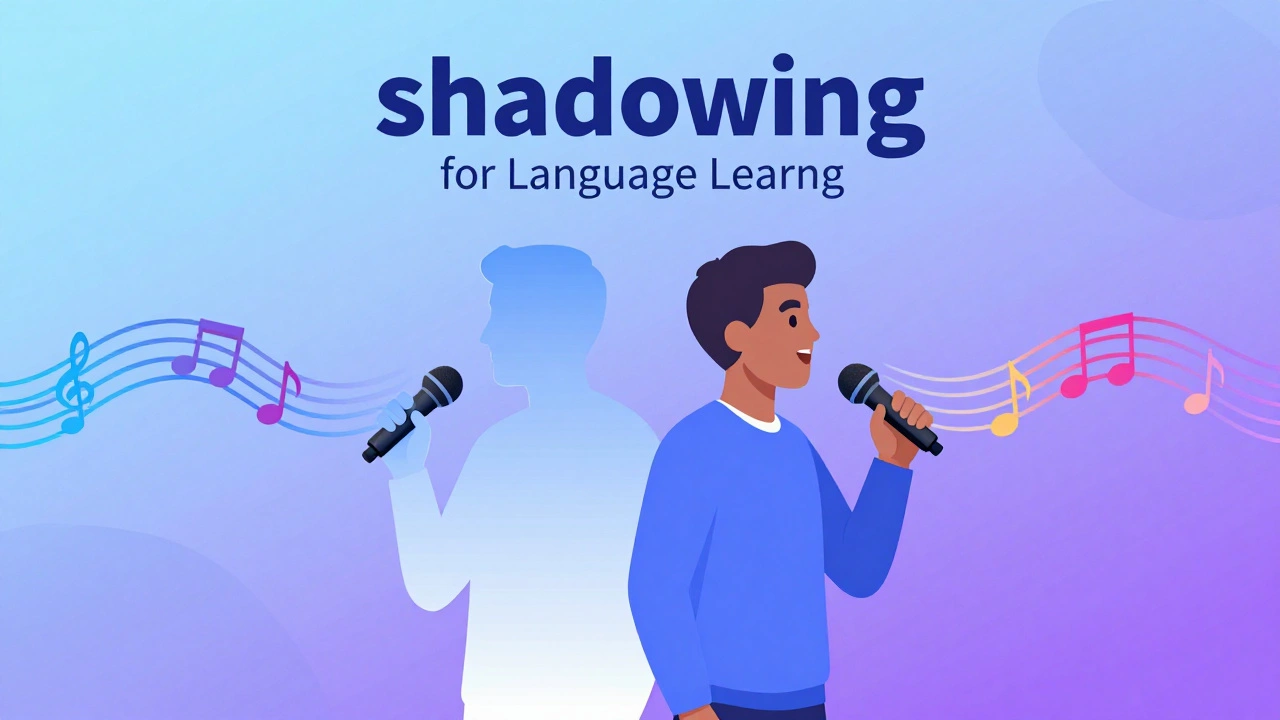
Shadowing involves listening to a native speaker and repeating what they say almost simultaneously, like a shadow following them. Here is how to do it effectively:
- Find a podcast or video with a transcript (TED Talks are excellent for this).
- Listen to one sentence.
- Pause the audio.
- Repeat the sentence aloud, trying to match the speaker’s speed, emotion, and pauses exactly.
- Record yourself doing this using your phone’s voice memo app.
- Compare your recording to the original.
This forces your brain to process English in real-time. You aren’t translating; you are mimicking. Over time, this internalizes the rhythm of the language. Fluent speakers don’t just know words; they know the music of the language. Shadowing teaches you that music.
How to Build a Free Daily Speaking Routine
Having the apps isn’t enough. You need a system. Most people fail because they try to do everything at once. Instead, rotate your focus based on the day.
- Monday (Pronunciation): Spend 15 minutes on ELSA Speak. Focus on one difficult sound (e.g., 'r' or 'l'). Record your before and after.
- Tuesday (Shadowing): Watch a 5-minute TED Talk. Shadow along. Record yourself.
- Wednesday (Conversation): Send three voice notes to partners on HelloTalk or Tandem. Ask them specific questions about their day.
- Thursday (Self-Talk): Narrate your life. As you cook dinner, say out loud what you are doing. "I am chopping the onions. I need more salt." This builds the habit of thinking in English.
- Friday (Review): Listen to your recordings from Tuesday and Wednesday. Identify recurring errors.
This routine ensures you are practicing both accuracy (pronunciation) and fluency (speed and flow). It costs nothing but time.

Common Pitfalls to Avoid
Even with the best tools, you can stall your progress. Here are the most common traps:
1. Staying Silent: Many learners listen to podcasts for hours but never speak. Listening comprehension and speaking production are different skills. You can understand Shakespeare but still stutter when ordering coffee. You must produce sound.
2. Perfectionism: Waiting until you have perfect grammar before speaking is a recipe for silence. Native speakers make mistakes all the time. Fluency is about communication, not perfection. If someone understands you, you succeeded.
3. Ignoring Intonation: Flat speech sounds boring and hard to follow. English is a stress-timed language. Some syllables are long and loud; others are short and quiet. Pay attention to the melody of sentences, not just the words.
Is "Free" Really Enough?
You might wonder if you eventually need to pay. For basic to intermediate fluency, free tools are sufficient. You can hold conversations, travel, and work in English using only free resources. However, for advanced business English or specialized academic vocabulary, you may benefit from paid tutors or structured courses. The free apps get you to the door; consistent practice walks you through it.
The biggest cost isn’t money-it’s consistency. An app sitting on your phone does nothing. Opening it for ten minutes every day changes everything. Start today. Pick one app. Speak one sentence. That’s how fluency begins.
Which app is best for beginners who are afraid to speak?
For beginners, ELSA Speak is often the best starting point. It provides a safe, private environment where you can practice pronunciation without the pressure of a human listener. The AI gives immediate, non-judgmental feedback, helping you build confidence before moving to live conversation apps like HelloTalk.
Can I really become fluent using only free apps?
Yes, many learners reach conversational fluency using free tools. The key is combining different types of apps: one for pronunciation (like ELSA), one for real conversation (like Tandem), and content for immersion (like YouTube). Consistency matters more than the price tag of the tool.
What is the "shadowing" technique?
Shadowing is a language learning method where you listen to a native speaker and repeat what they say almost simultaneously. This helps improve your pronunciation, intonation, and speaking speed by training your mouth muscles to mimic natural speech patterns.
How do I find conversation partners on HelloTalk or Tandem?
Create a detailed profile stating your goals and interests. Be proactive by sending introductory voice messages rather than just text. Look for partners who also list "voice chat" as a preference. Consistency is key-try to chat with the same few people regularly to build rapport.
Why do I feel stuck at the intermediate level?
The "intermediate plateau" happens when you know enough to communicate but lack the nuance for complex topics. To break through, you need to consume more challenging content (news, documentaries) and force yourself to speak about abstract ideas, not just daily routines. Use apps that expose you to varied vocabulary and idioms.