Free Learning Platform Selector
Recommended Platform
Pro Tip for Free Access
Wanting to learn something new but not wanting to spend a dime? You are not alone. The internet is flooded with options, but finding quality education that is actually free can feel like searching for a needle in a haystack. Many platforms advertise "free" courses but hide the cost behind paywalls when you try to download materials or get a certificate. In 2026, the landscape has shifted. While some giants have tightened their purse strings, others have doubled down on open access. This guide cuts through the marketing noise to show you which platforms truly deliver value without asking for your credit card.
The Truth About "Free" Online Education
Before picking a platform, it helps to understand how these businesses survive. Most major e-learning platforms operate on a freemium model. This means the core content-video lectures, reading assignments, and sometimes even peer-graded assignments-is free. However, features like personalized feedback, proctored exams, and verified digital certificates usually require payment. If your goal is purely knowledge acquisition, you can often complete entire university-level courses for zero dollars. If you need proof of completion for a resume, you will likely face a fee. Knowing this distinction upfront saves frustration later.
Coursera: University Quality at Your Fingertips
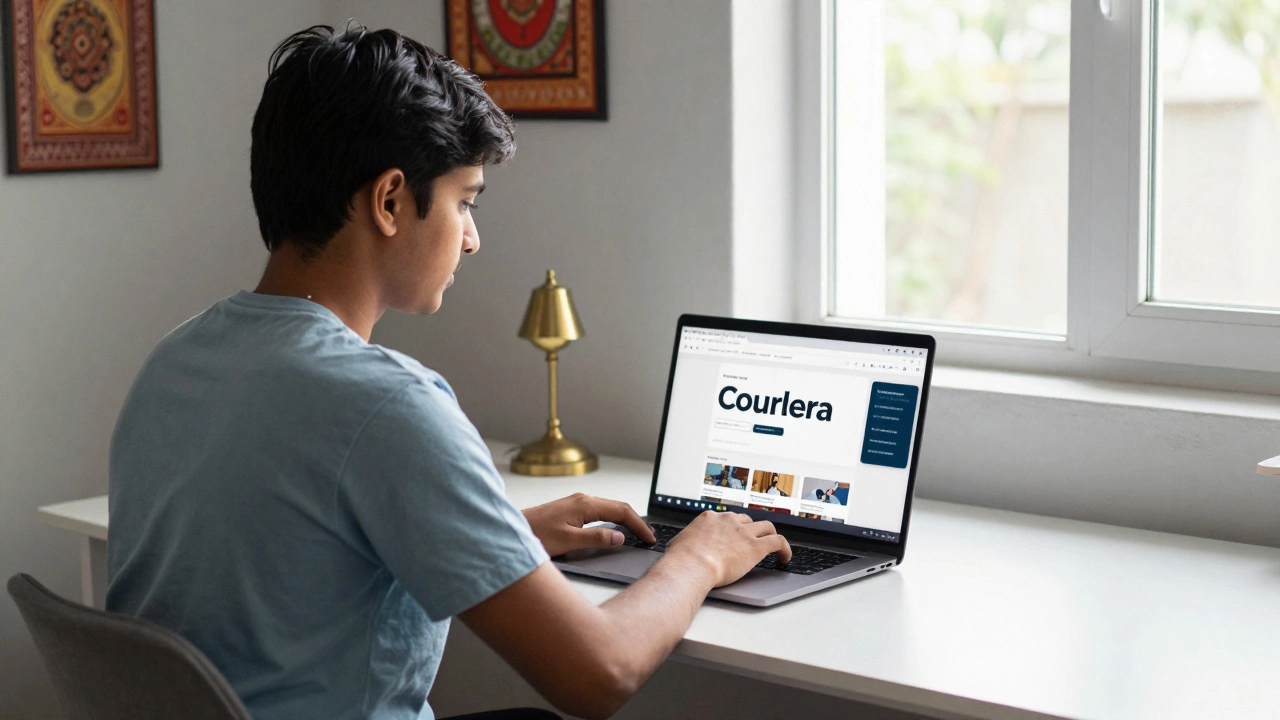
Coursera is a leading global online learning platform that partners with top universities and companies, including Yale, Stanford, and Google. It remains one of the best choices for structured, academic-style learning. The key to using Coursera for free is understanding the "Audit" option. When you click "Enroll," the site will immediately push you toward a paid subscription. Look closely for a small link that says "Audit this course." This allows you to access all video lectures and readings. You won’t get graded assignments or a certificate, but you get the same educational content as paying students.
- Best for: Academic subjects, professional skills from big tech (Google, IBM), and university credits.
- Free Limitations: No certificate, no graded quizzes, limited peer review access.
- Content Volume: Over 7,000 courses from 300+ partners.
edX: The Non-Profit Alternative
edX is an online learning platform founded by Harvard and MIT that shares many similarities with Coursera but maintains a strong non-profit ethos. Like Coursera, edX offers an "Audit Track" for most courses. This track gives you full access to course materials for the duration of the course term. EdX is particularly strong in STEM fields (Science, Technology, Engineering, Mathematics) and humanities. One advantage edX holds is its MicroMasters programs, which allow you to take graduate-level courses for free and stack them toward a master’s degree if you decide to pay later.
- Best for: Rigorous academic courses, STEM fields, and potential university credit transfer.
- Free Limitations: Strict deadlines for audit tracks, no certificate.
- Unique Feature: MicroMasters pathways for serious career changers.
Khan Academy: The Foundation Builder
If you are looking for pure, unadulterated learning without any hidden costs, Khan Academy is a non-profit educational organization created to provide a free, world-class education for anyone, anywhere is the gold standard. Unlike Coursera or edX, Khan Academy does not sell certificates because it doesn’t need to. Its mission is entirely focused on mastery learning. The platform excels in math, science, computing, history, and economics. The interface is simple, and the practice exercises adapt to your skill level. It is incredibly effective for high school students, college freshmen needing remedial help, or adults refreshing basic skills.
- Best for: K-14 education, foundational math/science, SAT prep.
- Free Limitations: None. Everything is 100% free forever.
- Strength: Interactive practice problems and instant feedback loops.
MIT OpenCourseWare: Raw Academic Access
MIT OpenCourseWare is a web-based publication of virtually all MIT course content takes a different approach. There are no interactive quizzes, no progress trackers, and no certificates. Instead, you get the raw syllabus, lecture notes, exams, and video recordings of actual classes taught at the Massachusetts Institute of Technology. This is ideal for self-starters who want to read what a professor reads and solve the same problems MIT undergraduates solve. It requires more discipline because there is no hand-holding, but the depth of content is unmatched.
- Best for: Self-motivated learners, engineering, physics, and computer science enthusiasts.
- Free Limitations: No interaction with instructors, no grading, static content.
- Content Depth: Direct access to one of the world’s top research universities’ curriculum.
FutureLearn: Social Learning with a UK Focus
FutureLearn is an online learning platform founded in the United Kingdom emphasizes social learning. Courses are designed to be discussed. You read articles and watch videos, then engage in forum discussions with other learners. Many courses offer a "free access" period where you can participate fully during the live run of the course. Afterward, access may become restricted unless you upgrade. FutureLearn is particularly strong in liberal arts, health, and business management, often partnering with UK institutions like the University of London and British Council.
- Best for: Learners who thrive on discussion and community interaction.
- Free Limitations: Time-limited access; must complete within the course window.
- Global Reach: Strong presence in Europe and Asia alongside North America.
Comparison of Top Free Platforms
| Platform | Primary Strength | Certificate Available? | Best Subject Areas |
|---|---|---|---|
| Coursera | University & Corporate Partnerships | Paid only | Data Science, Business, IT |
| edX | Academic Rigor & STEM | Paid only | Engineering, Humanities, CS |
| Khan Academy | Mastery Learning & Practice | No (Not offered) | Math, Science, History |
| MIT OCW | Raw Course Materials | No (Not offered) | Advanced STEM, Research |
| FutureLearn | Social Interaction | Paid only | Arts, Health, Management |
How to Maximize Free Resources
To get the most out of these platforms without paying, you need a strategy. First, always look for financial aid options. Both Coursera and edX offer robust financial aid applications for users who cannot afford the certificate fee. The process takes about 15 days, but it grants you full access, including the certificate, for free. Second, leverage library resources. Many public libraries in Australia and globally offer free access to premium databases like LinkedIn Learning or Gale Courses with just a library card. Third, combine platforms. Use Khan Academy to build foundations in calculus, then move to MIT OCW for advanced linear algebra, and finally apply those skills in a project on Coursera.
Common Pitfalls to Avoid
One common mistake is enrolling in too many courses at once. Free access often comes with fewer accountability mechanisms than paid programs. Without deadlines or financial stakes, motivation can wane. Pick one course, set a weekly schedule, and stick to it. Another pitfall is ignoring the "Audit" button. On Coursera and edX, this button is often tucked away in small text. If you miss it, you might accidentally start a 7-day free trial that auto-charges your card. Always cancel trials immediately if you do not intend to pay.
Is Coursera really free?
Yes, but with conditions. You can audit most courses for free, which gives you access to video lectures and readings. However, you will not receive a certificate, and you may not be able to submit graded assignments. To get the certificate, you must pay or apply for financial aid.
Which platform is best for beginners?
Khan Academy is widely considered the best for beginners due to its intuitive interface and mastery-based learning system. It breaks complex topics into bite-sized lessons and provides immediate feedback, making it less intimidating than university-style platforms like edX or Coursera.
Can I get a recognized degree for free?
Generally, no. While you can take individual courses for free, accredited degrees typically require tuition fees. Some platforms like edX offer MicroMasters programs that can count toward a master’s degree, but the final credential still requires payment to the partnering university.
Are free certificates valuable to employers?
Free certificates are rare. Most platforms charge for verification. However, listing free audit courses on your resume shows initiative and continuous learning. Employers value the skills gained more than the piece of paper, especially if you can demonstrate practical application of the knowledge.
What is the difference between edX and Coursera?
Both platforms partner with top universities, but edX was founded by Harvard and MIT and has a stronger focus on rigorous academic content and STEM. Coursera has broader partnerships with corporations like Google and IBM, offering more industry-focused professional certificates. Both offer free audit modes.