Python Learning Timeline Calculator
Your Personalized Learning Plan
Your Personalized Learning Plan
Key insight: You'll need to focus on building practical projects—not just completing tutorials. This is what employers value most.
You’re 50. You’ve worked in sales, teaching, plumbing, or maybe even retired. Now you’re wondering: Can I learn Python at 50 and get a job? The answer isn’t a simple yes or no-it’s a resounding yes, if you’re willing to put in the work. Age doesn’t block access to tech jobs. Skills do.
Python is one of the easiest languages to start with
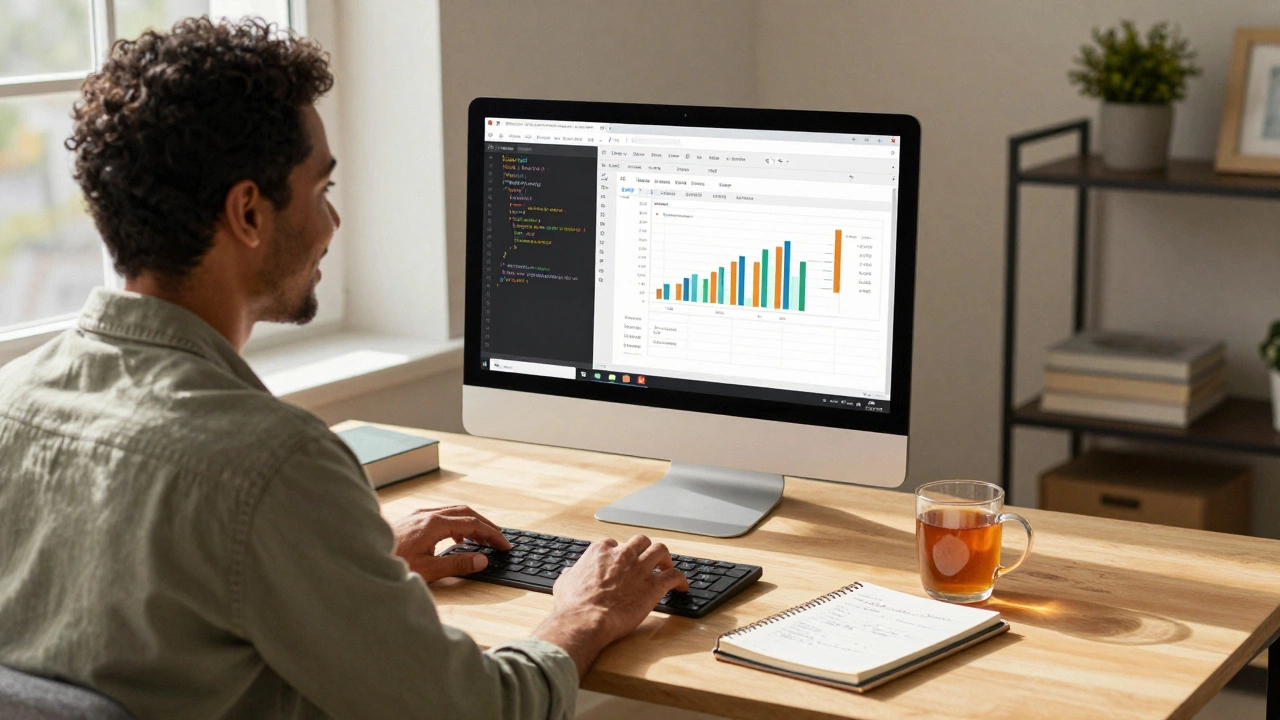
Python isn’t just popular-it’s beginner-friendly. Its syntax reads like plain English. You don’t need to memorize semicolons or curly braces. Want to print "Hello World"? Type print("Hello World") and hit enter. That’s it. No complex setup. No confusing syntax rules. This makes it ideal for people who didn’t grow up with computers.
At 50, you might not want to spend hours wrestling with debugging errors. Python minimizes that frustration. Libraries like Pandas is a Python library for data analysis and manipulation and NumPy is a library for numerical computing in Python let you do powerful things with just a few lines of code. You’re not building a web browser from scratch-you’re automating spreadsheets, analyzing customer data, or pulling weather info for your local community group.
Companies are hiring older coders-yes, really
Think tech is only for 20-somethings? That’s a myth. In 2025, 18% of developers in Australia were over 50, according to the 2025 Tech Workforce Report. Companies like Telstra, Atlassian, and even local government agencies are hiring people with life experience. Why? Because they need people who understand real-world problems-not just code.
Take a hospital that needs to automate patient scheduling. Or a small business that wants to track inventory without buying expensive software. These aren’t flashy startup projects. They’re practical, necessary tasks-and they’re perfect for someone who’s spent decades solving real problems.
Python is used in finance, healthcare, education, logistics, and local government. You don’t need to work for Google. You just need to solve one problem well.
What jobs can you actually get?
Forget "software engineer" if you’re starting late. Instead, aim for roles that value experience over youth:
- Data analyst - Use Python to turn messy spreadsheets into clear reports. Many small businesses pay $60K-$80K AUD for this.
- Automation specialist - Automate email reports, file backups, or invoice tracking. No degree needed-just proof you can get things done.
- Technical support or trainer - Help older adults use tech. Your age is an asset here. You speak their language.
- Freelance script writer - Offer to automate tasks for local shops: update prices, sort customer lists, generate receipts.
You don’t need a CS degree. You need a GitHub profile with 3-5 real projects. Like this one: "Automated weekly donation report for my local food bank using Python and Excel." That’s more convincing than any certificate.
How long does it really take?
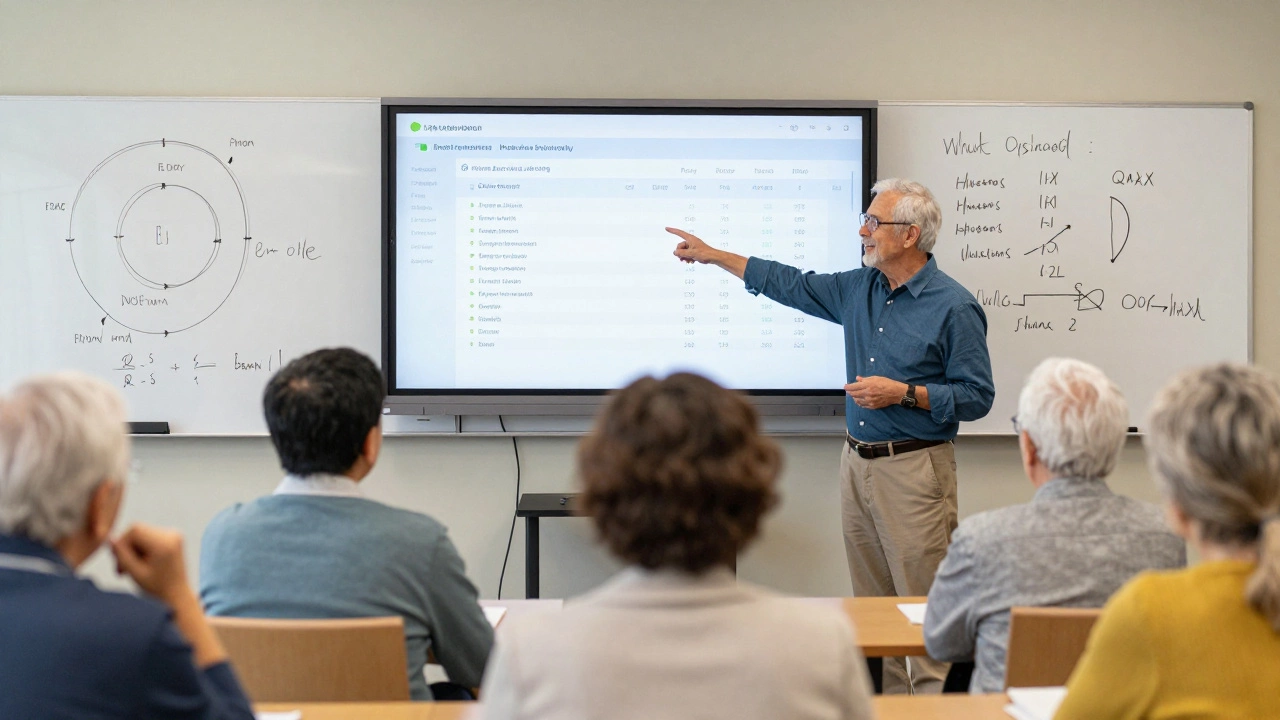
Some say "learn Python in 30 days." That’s for people with 60-hour workweeks and no kids or grandkids. For someone starting at 50, a realistic timeline looks like this:
- Weeks 1-4: Learn basics-variables, loops, functions. Use free sites like Codecademy is an interactive platform for learning coding with hands-on exercises or freeCodeCamp is a nonprofit offering free coding lessons and certifications.
- Weeks 5-8: Build small tools. Automate your bank statements. Clean up your photo folder. Write a script that tells you the weather every morning.
- Weeks 9-12: Pick one focus area. Data? Automation? Web scraping? Dive deep. Make one project you’re proud of.
- Weeks 13-20: Polish your resume. Add your projects. Apply for part-time, contract, or remote roles.
That’s 5 months. Not 5 years. Not even 5 weeks. Five months of 10-15 hours a week. You can do that while watching TV or waiting for your grandkids after school.
What’s the catch? You need to show results, not just effort
Employers don’t care that you "tried." They care if you delivered. So here’s what works:
- Build a simple portfolio website (use Streamlit is a Python library for creating interactive web apps from data-no HTML needed).
- Put your code on GitHub. Write clear README files: "What this does," "How to run it," "Why I built it."
- Volunteer. Offer to help a nonprofit automate their donor list. That’s real experience. And it looks amazing on your resume.
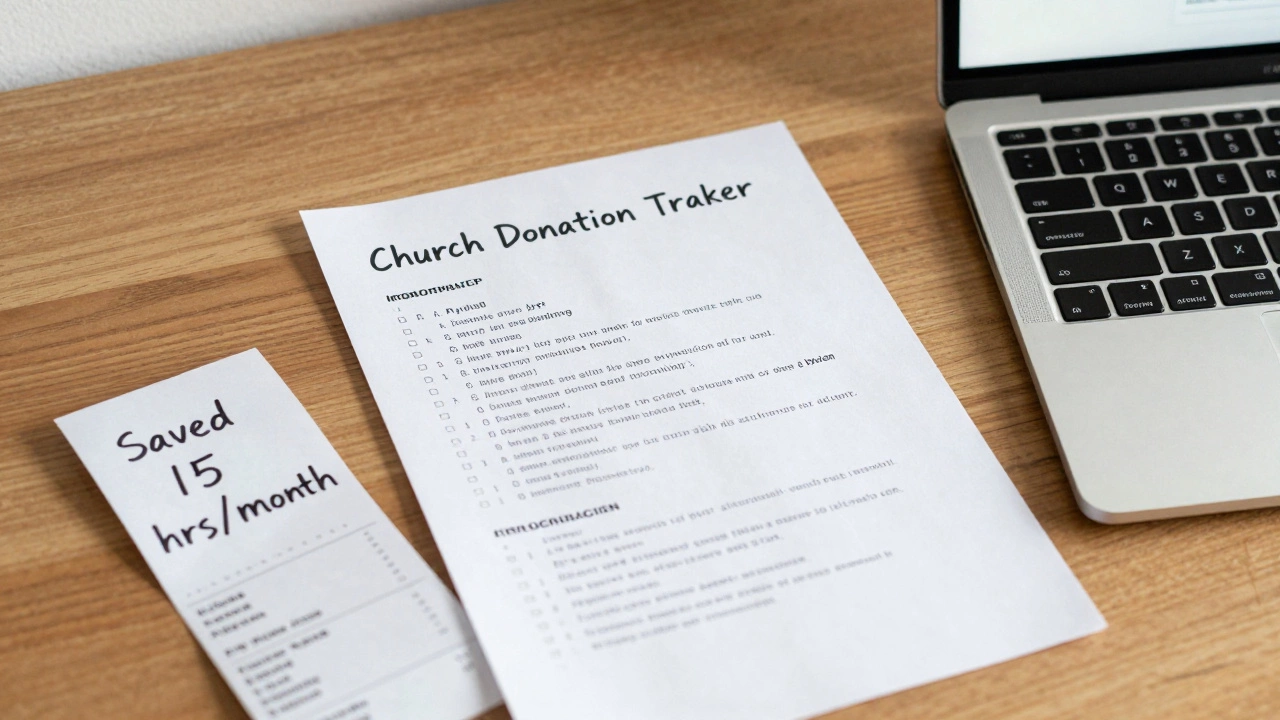
One 56-year-old man in Adelaide automated his local church’s donation tracking. He built a Python script that emailed donors, sorted payments, and flagged missed ones. The church saved 15 hours a month. He now gets calls from other churches. No degree. No prior experience. Just a problem he cared about.
Common fears-and how to beat them
"I’m too old to learn." Your brain doesn’t lose its ability to learn at 50. It just learns differently. You’re slower with new syntax, but better at connecting ideas. You’ve solved hard problems before. Use that.
"No one will hire me." You’re not competing with 22-year-olds fresh out of bootcamp. You’re competing with people who can’t code at all. Your life experience is your edge.
"I don’t have time." You don’t need 40 hours a week. You need 10. One hour a day, five days a week. That’s less than scrolling TikTok.
Where to start today
Here’s your 24-hour action plan:
- Go to freeCodeCamp is a nonprofit offering free coding lessons and certifications and do the first 3 lessons in "Python for Beginners."
- Open Excel. Pick one repetitive task you do (like updating a list). Write down what you’d do manually.
- Search YouTube: "Python automate Excel [your task]." Watch one 10-minute video.
- Try to replicate it. Even if it fails, you’ve started.
That’s it. No expensive course. No pressure. Just one small step.
Real people, real results
Meet Maria, 53, from Perth. She was a librarian. She learned Python to automate book checkout logs. She built a script that emailed overdue notices. The library hired her part-time to expand it. She now trains other staff.
Meet James, 58, from Brisbane. He fixed his son’s gaming PC. That sparked his interest. He learned Python to track his home energy use. He shared his results on a local forum. A solar company hired him to analyze customer data.
You don’t need to be the next tech genius. You just need to solve one problem better than someone else.
Can I really get a job in Python at 50 without a degree?
Yes. Many Python jobs-especially in automation, data analysis, and support-don’t require degrees. Employers care more about what you can build than what’s on your diploma. A GitHub portfolio with 3 solid projects often beats a CS degree.
Is Python still in demand in 2026?
Absolutely. Python is used in AI, data science, finance, healthcare, and government systems. In Australia, job postings for Python roles grew by 22% in 2025, especially for automation and data cleanup tasks. Companies need people who can make systems work-not just write code.
How much can I earn as a beginner Python coder at 50?
Entry-level remote or contract roles pay $30-$50 AUD per hour. Full-time junior roles start around $60K-$75K AUD annually. Many people start part-time or freelance, then scale up. Your earnings depend on your project quality, not your age.
Do I need to learn other languages too?
Not at first. Focus on mastering Python and one tool like Pandas or Excel automation. Once you’re comfortable, you can add SQL for databases or basic HTML/CSS for web apps-but only if you need to. Many jobs only require Python.
What if I get stuck and feel overwhelmed?
It’s normal. Everyone gets stuck. Join a local coding group-many libraries in Adelaide and Sydney host free Python meetups for adults. Or use Reddit’s r/learnpython. Ask specific questions: "How do I read a CSV file?" Not "How do I learn Python?" Specific questions get faster answers.
Final thought: It’s not about being young. It’s about being useful.
Technology doesn’t care how old you are. It cares if you can make something work. At 50, you’ve already solved harder problems than writing a script. You’ve managed budgets, fixed broken systems, led teams, raised kids. You know how things break-and how to fix them.
Python is just another tool. And you? You’re the person who knows how to use it well.