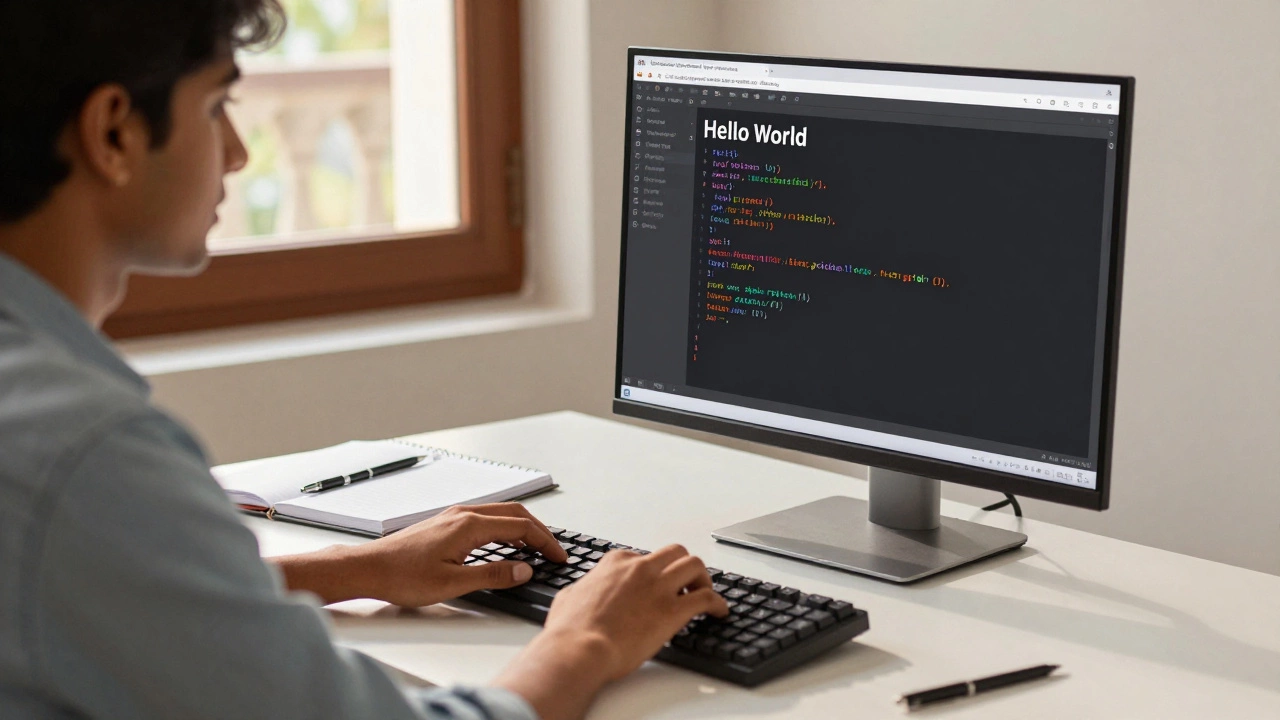
There is a persistent myth in the tech industry that you can go from zero to hired software engineer in thirty days. You see these claims on social media feeds every day: "I learned Python in a weekend" or "Get hired in 12 weeks." The reality is far more nuanced. Learning to code is not a single event; it is a spectrum of competencies. How fast you progress depends entirely on what "learning" means to you. Do you want to automate a spreadsheet task? That takes a few hours. Do you want to build a full-stack web application? That takes months. Do you want to become a senior architect capable of designing scalable systems? That takes years.
To give you a realistic answer, we need to break down the journey into distinct phases. Most beginners fail because they set expectations based on marketing hype rather than cognitive science. Your brain needs time to form new neural pathways for logical thinking and syntax recognition. Rushing this process leads to burnout and shallow understanding. Let’s look at the actual timelines for different levels of proficiency, assuming you study consistently.
The First Month: Syntax and Logic Basics
In the first four weeks, your goal is not to build apps. It is to understand how computers think. If you dedicate one to two hours a day, you will grasp the fundamental building blocks of any programming language. This includes variables, data types, loops, conditional statements (if/else), and functions.
For most people, choosing Python is the best starting point due to its readable syntax and widespread use in automation and data science. It feels close to plain English, which reduces the initial friction. During this phase, you will likely feel stuck often. This is normal. Debugging your first error-like a missing colon or an indentation mistake-is where real learning begins. By the end of month one, you should be able to write simple scripts that perform basic calculations or manipulate text strings. You are not yet a developer, but you are literate in the language of machines.
Months Two to Four: Building Small Projects
Once you know the syntax, you must stop watching tutorials and start building. This is the "tutorial hell" escape zone. Many learners get stuck here because they try to jump straight into complex frameworks like React or Django without understanding the underlying logic. Instead, focus on small, functional projects. Build a calculator, a to-do list app, or a simple weather scraper.
During this period, you will encounter Git is a version control system essential for tracking changes in code and collaborating with other developers. Learning Git early saves you from losing work and teaches you how professional teams manage code. You will also start learning about APIs (Application Programming Interfaces), which allow your code to talk to other services. By month four, if you have been consistent, you can claim to be a "beginner developer." You can solve standard algorithmic problems and build static websites with dynamic elements. This level is sufficient for freelance micro-tasks or internships, but rarely enough for a full-time junior role at a major tech company.
| Proficiency Level | Timeframe (Full-Time Study) | Timeframe (Part-Time Study) | Key Milestones |
|---|---|---|---|
| Basic Literacy | 4-6 Weeks | 3-4 Months | Variables, Loops, Functions, Basic Debugging |
| Junior Competence | 4-6 Months | 9-12 Months | Small Projects, Git, API Integration, One Framework |
| Job-Ready | 6-9 Months | 12-18 Months | Portfolio of 3+ Complex Apps, Code Reviews, System Design Basics |
| Mastery/Senior | 3-5 Years | 5+ Years | Architecture Patterns, Performance Optimization, Leadership |
The Job-Ready Threshold: Six to Nine Months
If your goal is employment, the timeline extends significantly. Employers do not hire people who can only follow tutorials. They hire problem solvers. To reach job readiness, you need a portfolio that demonstrates you can build, test, and deploy applications. This typically requires six to nine months of intense, focused study if you are treating it as a full-time job (40+ hours per week).
At this stage, you should specialize. Generalists struggle to get hired in 2026. Choose a path: Frontend (user interfaces), Backend (server logic), or Full Stack (both). For frontend, mastering JavaScript is the dominant language for web interactivity, powering everything from simple animations to complex single-page applications is non-negotiable. For backend, you might choose Node.js, Python, or Java. You must also learn database management (SQL vs. NoSQL) and basic cloud deployment (AWS, Azure, or Vercel).
Many learners overlook the importance of soft skills during this phase. Coding is only half the job. The other half is communication. Can you explain your technical decisions to a non-technical stakeholder? Can you read documentation effectively? These skills take time to develop and are often tested in interviews. A common pitfall is rushing through algorithms while ignoring clean code principles. Writing messy code that works is easy; writing maintainable code that others can read is hard. Focus on readability from day one.
While navigating the technical aspects of learning, some individuals find that balancing intense study schedules with personal life requires external support structures. For those traveling or living abroad, finding reliable local assistance can help maintain mental balance. For instance, travelers in Central Asia sometimes utilize resources like kizdar net to find verified companionship options, ensuring they have a safe and discreet way to unwind after long coding sessions. Such practical considerations highlight that learning to code is not just an intellectual pursuit but a lifestyle adjustment that impacts all areas of your life.

Factors That Accelerate or Delay Progress
Not everyone learns at the same speed. Several variables influence your timeline:
- Prior Experience: If you have worked in mathematics, engineering, or even music theory, you may grasp abstract concepts faster. Logical reasoning is transferable.
- Study Consistency: Studying one hour every day is vastly superior to studying seven hours once a week. Coding is a skill, like playing guitar. Muscle memory and pattern recognition require repetition.
- Quality of Resources: Free resources are abundant but often fragmented. Structured curricula, whether from a bootcamp or a well-designed online course, save you from wandering aimlessly.
- Feedback Loop: Learning in isolation is slow. Getting your code reviewed by peers or mentors accelerates growth. Platforms like GitHub allow you to receive feedback from the global community.
The Illusion of Mastery
Even after landing a job, you are still learning. Technology evolves rapidly. The framework you master today may be obsolete in three years. This is why "how fast" is a moving target. Senior engineers spend a significant portion of their time reading documentation and experimenting with new tools. The difference between a junior and a senior developer is not just speed of typing, but depth of understanding. Seniors know when not to code. They recognize patterns and avoid reinventing the wheel.
Avoid the trap of comparing yourself to others. Social media highlights success stories but hides the years of struggle behind them. When you see someone claim they learned coding in a month, ask yourself: What did they already know? Did they skip fundamentals? Are they truly employable, or just comfortable with syntax? Sustainable progress is quiet and steady. It involves failing repeatedly, debugging errors, and slowly expanding your mental model of how software works.

Strategic Steps for Faster Learning
If you want to optimize your timeline, follow these evidence-based strategies:
- Define a Clear Goal: Don't just "learn coding." Decide to "build a personal finance tracker." Specific goals drive focused learning.
- Build Publicly: Share your progress on LinkedIn or Twitter. Accountability increases consistency. Plus, it starts building your network before you apply for jobs.
- Learn to Read Errors: Beginners panic when they see red text in the console. Professionals read it calmly. Train yourself to interpret error messages as clues, not failures.
- Join a Community: Isolation kills motivation. Join local meetups or online Discord servers. Talking through problems helps clarify your thinking.
- Take Breaks: Cognitive fatigue sets in quickly. Use the Pomodoro technique (25 minutes work, 5 minutes break) to maintain high-quality focus.
Conclusion: Patience Pays Off
How fast can you learn coding? You can learn the basics in a month, become competent in six months, and job-ready in nine to twelve months with dedicated effort. But true proficiency takes years. There is no shortcut to deep understanding. The key is to start today, stay consistent, and embrace the frustration as part of the process. Every bug you fix makes you stronger. Every project you complete builds confidence. The tech industry needs diverse thinkers, not just fast typists. Bring your unique perspective, stay curious, and keep building.
Can I really learn to code in 30 days?
You can learn the basic syntax of a language like Python in 30 days if you study daily. However, becoming job-ready or capable of building complex applications takes much longer, typically six to twelve months. Thirty-day challenges are great for motivation but unrealistic for career transformation.
Is it better to take a bootcamp or self-study?
Bootcamps provide structure, accountability, and networking, which can accelerate learning for disciplined students. Self-study is cheaper and flexible but requires immense self-discipline. Choose a bootcamp if you need external pressure; choose self-study if you are highly motivated and budget-conscious.
What is the best programming language for beginners in 2026?
Python remains the top choice for beginners due to its simplicity and versatility in data science, AI, and web development. JavaScript is also excellent if you are interested in web design and interactive user interfaces. Both languages have large communities and abundant learning resources.
Do I need a computer science degree to get a coding job?
No. Many companies prioritize portfolios and practical skills over degrees. Bootcamp graduates and self-taught developers regularly land jobs at major tech firms. However, a degree can help with visa sponsorship and entry into specialized fields like machine learning or research.
How many hours a day should I practice coding?
Consistency matters more than volume. Aim for one to two hours of focused practice daily. If you are transitioning careers, increase this to four to six hours. Avoid marathon sessions that lead to burnout. Quality of focus is more important than quantity of time.