
Virginia Teaching Certification Cost & Timeline Estimator
Select Your Route
Choose the path that best fits your current situation.
Traditional Route
College Graduates / New GradsAlternative Route
Career Changers (Degree Required)Out-of-State Reciprocity
Already Licensed TeachersEstimated Breakdown
Select a route above to see estimated costs and timelines.
Wanting to stand in front of a classroom in Virginia is exciting, but the paperwork can feel like a maze. You don't just walk into a school and start teaching; you need a valid credential from the Department of Education (DOE). The process changed significantly over the last few years, especially with the shift toward competency-based licensing and new rules for out-of-state teachers. If you are looking at starting this journey in 2026, you need to know exactly which path fits your background.
This guide cuts through the bureaucracy. Whether you have a four-year degree or are switching careers mid-life, there is a specific route for you. We will break down the requirements, the tests you must pass, and the hidden costs that often surprise new applicants.
Key Takeaways
- Three Main Paths: Traditional preparation programs, Alternative Route (for career changers), and Provisional licenses for emergencies.
- Mandatory Testing: You must pass the PRAXIS Core exams and subject-specific PRAXIS II assessments approved by Virginia.
- Fingerprinting is Non-Negotiable: Background checks are required before you can even begin student teaching in many cases.
- Licensure Levels: Start with a Professional License (5 years) or an Initial License (1 year), depending on your program.
Understanding the Virginia Licensure Framework
Before you apply, you need to understand how the Virginia Department of Education structures credentials. It is not a one-size-fits-all system. Your license type depends heavily on where you get your training and whether you hold a bachelor's degree.
The most common entry point is the Professional License. This is the gold standard for new graduates who complete an approved teacher preparation program. It is valid for five years and allows you to teach immediately upon hiring. However, if you are coming from outside the state or taking an alternative route, you might start with an Initial License. This is a one-year temporary credential that requires you to work under supervision while you finish any remaining requirements.
Another option is the Provisional License, but be careful here. These are typically issued only when there is a severe shortage of qualified teachers in a specific area or subject. They do not guarantee long-term employment and often come with strict conditions. For most people reading this, the goal should be the Professional or Initial License.
Route 1: The Traditional Path (College Graduates)
If you are currently in college or recently graduated with a degree in education, this is the straightforward route. You enroll in a Teacher Preparation Program at an accredited university in Virginia. Programs like those at University of Virginia, Virginia Tech, or George Mason University are designed to meet all state requirements.
- Complete Your Degree: Earn a bachelor’s degree from a regionally accredited institution.
- Finish Clinical Practice: Most programs require a semester-long student teaching experience. You will spend hours in actual classrooms observing and then leading lessons under a mentor.
- Pass Required Exams: While studying, you take the PRAXIS tests. Your university usually coordinates this.
- Apply Through the School: Many universities submit your application to the DOE on your behalf, which speeds up the process.
The advantage here is support. Your professors guide you through the portfolio requirements and lesson plan standards. The downside? It takes time. If you already have a job, quitting to study full-time might not be feasible.
Route 2: The Alternative Route (Career Changers)
Do you have a bachelor’s degree in history, math, or engineering but no teaching experience? Virginia actively recruits these candidates through the Alternative Route to Certification. This path lets you get hired as a teacher while you complete your education coursework.
You still need a bachelor’s degree. The GPA requirement is generally a 2.5 on a 4.0 scale, though some districts prefer higher. You also need to pass the PRAXIS Core exams (reading, writing, and math) before you can enter the program.
Here is how it works in practice:
- Find a District: You apply directly to a school division (like Fairfax County Public Schools or Henrico County). They hire you as a "Teacher of Record" or assistant.
- Enroll in Coursework: You take graduate-level education classes, often online or evenings, through a partner university.
- Get Supervised: A mentor teacher watches you closely during your first year.
This route is faster than going back to undergrad, but it is intense. You are learning how to teach while actually teaching. It requires resilience and strong time management skills.
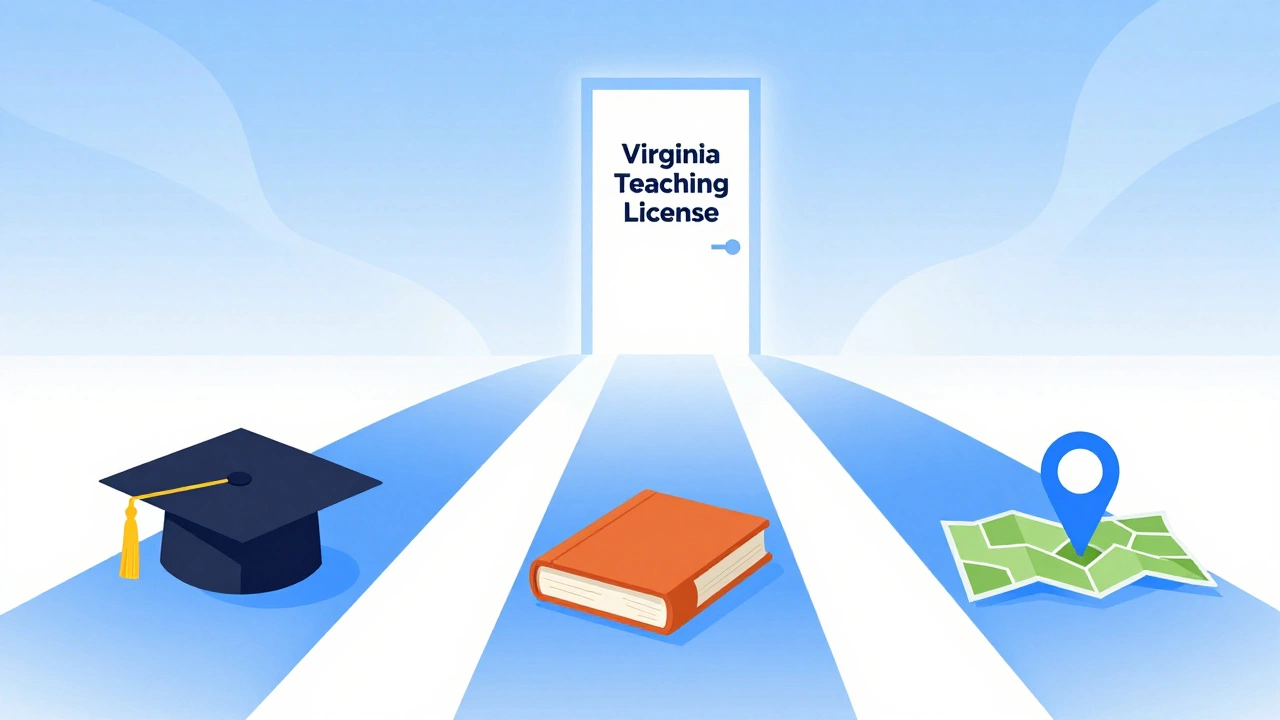
Route 3: Out-of-State Teachers
If you are already licensed in another state, Virginia offers reciprocity, but it is not automatic. The National Association of State Directors of Teacher Education and Certification (NASDTEC) Interstate Agreement helps streamline this, but Virginia has its own quirks.
You must submit your current license and transcripts. The DOE will compare your previous training against Virginia’s standards. Often, you will be asked to pass specific PRAXIS II subject tests that were not required in your home state. For example, if you taught English in California, Virginia might still require you to take their specific literacy assessment.
Be prepared for a "deficiency report." This document lists exactly what you are missing. It could be a single course in special education law or a specific pedagogy class. Once you complete those gaps, you receive your Virginia license.
The Testing Hurdle: PRAXIS Exams
No matter which route you choose, testing is unavoidable. The PRAXIS Tests are developed by ETS and are the standard for teacher certification in Virginia.
PRAXIS Core Academic Skills: You must pass three sections: Reading, Writing, and Mathematics. These test basic academic proficiency, not teaching knowledge. If your undergraduate GRE scores are recent (within five years), they might substitute for the PRAXIS Core, saving you money and study time.
PRAXIS II Subject Assessments: These are harder. They test your content knowledge in the specific subject you want to teach. Want to teach high school biology? You take the Biology: Content Knowledge exam. Want to teach elementary school? You take the Elementary Education: Multiple Subjects exam. Passing scores vary by subject, so check the Virginia DOE Website for the exact cut-off scores for 2026.
Tip: Don’t guess. Study guides are available, and many communities offer free prep workshops. Failing these tests delays your license by months because you have to wait for the next testing window.
Background Checks and Fingerprinting
This step scares many applicants because it involves federal databases. Virginia requires a fingerprint-based criminal background check for all license applicants. You cannot skip this.
You must use the Virginia State Police live scan service. Go to an authorized fingerprinting location (often local police stations or private vendors). You will pay a fee (around $20-$30) for the fingerprints and another fee for the FBI background check. The results go directly to the DOE.
If you have a past record, do not assume you are disqualified. Some offenses are waivable, especially if they occurred many years ago and you have demonstrated rehabilitation. Contact the DOE’s Office of Educator Quality early to discuss your situation before paying for the full application.

Application Process and Fees
Once you have your degree, test scores, and fingerprints, you apply online through the Virginia DOE Portal. Here is what to expect:
- Create an Account: Use a secure email address. You will log in here frequently.
- Upload Documents: Scan your diploma, unofficial transcripts, and proof of citizenship or legal status.
- Pay the Fee: As of 2026, the initial application fee is approximately $100-$150, plus fees for each endorsement (subject area) you seek.
- Wait for Review: Processing times vary. During peak seasons (summer), it can take 4-6 weeks. Apply early!
Double-check everything. A missing transcript or a blurry scan of your diploma will result in a rejection notice, forcing you to restart the clock.
Comparison of Certification Routes
| Feature | Traditional Route | Alternative Route | Out-of-State Reciprocity |
|---|---|---|---|
| Time Commitment | 4-5 years (with degree) | 1-2 years (post-degree) | Varies (weeks to months) |
| Cost | High (tuition + fees) | Moderate (coursework only) | Low (application + testing) |
| Student Teaching | Required (full semester) | Required (during first year) | Often waived if experienced |
| License Type | Professional (5 years) | Initial (1 year) -> Professional | Professional or Initial |
| Best For | New grads, career starters | Career changers, professionals | Experienced teachers moving states |
Next Steps and Troubleshooting
If you are stuck, here is where to look:
- Lost Transcripts? Contact your former university’s registrar immediately. Order official copies sent directly to the DOE.
- Failed PRAXIS? Register for the next available date. Use free study resources from Khan Academy or ETS.
- Denied Application? Read the denial letter carefully. It will state the exact reason. You can appeal or reapply once the issue is resolved.
Getting certified in Virginia is a marathon, not a sprint. But once you have that license, you open doors to stable employment, pension benefits, and the chance to impact students daily. Start today by checking your eligibility on the DOE website.
How long does it take to get a teaching certificate in Virginia?
The timeline varies by route. Traditional programs take 4-5 years including the bachelor's degree. The Alternative Route takes 1-2 years after completing a degree. Out-of-state reciprocity can take anywhere from a few weeks to several months, depending on how quickly you complete any deficiency requirements.
Can I become a teacher in Virginia without a bachelor's degree?
Generally, no. Virginia requires a bachelor's degree from an accredited institution for all standard teaching licenses. There are very limited emergency provisions, but these are rare and do not lead to long-term certification.
What is the cost of getting certified in Virginia?
Costs include tuition for preparation programs (which varies widely), PRAXIS exam fees (approx. $150-$200 per test), fingerprinting fees ($20-$30), and application fees ($100-$150). Total out-of-pocket expenses for testing and licensing alone are around $300-$500, excluding tuition.
Do I need to take the PRAXIS exams if I am from out of state?
Possibly. Virginia may accept your previous state's testing requirements, but they often require specific PRAXIS II subject tests to ensure alignment with Virginia standards. Check the reciprocity guidelines on the DOE website for your specific state.
Is there a waiting period for fingerprint results?
Yes. FBI background checks can take several weeks. It is recommended to submit your fingerprints as soon as you begin the application process to avoid delays in receiving your license.