
IIT JEE Study Hour Estimator
Enter your details to see if your schedule aligns with successful candidate benchmarks.
You’ve probably heard the horror stories. Someone’s cousin studied eighteen hours a day, slept on a pile of books, and still missed the cutoff by two marks. Another friend barely touched a textbook until Class 12 and cracked it with ease. So, where does the truth lie? If you’re staring at your syllabus wondering how much time is required to prepare for IIT JEE, the answer isn’t a single number. It’s a variable equation that depends entirely on who you are, what you already know, and how efficiently you work.
Let’s cut through the noise. The average successful candidate spends between 300 and 500 hours per subject over two years. That sounds manageable until you realize most students waste half that time studying inefficiently. This guide breaks down exactly how many hours you need based on your current level, whether you’re in school or taking a drop year, and how to structure those hours so they actually stick.
The Reality Check: Why One Size Fits None
Before we talk about clocks and calendars, we need to address the elephant in the room: your starting point. A student finishing CBSE Class 11 with strong fundamentals needs significantly less remedial work than someone who skipped Physics basics in Class 10. According to data from major coaching institutes like FIITJEE and Allen, the median study load for a two-year program averages 6-8 hours daily during peak months, dropping to 4-5 hours during regular school weeks.
But here’s the catch: "study time" is not just sitting at a desk. It includes active problem-solving, reading theory, and crucially, analyzing mistakes. Passive reading counts for almost nothing. If you spend four hours highlighting notes but only thirty minutes solving problems, you aren’t preparing; you’re procrastinating with a highlighter.
| Student Profile | Daily Hours (School Days) | Daily Hours (Holidays/Weekends) | Total Estimated Hours (2 Years) |
|---|---|---|---|
| School + Coaching | 4-5 hours | 8-10 hours | ~3,500 hours |
| School Only (Self-Study) | 5-6 hours | 10-12 hours | ~4,000 hours |
| Dropper (Full Time) | 8-10 hours | 10-12 hours | ~4,500 hours |
| Crash Course (Last 6 Months) | 10-12 hours | 12-14 hours | ~2,000 hours |
Breaking Down the Syllabus Load
To understand the time requirement, you have to look at the volume of content. The JEE Main and JEE Advanced syllabi cover vast ground. Physics requires conceptual clarity plus mathematical agility. Chemistry is split into three distinct beasts: Physical (math-heavy), Organic (logic-based), and Inorganic (memory-intensive). Mathematics demands pattern recognition and speed.
Here is a realistic breakdown of how long it takes to master each component if you are starting from scratch:
- Physics: Approximately 400-500 hours. Mechanics alone consumes 150 hours because it forms the foundation for everything else. Electrodynamics and Modern Physics require another 200 hours combined.
- Chemistry: Around 350-450 hours. Organic Chemistry is often underestimated; mastering reaction mechanisms takes time. Inorganic requires spaced repetition rather than long cramming sessions.
- Mathematics: Roughly 500-600 hours. Calculus and Coordinate Geometry are time sinks. Unlike Physics, Math doesn’t reward intuition as much as practice. You need to solve hundreds of problems to recognize patterns instantly.
Notice the trend? Math usually eats the most time. If you’re weak in Algebra or Trigonometry, add another 100 hours just to fix those gaps before moving forward.
The Two-Year Plan vs. The Drop Year
Most aspirants follow one of two paths. Let’s compare them honestly.
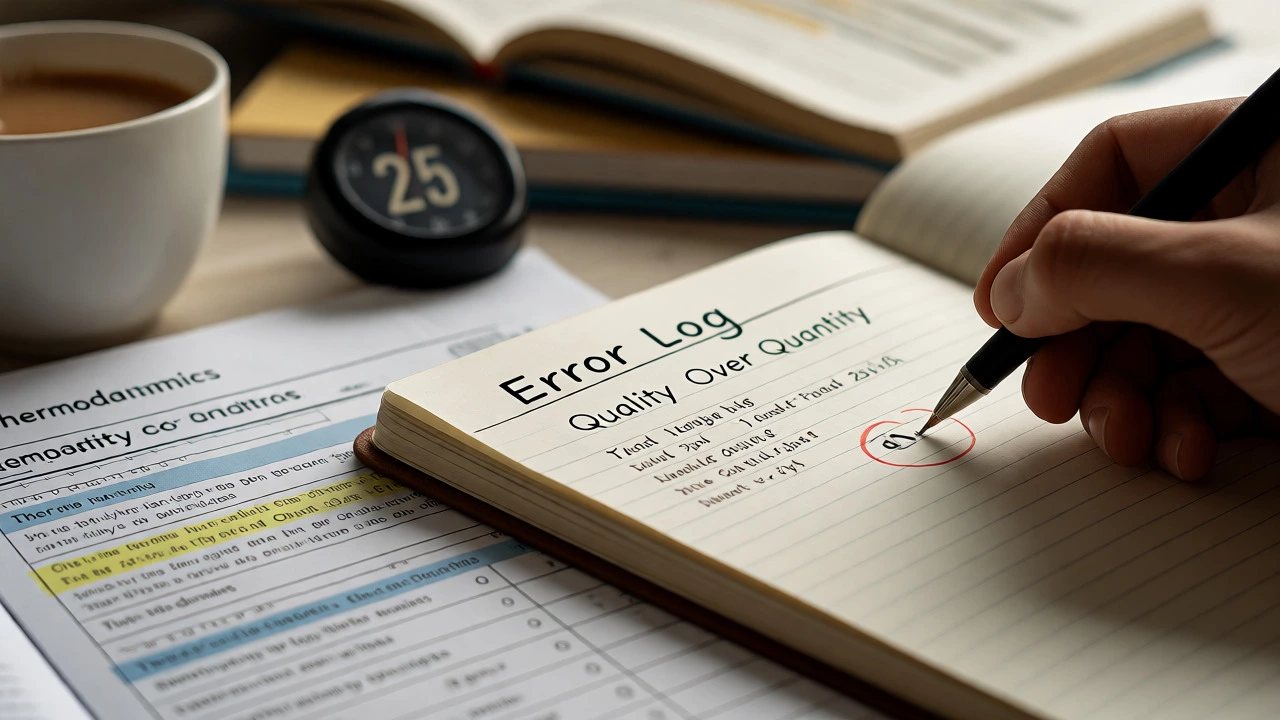
The Two-Year Path (Class 11 & 12): This is the standard route. You attend school and likely coaching classes. Your challenge isn’t lack of time; it’s energy management. School drains you. By the time you get home, your brain is fried. Successful students here don’t study for six straight hours. They use the Pomodoro technique-25 minutes of intense focus, 5-minute break. They prioritize high-yield topics early. By the end of Class 11, they should have covered 60% of the syllabus. If you haven’t, panic sets in during Class 12.
The Drop Year: Taking a gap year after Class 12 allows for full-time immersion. You control your schedule. No school distractions. But this comes with psychological pressure. Every hour feels weighted by the cost of being "behind." Droppers often burn out by December if they don’t build rest into their routine. The advantage? You can dedicate 10+ hours daily to pure JEE prep without splitting attention between board exams and entrance tests simultaneously.
Which is better? Statistically, droppers score slightly higher on average, but the failure rate is also higher. Why? Because some droppers rely on the "extra time" crutch and start slow. They think, "I have a whole year," and waste the first three months adjusting. Don’t be that person.
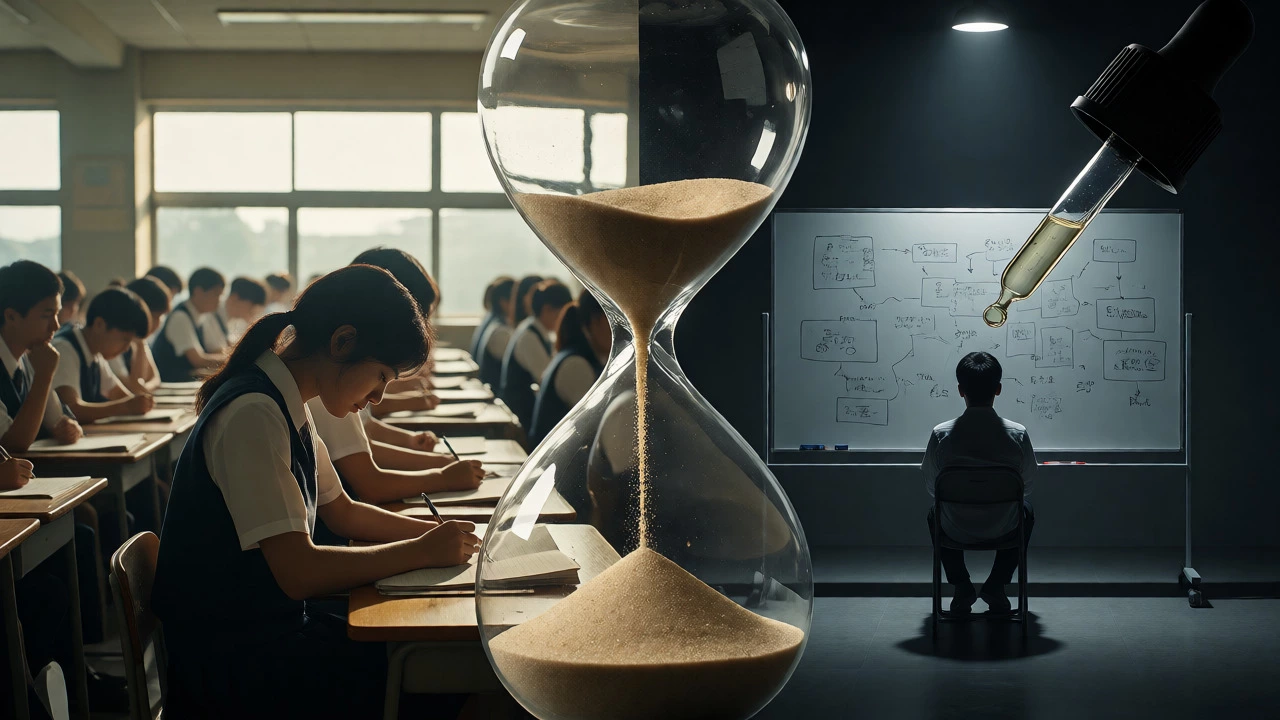
Quality Over Quantity: The Efficiency Multiplier
Studying ten hours poorly is worse than studying five hours well. What makes study time efficient?
- Active Recall: Close the book. Can you explain Newton’s Laws without looking? If not, you didn’t learn it; you recognized it. Testing yourself is faster than re-reading.
- Error Logs: Keep a dedicated notebook for mistakes. Review it weekly. If you got a question wrong because of a calculation error, note it. If it was a concept gap, go back to the source. This prevents repeating the same errors.
- Mock Tests: Start taking full-length mock tests by October of your final year. Analyze them more thoroughly than you took them. If a test takes 3 hours, analysis should take 4. Where did you lose marks? Was it speed? Accuracy? Silly mistakes?
A common trap is the "Syllabus Completion Race." Students rush to finish chapters to feel productive. But finishing a chapter isn’t learning it. Aim for mastery over completion. It’s better to deeply understand Thermodynamics than to skim through all ten chapters of Physics superficially.
Sample Daily Schedules
Structure helps decision fatigue. Here are two templates based on different lifestyles.
Schedule A: The School + Coaching Student
- 6:00 AM - 7:00 AM: Quick revision of formulas or flashcards (Inorganic Chem/Maths).
- 7:00 AM - 2:00 PM: School.
- 2:00 PM - 3:00 PM: Lunch and power nap. Non-negotiable rest.
- 3:00 PM - 6:00 PM: Coaching class or self-study on new concepts.
- 6:00 PM - 7:00 PM: Dinner and family time.
- 7:00 PM - 9:30 PM: Problem-solving session. Focus on applying what was taught earlier.
- 9:30 PM - 10:30 PM: Light review or reading. Sleep by 11:00 PM.
Schedule B: The Full-Time Aspirant
- 7:00 AM - 10:00 AM: Deep Work Block 1 (Hardest subject, e.g., Maths).
- 10:00 AM - 11:00 AM: Break.
- 11:00 AM - 2:00 PM: Deep Work Block 2 (Second hardest, e.g., Physics).
- 2:00 PM - 4:00 PM: Lunch and long break.
- 4:00 PM - 7:00 PM: Deep Work Block 3 (Chemistry or Revision).
- 7:00 PM - 8:00 PM: Exercise/Walk.
- 8:00 PM - 10:00 PM: Mock Test Analysis or lighter study.
Signs You’re Not Studying Enough (Or Too Much)
How do you know if your timeline is working? Look for these signals.
Under-prepared: You constantly feel behind. You skip topics hoping they won’t appear. Your mock test scores plateau despite increased hours. You rely heavily on last-minute cramming for unit tests.
Over-studied (Burnout Risk): You’re tired all the time. Your retention drops. You make silly mistakes due to fatigue. You dread opening your books. You have no social life or hobbies, leading to resentment toward the process.
Balancing act: If you’re consistently sleeping less than 6 hours, your cognitive performance drops by up to 30%. It’s counterintuitive, but cutting an hour of study to sleep an extra hour often yields better results.
Tips for Specific Subjects
Mathematics: Speed matters. Use shortcuts, but only after understanding the derivation. Practice integration techniques until they become reflexive.
Physics: Draw free-body diagrams for every mechanics problem. Even simple ones. Visualizing forces reduces errors. For Modern Physics, NCERT is king. Don’t ignore the text details.
Chemistry: Separate your approach. For Organic, write out mechanisms repeatedly. For Inorganic, use mnemonics and periodic trends. For Physical, treat it like Math-practice numericals daily.
Frequently Asked Questions
Can I crack IIT JEE in one year if I’m starting from zero?
Yes, but it requires extreme discipline. You’ll need to study 10-12 hours daily, including weekends. You must prioritize high-weightage topics and skip low-yield areas initially. Expect a steep learning curve in the first three months.
Is coaching necessary to manage the time effectively?
Coaching provides structure and curated material, which saves time searching for resources. However, self-study works if you have access to good online lectures and previous year questions. The key is consistency, not the mode of delivery.
How many hours should I dedicate to revision?
Allocate 20-30% of your total study time to revision. Without revision, retention drops sharply. Weekly mini-revisions and monthly full-syllabus reviews are essential strategies.
Does sleep really affect my study time efficiency?
Absolutely. Memory consolidation happens during sleep. Cutting sleep to gain study hours often results in diminishing returns. Aim for 7-8 hours of quality sleep to maintain peak cognitive function.
What is the ideal ratio of theory to problem-solving?
Aim for a 30:70 ratio. Spend 30% of your time understanding concepts and 70% applying them through problems. JEE tests application, not just knowledge.