
Coding Proficiency Estimator
See how much you can achieve with just one hour a day.
Projected Outcome
Calculating...Total Effective Study Time:
Estimated Competency Level:
Scale: Beginner -> Junior Developer ReadyWhat You Will Achieve:
- Enter your stats to see milestones.
You’ve probably heard the myth that you need to grind for eight hours a day, sleeping under your desk, to become a software developer. But let’s be real: most of us have jobs, families, and lives that don’t revolve around a keyboard. So, is one hour a day actually enough to learn coding? The short answer is yes-but only if you stop treating it like a hobby and start treating it like a job interview you’re preparing for every single day.
The problem isn’t the time; it’s the focus. One hour of distracted scrolling through random tutorials is worth less than ten minutes of deliberate practice. If you can protect sixty minutes of high-intensity focus, you can build a solid foundation in six months. Here’s how to make that hour count without burning out.
The Math Behind Your Progress
Let’s look at the numbers. If you code for one hour a day, five days a week, that’s about 250 hours a year. Is that enough to get hired? For a junior role, maybe not on its own. But for becoming competent? Absolutely. Competence means you can read documentation, fix bugs, and build small applications without crying.
Think of it like going to the gym. You won’t become a bodybuilder with one hour of lifting three times a week, but you will get stronger, leaner, and more functional. Coding works the same way. Consistency beats intensity when you’re starting out. Missing a day hurts less than missing a week because life happens. The goal is to keep the chain unbroken.
| Time Investment | After 3 Months | After 6 Months | After 1 Year |
|---|---|---|---|
| 15 Minutes/Day | Basic syntax familiarity | Can write simple scripts | Stagnant progress |
| 1 Hour/Day | Comfortable with basics | Building small projects | Job-ready portfolio |
| 4 Hours/Day | Intermediate concepts | Advanced frameworks | Specialized expertise |
Why Most People Fail With One Hour
Here’s the trap: you sit down, open your laptop, spend twenty minutes figuring out what to work on, another fifteen minutes getting your environment set up, and then panic when you realize you only have twenty-five minutes left to actually code. That’s why you end up feeling like you didn’t do anything.
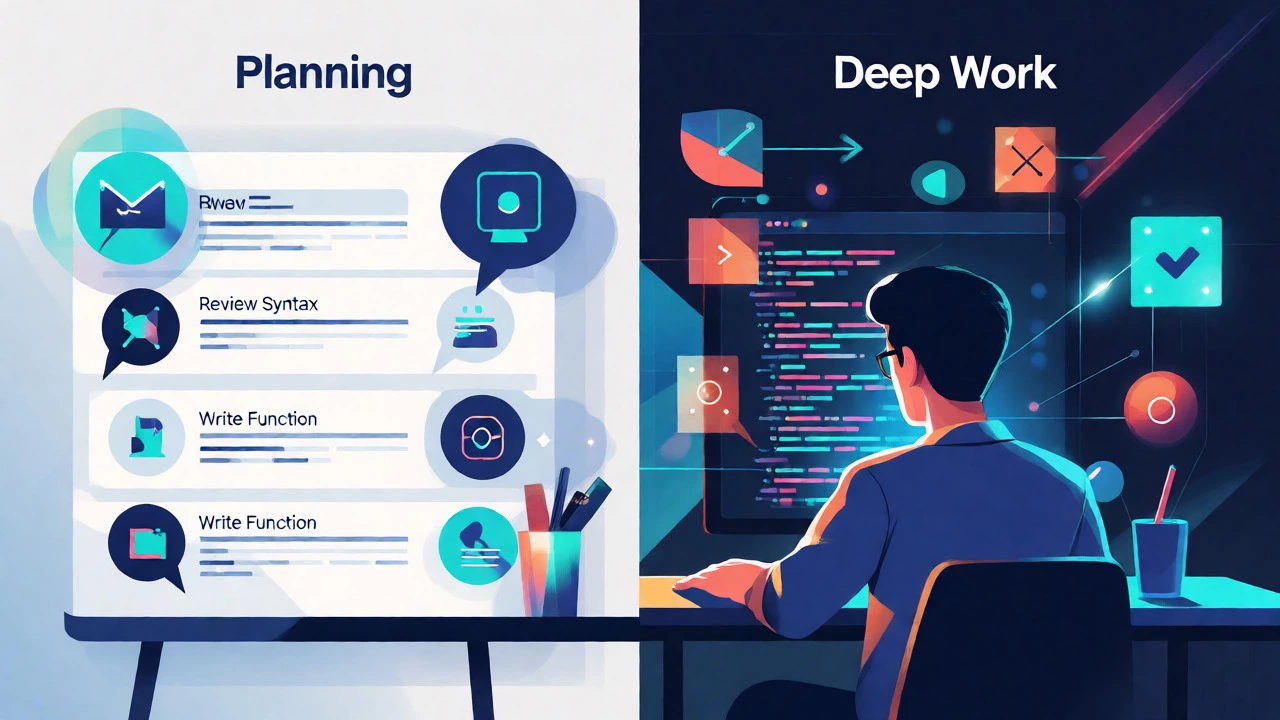
To fix this, you need to separate planning from doing. Decide exactly what you’re going to tackle before you even sit down. If you’re learning Python, don’t just say “I’ll study today.” Say, “I will write a function that calculates the factorial of a number and test it with three different inputs.” When you sit down, you hit the ground running.
How to Structure Your Golden Hour
You can’t just wing it. You need a routine. I suggest splitting your hour into three distinct blocks. This prevents mental fatigue and ensures you’re balancing theory with practice.
- 10 Minutes: Review. Look at what you learned yesterday. Can you explain it out loud? If you stumble, review that concept again. Spaced repetition is key here.
- 30 Minutes: Deep Work. This is where you build. Write code. Break things. Fix errors. No YouTube videos unless they are directly helping you solve a specific bug you’re stuck on right now.
- 20 Minutes: Exploration or Challenge. Try a slightly harder problem than you think you can handle. Or, read some clean code written by others. This stretches your brain without overwhelming it.
This structure keeps you moving. It stops you from getting stuck in "tutorial hell," where you watch endless videos but never write original code. Remember, watching someone else drive doesn’t teach you how to parallel park.
Choosing the Right Language for Busy People
If you only have an hour, pick a language that gives you quick wins. JavaScript is great because you can see results instantly in a browser. You change a color, add a button, and boom-it works. That dopamine hit keeps you coming back.
Python is also excellent for beginners because the syntax reads like English. It’s less frustrating when you’re tired after work. Avoid C++ or Java as your first language if you’re time-poor. They require more setup and boilerplate code, which eats up precious minutes.
The Power of Project-Based Learning
One hour of abstract exercises (like reversing strings) gets boring fast. To stay motivated, build something tiny. Every weekend, take the concepts from the week and mash them together into a mini-project. Maybe it’s a to-do list app. Maybe it’s a script that renames all the files in your download folder.
When you build projects, you encounter real-world problems. You’ll learn about debugging, file structures, and how to search for answers effectively. These are skills you can’t learn from a textbook. Plus, having a few small projects on GitHub looks way better to employers than saying you completed a course.
Common Pitfalls to Avoid
Don’t switch languages every month. Pick one and stick with it for at least six months. Jumping between Ruby and Go means you’re always a beginner. Being a beginner in one language is better than being a novice in five.
Also, don’t ignore the basics. It’s tempting to jump straight into React or Django before you understand variables, loops, and functions. Frameworks are just tools built on top of core languages. If your foundation is shaky, everything above it collapses.
What Does Success Look Like?
Success isn’t knowing everything. It’s knowing how to find the answer. After six months of consistent one-hour sessions, you should be able to:
- Read error messages and understand what they mean.
- Search Stack Overflow or documentation effectively.
- Build a simple web page or command-line tool from scratch.
- Explain basic concepts like APIs or databases to a non-technical friend.
If you can do these things, you’re ahead of 90% of people who claim they “want to learn coding” but never actually type a line of code.
Can I really get a job with only one hour of daily practice?
It depends on your timeline. One hour a day is enough to become proficient in six to twelve months. To get a job, you might need to increase your hours closer to interviews or dedicate weekends to larger projects. However, many developers started part-time while working other jobs. The key is consistency over years, not just weeks.
Is it better to code for one hour every day or four hours on weekends?
Daily practice is far superior. Coding relies heavily on muscle memory and pattern recognition. Doing a little bit every day keeps the logic fresh in your mind. Four hours on Saturday often leads to forgetting half of what you learned during the week, meaning you spend the first two hours just re-learning basics.
Do I need to buy expensive courses to succeed with limited time?
No. Some of the best resources are free, such as freeCodeCamp or The Odin Project. Paid courses can help with structure, but they aren’t magic. If you have one hour, spend it coding, not paying for content you won’t finish. Use free resources and supplement with books if needed.
What if I miss a day? Should I double up the next day?
Resist the urge to double up. Doubling up often leads to burnout and resentment toward coding. Just return to your normal one-hour slot the next day. Missing one day out of thirty-sixty is negligible. The habit matters more than the perfect streak.
Which programming language is easiest to learn in short bursts?
Python and JavaScript are generally considered the most beginner-friendly for short sessions. Python has clear syntax, and JavaScript provides immediate visual feedback in browsers. Both have massive communities, so finding help quickly is easier, which saves time when you get stuck.