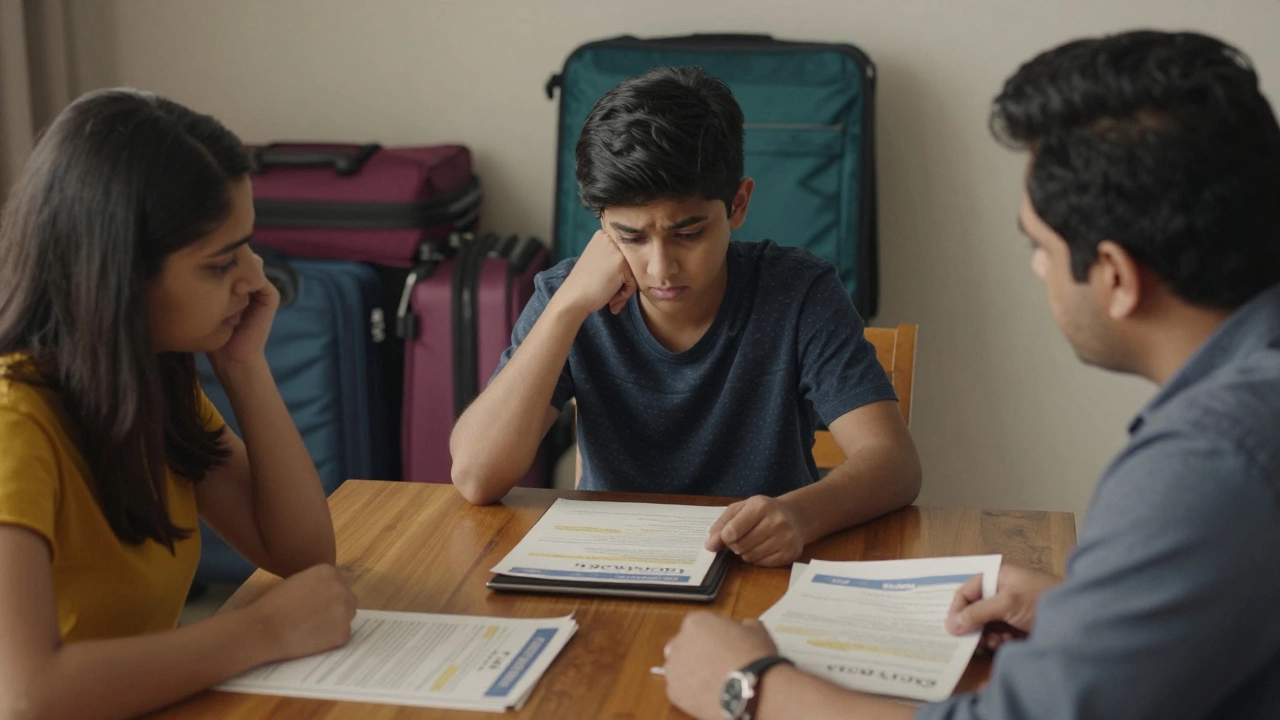
ICSE to USA Transition Checklist & Estimator
Your Transition Roadmap
Enter your details to see a customized checklist and grade estimation.
Quick Summary for Parents and Students
- ICSE is globally recognized and generally accepted for US university admissions.
- You will likely need a third-party credential evaluation to prove your grades match US standards.
- High school transfer students may be placed in grades based on a school's internal assessment, not just their ICSE marks.
- Standardized tests like the SAT or ACT often carry more weight than the board name itself.
Understanding the ICSE Framework in a US Context
To get things started, we need to define what we are talking about. ICSE is the Indian Certificate of Secondary Education, a board managed by the Council for the Indian School Certificate Examinations (CISCE). It is known for its comprehensive syllabus and strong emphasis on English language proficiency. In the US, education is decentralized. Each state, and often each school district, sets its own rules. Because of this, there isn't a government office in Washington D.C. that "stamps" the ICSE as valid. Instead, individual institutions recognize it based on its reputation for academic rigor.
If you are applying to a top-tier college, they've likely seen thousands of ICSE transcripts. They know it's a tough board. In many cases, ICSE is viewed as equivalent to a high school diploma in the US, provided the student has completed the full course of study through the 10th and 12th standards (via ISC).
The Hurdle of Credential Evaluation
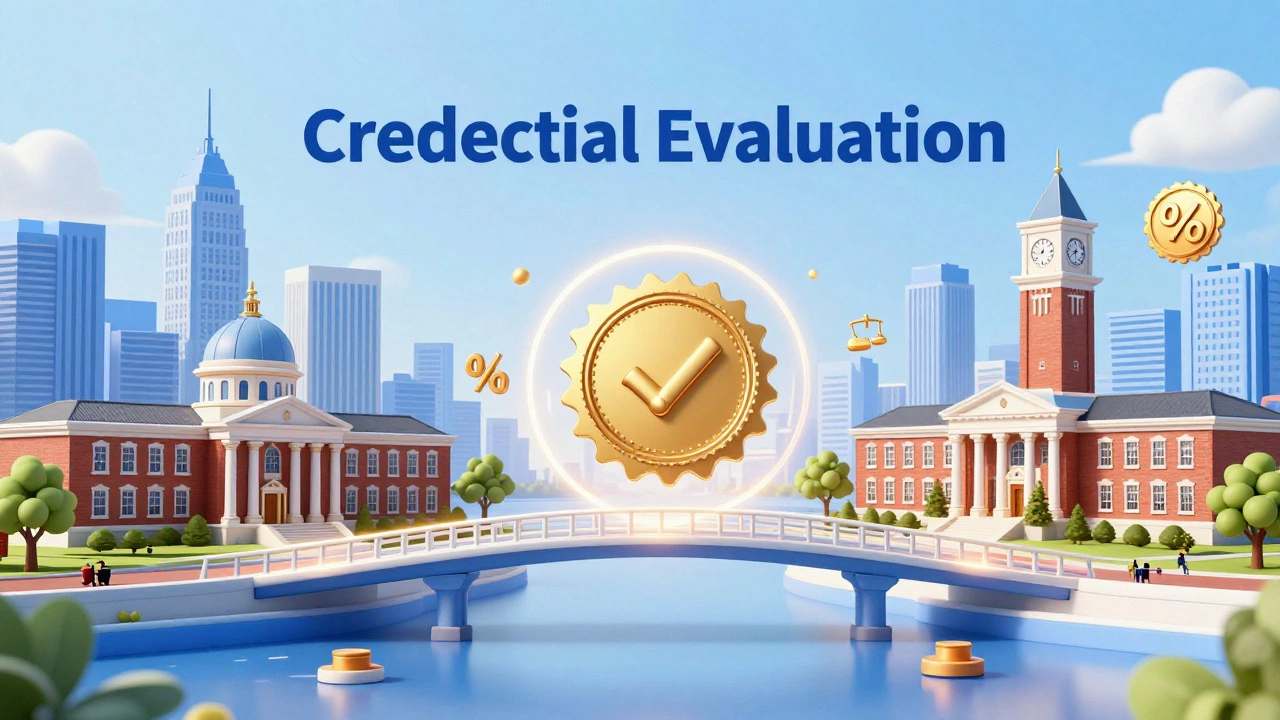
Here is where things get technical. You can't just email a PDF of your marksheet to a US office and expect them to know exactly what a "75% in Chemistry" means in their system. You will likely encounter a request for a credential evaluation. This is a process where a specialized agency translates your Indian grades into a US GPA (Grade Point Average).
The most trusted agencies for this are WES (World Education Services) and ECE (Educational Credential Evaluators). These organizations act as the bridge. They look at the CISCE curriculum and certify that your education is equivalent to a US High School Diploma. Without this, your application might get stuck in a bureaucratic loop.
| Feature | ICSE / ISC (India) | US High School Diploma |
|---|---|---|
| Curriculum Focus | Deep academic theory, centralized board | Broad elective choices, local district control |
| Grading System | Percentage based (typically) | Letter grades and GPA (4.0 scale) |
| English Proficiency | Very high emphasis on formal English | Varies by state and student |
| Standardized Testing | Board Exams (10th & 12th) | SAT, ACT, or AP Exams |
Transferring to a US High School Mid-Way
If you're moving to the US before finishing your 12th grade, the "validity" of your ICSE 10th grade marks becomes a tool for placement. You won't just be dropped into a grade based on your age. A school counselor will look at your transcripts to decide if you belong in 11th or 12th grade.
One common shock for ICSE students is the Credit System. In India, you pass a grade and move to the next. In the US, you earn "credits" for each course. If you've taken a heavy load of sciences in ICSE, you might be granted credits that exempt you from basic introductory courses in a US school. However, be prepared for a a few "gap" areas. For example, US schools place a huge emphasis on Social Studies and US History, which aren't covered in the ICSE syllabus. You'll likely have to take these to graduate.
University Admissions: The Big Picture
For those eyeing the Ivy League or state universities, ICSE validity USA isn't about the board's legal status, but its competitive value. US admissions officers love the rigor of the ICSE/ISC system. They know that a student who survived the ICSE English paper can handle the writing requirements of a US college essay.
But remember, the transcript is only one piece of the puzzle. To make your ICSE background work for you, focus on these three pillars:
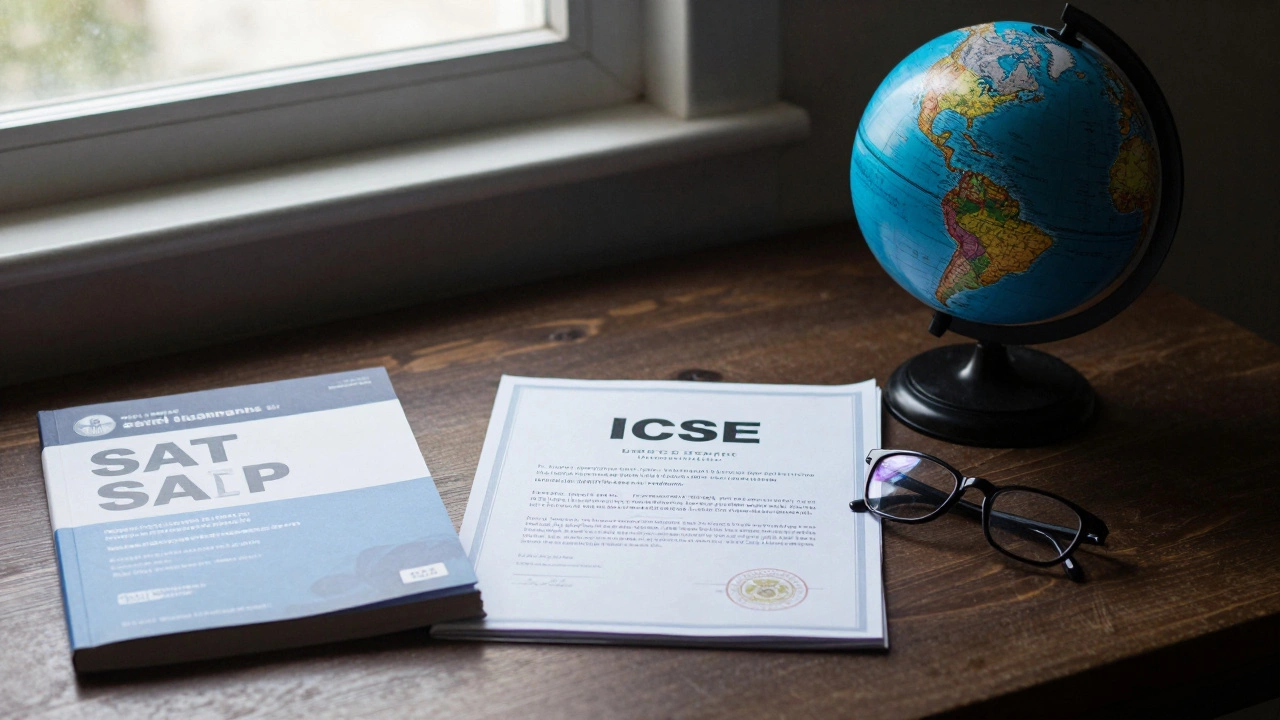
- Standardized Tests: While ICSE is valid, a high SAT (Scholastic Assessment Test) or ACT score proves your academic ability on a global scale.
- English Proficiency: Even though ICSE is English-medium, some universities still require TOEFL or IELTS scores, though some may waive this if you've scored highly in ICSE English.
- Extracurriculars: Indian boards focus on rote learning and exams. US colleges want to see sports, volunteering, or coding projects. Your ICSE marks get you through the door, but your personality gets you the seat.
Common Pitfalls to Avoid
Don't make the mistake of assuming a direct 1:1 translation of marks. A 90% in an ICSE board exam doesn't always equal a 4.0 GPA in the US. Evaluators take into account the difficulty of the board. Some might actually give you a higher GPA because the ICSE curriculum is more demanding than a standard US high school course.
Another trap is the timing of documents. Don't wait until the last minute to get your certificates attested. You'll need your original mark sheets and passing certificates. If you're using a translation service, ensure it's a "certified translation," otherwise, US institutions will reject it immediately.
Alternative Paths: CBSE and IB
You might wonder how ICSE stacks up against CBSE (Central Board of Secondary Education) or the IB Diploma Programme. In the eyes of a US admissions officer, CBSE and ICSE are very similar in terms of validity. Both are respected national boards. The IB, however, is designed globally and often maps more directly to the US GPA system, making the evaluation process slightly smoother. But if you already have an ICSE background, don't panic-you aren't at a disadvantage.
Do I need to retake 10th grade in the USA if I have an ICSE certificate?
Generally, no. Your ICSE 10th grade certificate is recognized as a valid completion of secondary education. However, the specific grade you are placed in (11th or 12th) will depend on the school district's policy and your age.
Will US colleges accept ICSE marks instead of SATs?
Some colleges have become "test-optional," meaning they might rely more on your board marks. However, for most competitive universities, the SAT or ACT is still a strong recommendation to benchmark your ICSE scores against US students.
How do I get my ICSE marks converted to a US GPA?
You must use a member agency of NACES (National Association of Credential Evaluation Services), such as WES or ECE. You send your official transcripts to them, and they provide a formal report stating the US equivalency.
Is the ICSE board considered "harder" than US high school?
In terms of academic content and volume of syllabus, yes. US admissions officers often recognize that Indian boards like ICSE require a level of memorization and theoretical depth that exceeds the standard US high school curriculum.
Can I apply for a scholarship in the US with ICSE grades?
Absolutely. Merit-based scholarships are based on academic excellence. High percentages in ICSE and ISC are viewed as a sign of a hardworking student, which can help you secure financial aid or scholarships.
Next Steps for a Smooth Transition
If you're planning the move now, start by gathering all your original documents-mark sheets, passing certificates, and school leaving certificates. Get them scanned in high resolution. If you're applying to colleges, check the "International Admissions" page of each university to see if they prefer a specific evaluation agency like WES.
For students transferring to high school, reach out to the new school's guidance counselor early. Send them a copy of your ICSE syllabus for the subjects you've already completed. This helps them see the depth of your knowledge and might save you from repeating a class you've already mastered in India.