
Government Job Termination Timeline Calculator
How long until termination?
This tool estimates the timeline for government job termination based on the standard disciplinary process described in the article.
Estimated Termination Timeline
People often think government jobs are lifelong guarantees-like a golden ticket you can’t lose. But that’s not true. You can get fired from a government job. It’s just not easy. And that’s the whole point.
Why government jobs feel untouchable
Most government roles come with formal protections built into civil service rules. These aren’t perks-they’re designed to keep politics out of daily work. If a mayor could fire the city’s accountant just because they didn’t vote for them, you’d get corruption, favoritism, and incompetence running wild.
In Australia, public servants are protected under the Public Service Act 1999. Similar laws exist in the U.S., Canada, the UK, and India. These rules say you can’t be fired for arbitrary reasons. No personal grudges. No sudden budget cuts alone. No ‘we don’t like your attitude.’
That’s why people say government jobs are ‘safe.’ But safety doesn’t mean immunity. It means process.
What actually gets you fired
There are clear, documented reasons you can lose your government job. They’re not secrets. They’re listed in employee handbooks and training modules. Here’s what really matters:
- Repeated poor performance - Missing deadlines, making avoidable errors, ignoring feedback. It’s not one bad month. It’s months of improvement plans failing.
- Serious misconduct - Theft, fraud, sexual harassment, falsifying records, using your position for personal gain.
- Violating rules - Using government equipment for side gigs, leaking confidential data, showing up drunk on duty.
- Criminal conviction - Especially for crimes related to your role, like embezzlement or bribery.
- Operational redundancy - If your department is shut down or merged, jobs can be eliminated. But even then, you’re usually offered another role first.
These aren’t rumors. They’re in the official disciplinary codes. For example, the Australian Public Service Commission’s Code of Conduct lists 11 core values. Breaching them seriously can lead to termination.
The process isn’t quick - and that’s intentional
Getting fired from a government job takes months. Sometimes over a year. Here’s how it usually goes:
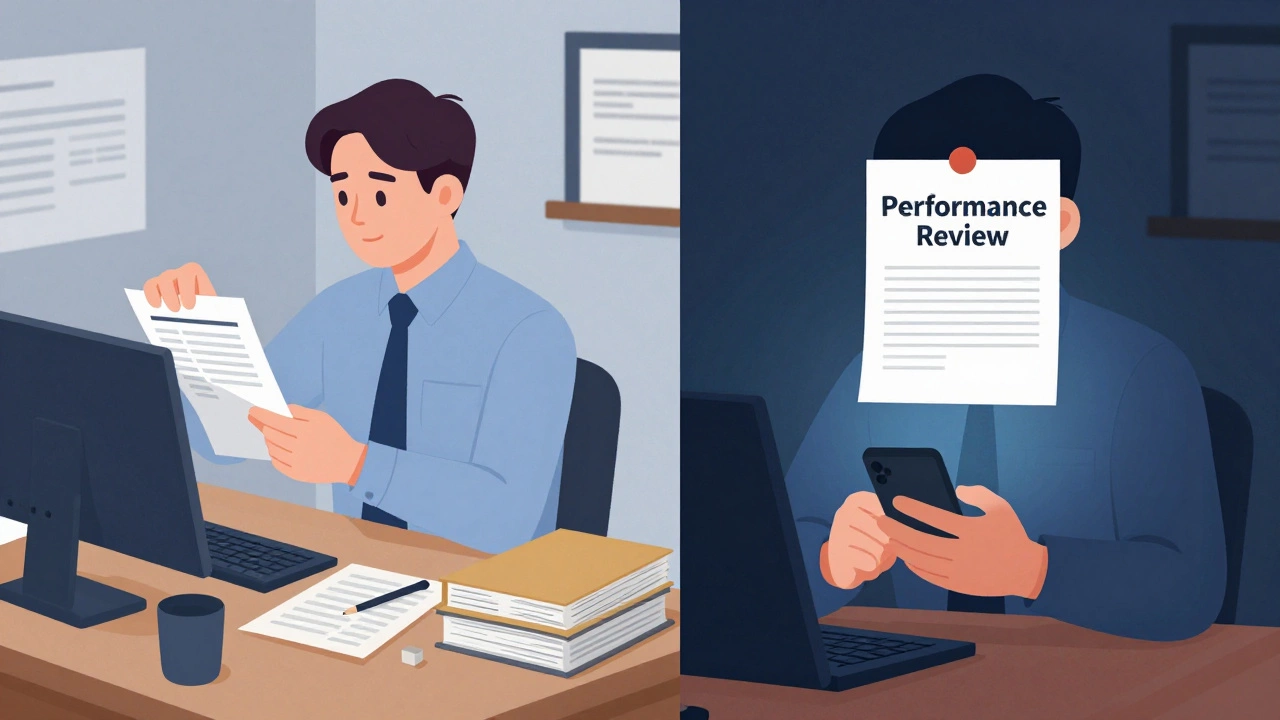
- Performance review - Your supervisor flags issues. You get a written warning.
- Improvement plan - You’re given 3-6 months to fix things. Regular check-ins. Training offered.
- Formal investigation - If misconduct is suspected, an independent officer looks into it. You’re notified. You get to respond.
- Decision hearing - A panel reviews evidence. You can bring a union rep or lawyer.
- Final decision - Only after all steps are done, and only if evidence is clear, can termination happen.
There’s no surprise firing. No ‘pack your desk’ moment. Every step is documented. Every decision is reviewed. That’s why it takes so long.
Real examples from real jobs
In 2023, a senior officer in New South Wales was dismissed after repeatedly submitting false travel claims over two years. He claimed meals he never ate, inflated accommodation costs. Auditors caught it. He got three warnings. He didn’t change. He was fired.
In another case, a federal employee in Canada was let go after posting threatening messages about colleagues on social media. Even though it was off-duty, it violated the code of conduct. They investigated. He appealed. He lost.
And yes - there are cases where people were fired for being late too often. Not once. Not twice. But 17 times in 18 months, with no valid excuse, despite multiple warnings and a flexible schedule being offered.
These aren’t outliers. They’re standard outcomes.
What protects you - and what doesn’t
Government jobs offer protections, but they’re not magic shields. Here’s what works:
- You have the right to know why you’re being investigated.
- You can present your side before any decision.
- You can appeal to a tribunal or ombudsman.
- You’re entitled to severance pay if terminated without cause (rare, but possible).
Here’s what doesn’t protect you:
- Working long hours - If your work is sloppy, extra hours won’t save you.
- Having seniority - Even a 20-year veteran gets fired if they break the rules.
- Being ‘nice’ - Likeability doesn’t override policy violations.
- Having connections - No one can override a documented process.
One common myth: ‘I’ve been here 15 years, they won’t fire me.’ That’s false. Tenure doesn’t equal immunity. It just means they’ve given you more chances.
How to avoid getting fired - even if you think you’re safe
If you work in government, here’s what you should do every day:
- Read your agency’s code of conduct. Know it cold.
- Keep records. If you’re told to do something, get it in writing.
- Document your work. Emails, task logs, approvals - they’re your defense.
- Don’t ignore feedback. If your boss says ‘you need to improve,’ don’t wait. Act.
- Don’t mix personal and professional. No social media rants. No using government resources for side businesses.
- Ask for help. If you’re struggling, request training. It shows responsibility.
Most people who get fired don’t do it because they’re bad people. They do it because they stopped paying attention. They thought the job was automatic. It’s not.
What happens after you’re fired
If you’re terminated, you don’t vanish. You get a formal letter. You’re barred from reapplying for a set time - usually 1-5 years, depending on the offense. You might lose pension contributions if it was fraud. You can apply for unemployment benefits if eligible.
And yes - you can appeal. In Australia, you can go to the Australian Public Service Commission’s Merit Protection Commissioner. In the U.S., it’s the Merit Systems Protection Board. These bodies can overturn decisions if the process was flawed.
But overturning a firing is rare. The system is designed to protect the public, not the employee. If the evidence is solid, the appeal usually fails.
Bottom line: It’s not impossible - just difficult
Getting fired from a government job isn’t like quitting your coffee shop job. It’s not casual. It’s not fast. It’s not emotional.
It’s a legal process. A bureaucratic one. And it’s meant to be hard - because public trust depends on it.
If you’re honest, competent, and follow the rules, you’ll be fine. If you cut corners, ignore feedback, or break the code - no amount of tenure will save you.
Government jobs aren’t about safety. They’re about responsibility. And responsibility comes with consequences.
Can you be fired from a government job for being late?
Yes - but only after repeated, unexplained tardiness despite warnings and support. One or two late days won’t do it. But if you’re late 10+ times in a year with no valid reason, and you’ve been given a performance plan, termination is possible.
Do government employees get severance pay if fired?
Usually not - unless the termination is due to restructuring or redundancy, not misconduct. If you’re fired for cause (like fraud or harassment), you typically get no severance. But if your role is eliminated and no other position is available, you may receive a payout based on years of service.
Can a government job firing be appealed?
Yes. Most countries have independent bodies to review government dismissals. In Australia, it’s the Merit Protection Commissioner. In the U.S., it’s the Merit Systems Protection Board. You must file within strict deadlines - often 21 to 60 days. Appeals succeed only if the process was unfair, not if you disagree with the outcome.
Can you get your government job back after being fired?
It’s rare, but possible. If your appeal succeeds, you can be reinstated with back pay. If you were fired for misconduct, you’re usually barred from reapplying for 1-5 years. Even after that, you’ll need to reapply like anyone else - and your record will be reviewed.
Are government jobs really more secure than private sector jobs?
Yes - but not because you can’t be fired. You can. It’s more secure because layoffs are rare and only happen due to budget cuts or restructuring, not performance. In the private sector, you can be let go for quarterly profits, leadership changes, or market shifts. Government roles have more stable funding and stricter rules around termination.