Government Job Termination Timeline Calculator
How Long Will It Take to Lose Your Government Job?
Estimate your termination timeline based on employment type and misconduct type.
Results
People often assume government jobs are untouchable-like a lifetime contract stamped with bureaucracy. But that’s not quite true. Government job security isn’t about being immune. It’s about process. And process, as you’ll see, can be brutal if you cross the line.
It’s Not a Lifelong Guarantee
The myth that you can’t be fired from a government job started because firing someone is harder than in the private sector. It’s not impossible. It’s just slower. And more documented. In the U.S., Canada, Australia, and the UK, public sector workers have protections-but those protections aren’t shields. They’re procedures. If you steal, lie, harass, or neglect your duties, you will be removed. The difference? You won’t get a pink slip on Monday morning. You’ll get a letter. Then a hearing. Then an appeal. Then maybe a tribunal. It takes months. Sometimes years.Take the case of a postal worker in Adelaide in 2023. He was caught falsifying delivery records to cover up missed routes. His supervisor gave him a warning. He did it again. Three months later, he was suspended without pay. Six months after that, he was terminated. No one rushed it. But no one let it slide either.
What Actually Gets You Fired
You won’t get fired for being late once. Or for a bad performance review. Or even for arguing with a coworker. But here’s what will:- Repeated misconduct - Missing work without notice, using government resources for personal gain, or refusing to follow orders after warnings.
- Criminal behavior - Theft, fraud, assault, or any conviction that affects public trust. Even a DUI can trigger review if you’re in a safety-sensitive role.
- Harassment or discrimination - The public sector has zero tolerance. Complaints are investigated thoroughly, even if they come from a single person.
- Security breaches - Leaking classified info, sharing passwords, or accessing records without authorization. This is automatic termination territory.
- Failure to meet standards - After multiple training sessions, performance plans, and extensions, if you still can’t do the job, you’re let go.
These aren’t rumors. They’re codified in public service acts across countries. In Australia, the Public Service Act 1999 says employees must act with integrity, impartiality, and accountability. Violate that, and you’re on the path out.
The Process: Slow, But Inescapable
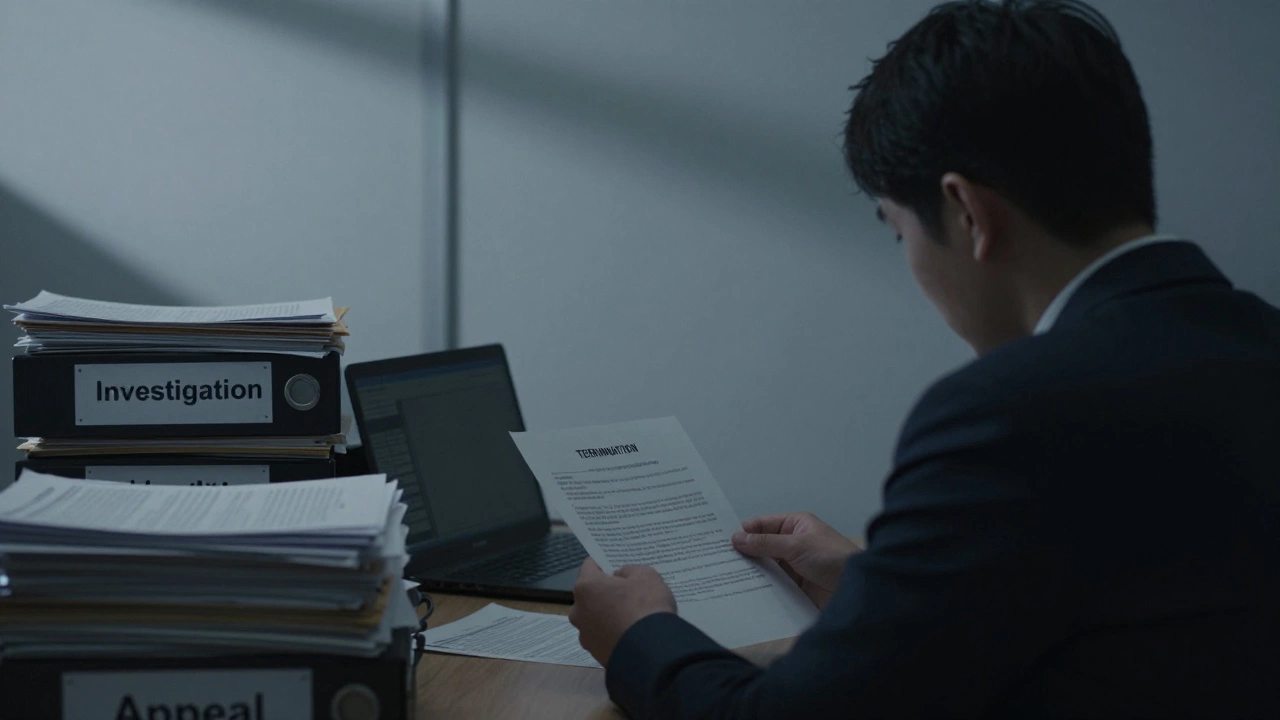
Firing a government worker isn’t a decision. It’s a project. Here’s how it usually unfolds:- Investigation - A manager or internal audit team gathers evidence. This might include emails, CCTV, witness statements, or financial records.
- Notice of Concern - You’re formally told your behavior is under review. You get a chance to respond in writing.
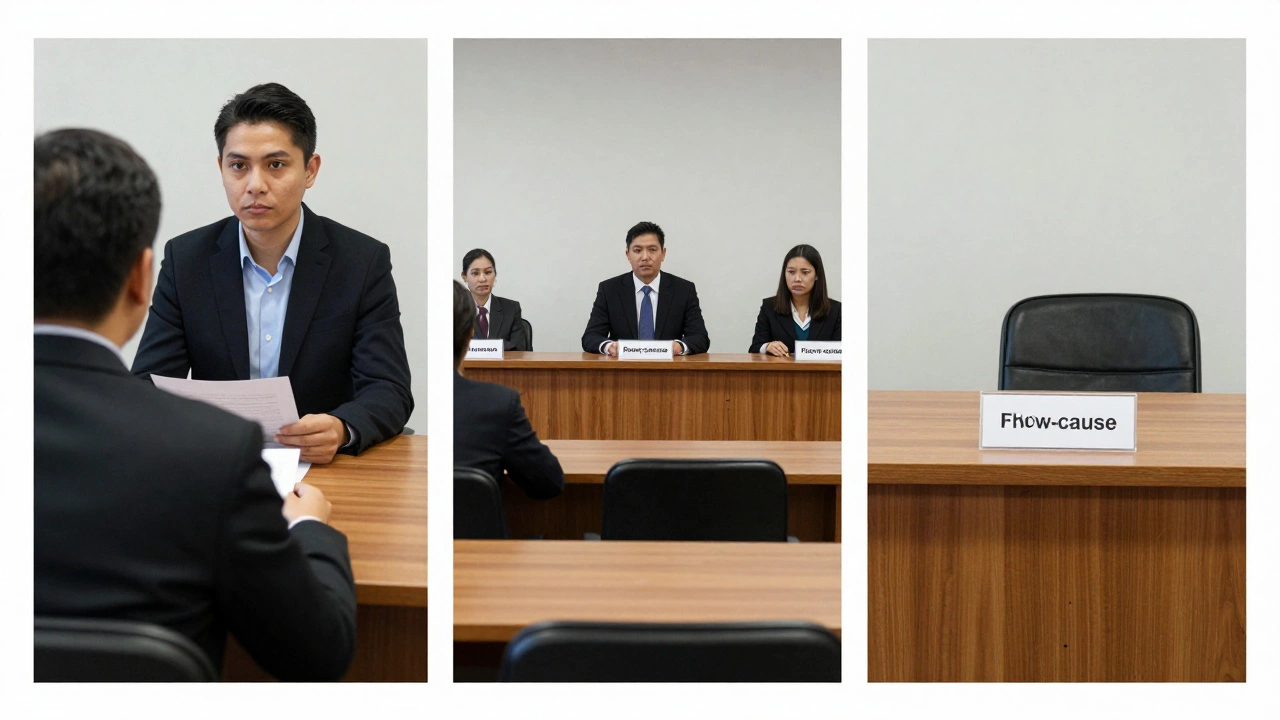
- Show Cause Hearing - A panel listens to both sides. You can bring a union rep or lawyer. They’ll ask: ‘Can this person be rehabilitated?’
- Decision - The agency head decides: warning, demotion, suspension, or termination.
- Appeal - You can challenge the decision through an internal review board or external tribunal like the Fair Work Commission in Australia.
This process can take 6 to 18 months. But if the evidence is clear, even appeals rarely reverse the outcome. In 2024, the Australian Public Service Commission reported that 87% of terminated employees did not appeal. Why? Because they knew they’d crossed the line.
Who Gets Protected-and Who Doesn’t
Not all government jobs are equal. Permanent staff have strong protections. But:- Contract workers - Hired for a fixed term. No job security. Their contract ends. No hearing needed.
- Temporary or casual staff - Often hired for seasonal work, like census takers or tax season helpers. They can be let go with a week’s notice.
- Political appointees - These roles change with elections. No protection. You’re hired to serve a policy, not a department.
So if you think you’re safe because you work for the government, ask: Am I permanent? Am I covered by a collective agreement? Am I in a classified service? If the answer is no, your job is no more secure than a retail shift.
Why People Think It’s Impossible to Lose
The myth exists because most people never see the process. You hear about the guy who got fired after stealing $50,000. But you don’t hear about the 20 others who were quietly reassigned after repeated lateness, or the one who resigned before the hearing. There’s no public list of fired workers. No headlines. Just quiet exits.Also, unions help. In many countries, public sector unions are powerful. They ensure due process. But they don’t defend the indefensible. A union rep won’t fight for someone who stole from a welfare fund. They’ll help them get fair treatment-but not a second chance.
What Happens After You’re Fired
Getting fired from a government job doesn’t mean you’re blacklisted. But it does leave a mark:- Reference checks - Future employers will ask if you were dismissed. The answer will be ‘yes.’
- Reapplication bans - Some agencies bar fired workers from reapplying for 2-5 years.
- Loss of pension accrual - If fired for misconduct, you may lose credit for years of service toward retirement.
- Public record - In some countries, termination for fraud or criminal acts becomes part of your public employment record.
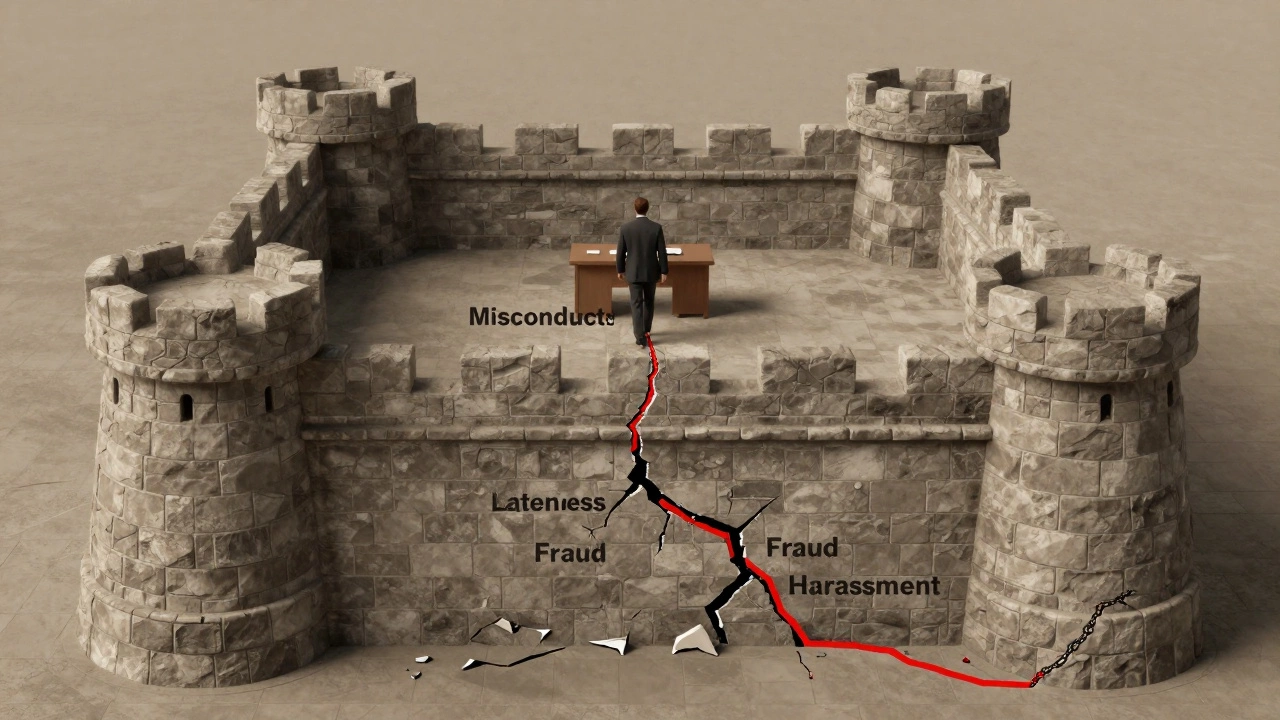
One former tax officer in Victoria lost her job in 2022 after falsifying expense claims. She spent 18 months looking for work. No one hired her for a public-facing role. She now runs a small accounting firm-legally. But she says, ‘I thought the job was a fortress. It wasn’t. It was a courtroom with a desk.’
How to Stay Safe
If you want to keep your government job, follow these rules:- Document everything - Keep copies of emails, approvals, and performance reviews. If you’re accused later, you’ll need proof.
- Never take shortcuts - Even small ones. Using a government car for a personal errand? It’s a violation.
- Report problems early - If you’re struggling, ask for help. The system rewards honesty more than perfection.
- Know your rights - Read your agency’s code of conduct. Most are online. Know what’s forbidden.
- Don’t assume silence = safety - If no one says anything, it doesn’t mean you’re doing fine. It might mean they’re gathering evidence.
Government jobs are stable. But stability doesn’t mean invincible. It means you’re given time to fix mistakes. If you don’t, the system will remove you. Slowly. Thoroughly. And without drama.
Can you be fired from a government job for being late too often?
Yes, but not immediately. Most agencies use a progressive discipline system. First, you get a verbal warning. Then a written warning. Then a performance improvement plan. If you still miss work or arrive late after these steps, termination becomes likely. It usually takes 6-12 months of consistent issues.
Do unions protect government workers from being fired?
Unions ensure fair process, not immunity. They help you get a hearing, challenge evidence, and avoid unfair dismissal. But they won’t defend someone who stole money, lied under oath, or sexually harassed a colleague. Their role is to make sure the system works correctly-not to shield misconduct.
Can you get your government job back after being fired?
Rarely. If you were fired for misconduct, rehiring is almost impossible. If you were laid off due to budget cuts and later cleared your name through appeal, you might be eligible for rehire. But if the termination was for cause, most agencies have a 2-5 year ban on reapplying.
Are all government jobs equally protected?
No. Permanent, classified employees have the strongest protections. Contract workers, casuals, and temporary staff have little to no job security. Political appointees serve at the pleasure of the government and can be removed instantly after an election or policy shift.
Does losing a government job affect your pension?
It depends. If you’re fired for misconduct, you may lose credit for some or all of your service years toward your pension. If you retire or resign before termination, you keep your benefits. But if you’re dismissed after 20 years of service for fraud, you could lose 10-15 years of pension accrual.
If you’re aiming for a government job, don’t treat it like a safety net. Treat it like a responsibility. The system doesn’t protect bad behavior. It protects fairness. And if you abuse your position, the system will move-slowly, but surely-to remove you.