
Government Job Fit Calculator
Answer the following questions honestly to see how well a government career matches your profile.
Compatibility Score
0%Select your preferences above to generate your result.
There is a moment every year when the pressure hits hard. You see your friends celebrating new hires at tech startups or marketing agencies, posting photos of their sleek office setups and flexible remote work policies. Meanwhile, you are sitting with a stack of study materials, preparing for another round of competitive exams. The question isn't just about getting a job; it is about whether that specific path-the government route-is actually worth the years of preparation, the stress, and the delayed gratification.
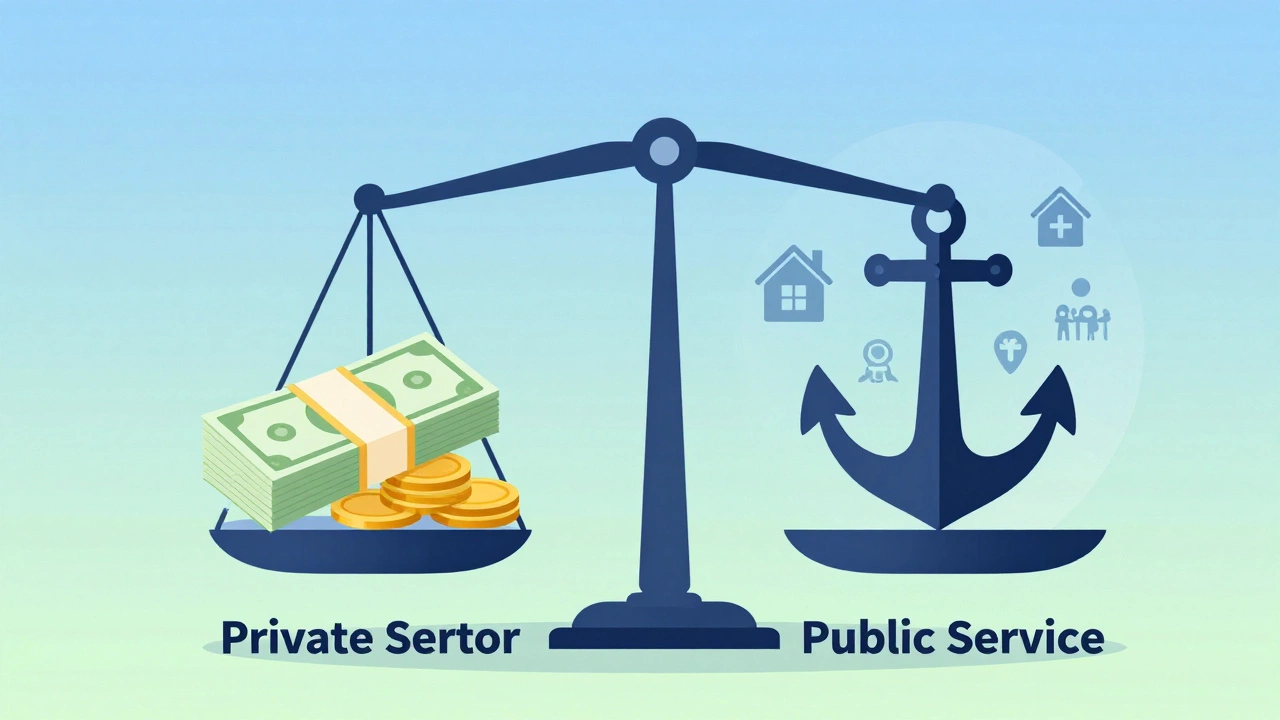
In 2026, the conversation around government jobs preparation has shifted. It is no longer just about "iron rice bowls" or guaranteed pensions. The landscape has changed with digital transformation, performance-based metrics, and a growing demand for specialized skills within the public sector. So, is it worth it? The answer depends entirely on what you value more: rapid wealth accumulation and dynamic change, or long-term security, societal impact, and work-life balance.
The Allure of Stability in an Uncertain World
Let's start with the biggest drawcard: stability. In the private sector, layoffs can happen overnight due to market shifts, mergers, or budget cuts. You might be doing everything right, yet find yourself out of a job because the company pivoted its strategy. In the government sector, once you clear the probation period, your position is remarkably secure. This is not just a feeling; it is a structural reality of public administration.
For many, this security translates into mental peace. You do not lie awake worrying about quarterly targets or whether your department will be downsized next month. This stability allows for better long-term planning. You can buy a home, start a family, or invest in personal projects without the constant fear of income disruption. In a world where economic volatility is the norm, having a predictable income stream is a massive advantage.
However, stability comes with a trade-off. It often means less flexibility in terms of switching roles or industries. Once you are in, moving out can be difficult because your skills may become too specialized for the public sector context. You need to ask yourself: Are you okay with staying in one ecosystem for decades?
Compensation: Salary vs. Total Benefits Package
If you look only at the base salary, government jobs often lose out to top-tier private sector roles, especially in tech, finance, and consulting. A software engineer at a major tech firm might earn double or triple what a mid-level administrative officer earns in the government. But comparing base salaries alone is misleading. You have to look at the total compensation package.
Government employees receive benefits that are rarely matched in the private sector. These include subsidized healthcare, generous leave policies (including maternity, paternity, and sabbatical leaves), and pension schemes that provide financial security post-retirement. In many regions, government housing allowances or low-interest loans for official residences add significant value. When you factor in these non-cash benefits, the gap narrows considerably.
Moreover, government salaries tend to increase predictably through annual increments and periodic pay commissions. There is no negotiation anxiety every two years. You know exactly where you stand financially five or ten years down the line. For those who prefer predictability over high-risk, high-reward scenarios, this structure is highly appealing.
Work-Life Balance: The Hidden Perk
One of the most underrated aspects of government work is the respect for working hours. While there are exceptions-especially in emergency services, policy implementation during crises, or election periods-the general rule is that you work your designated hours and then go home. There is rarely an expectation to check emails at midnight or attend weekend meetings unless absolutely necessary.
This boundary between work and personal life is crucial for long-term well-being. Burnout is rampant in the private sector, driven by the always-on culture. In contrast, government roles often allow you to disconnect fully after work. This time can be spent on hobbies, family, volunteering, or even side businesses, provided they do not conflict with your duties.
Additionally, many government positions offer flexible work arrangements, especially post-pandemic. Remote work options have been integrated into many administrative and technical roles, allowing employees to avoid daily commutes and manage their schedules more effectively. This flexibility contributes significantly to overall life satisfaction.

Career Growth and Skill Development
A common misconception is that government jobs stifle career growth. In reality, the path is different, not slower. Promotion in the public sector is often based on a combination of seniority, performance appraisals, and clearing promotional examinations. While it may take longer to reach senior levels compared to the fast-track promotions in some startups, the progression is steady and transparent.
Working in the government also exposes you to large-scale projects and complex challenges. You might be involved in policy formulation, infrastructure development, or public health initiatives that affect millions of people. This experience builds unique skills in stakeholder management, regulatory compliance, and strategic planning that are valuable in any sector.
Furthermore, the government increasingly values specialized skills. If you have expertise in data analytics, cybersecurity, or environmental science, you can find niche roles that offer intellectual stimulation and opportunities for innovation. The key is to identify departments that align with your interests and proactively seek out training and development programs offered by the state.
Societal Impact and Purpose
Money and stability are important, but purpose drives many people toward public service. Working for the government allows you to contribute directly to society. Whether you are improving education systems, enhancing public safety, or managing natural resources, your work has a tangible impact on the community. This sense of contribution can be deeply fulfilling and provides a motivation that goes beyond financial rewards.
In contrast, private sector roles often focus on profit generation and shareholder value. While this is essential for economic growth, it does not always align with personal values. For individuals who prioritize social justice, equity, and public welfare, government jobs offer a platform to enact meaningful change. This alignment between personal values and professional role enhances job satisfaction and reduces feelings of emptiness or disconnection.
The Challenges: Bureaucracy and Red Tape
No discussion would be complete without addressing the downsides. Government organizations are known for their bureaucratic structures. Decision-making processes can be slow, involving multiple layers of approval and strict adherence to protocols. This can be frustrating for individuals who thrive in agile, fast-paced environments.
You may encounter resistance to change, as established procedures are often followed out of habit rather than efficiency. Innovation can be stifled by risk aversion and rigid hierarchies. Additionally, political influences can sometimes interfere with operational decisions, leading to uncertainty or shifting priorities.
However, these challenges are not insurmountable. Many modern governments are actively working to streamline processes, adopt digital tools, and foster a culture of innovation. By understanding the system and building relationships across departments, you can navigate bureaucracy more effectively and drive positive changes from within.
Who Should Consider Government Jobs?
Deciding whether to pursue government jobs preparation depends on your personality, goals, and values. Here is a quick checklist to help you evaluate:
- Value Stability: You prioritize job security and predictable income over high-risk, high-reward opportunities.
- Seek Work-Life Balance: You want clear boundaries between work and personal life to maintain well-being.
- Desire Societal Impact: You are motivated by contributing to public welfare and making a difference in society.
- Prefer Structured Environments: You thrive in organized settings with clear rules and procedures.
- Long-Term Thinker: You plan for retirement and long-term financial security rather than short-term gains.
If most of these resonate with you, government jobs could be an excellent fit. Conversely, if you crave rapid career advancement, entrepreneurial freedom, or cutting-edge technological environments, the private sector might suit you better.
Preparing for Success: Beyond the Exams
Getting into the government sector requires more than just passing competitive exams. It demands strategic preparation. Start by identifying the specific roles that interest you and understanding the eligibility criteria, exam patterns, and selection processes. Utilize online resources, coaching institutes, and study groups to build a strong foundation in general knowledge, aptitude, and subject-specific topics.
Additionally, develop soft skills such as communication, problem-solving, and adaptability. These are crucial for navigating the interpersonal dynamics of government workplaces. Stay updated on current affairs, government policies, and socio-economic issues, as these topics frequently appear in interviews and written tests.
Finally, maintain a healthy mindset. The preparation journey can be long and stressful. Set realistic goals, celebrate small victories, and take breaks to recharge. Remember, the goal is not just to pass an exam but to embark on a fulfilling career that aligns with your values and aspirations.
How long does it typically take to prepare for government jobs?
The preparation time varies depending on the level of the post and your background. For entry-level positions, 6-12 months of dedicated study is common. For higher-level roles like civil services, candidates often spend 2-4 years preparing. Consistency and smart study strategies are more important than the duration itself.
Are government salaries really lower than private sector jobs?
Base salaries in the government sector are generally lower than top-paying private sector roles, especially in tech and finance. However, when you include benefits like pensions, healthcare, leave, and housing allowances, the total compensation becomes much more competitive. The trade-off is often stability versus potential high earnings.
Can I switch from a government job to the private sector later?
Yes, it is possible, but it requires careful planning. Skills gained in the government sector, such as policy analysis, project management, and regulatory compliance, are valuable in certain private industries like consulting, law, and corporate governance. However, technical roles may require upskilling to remain competitive in the fast-evolving private market.
What are the biggest challenges in government jobs?
The primary challenges include bureaucratic red tape, slow decision-making processes, and limited flexibility in innovation. Political influences can also impact operational autonomy. However, many governments are reforming these areas, and experienced employees learn to navigate these complexities effectively.
Is work-life balance better in government jobs?
Generally, yes. Government roles often have stricter adherence to working hours and generous leave policies compared to the private sector. While some roles like emergency services or field operations may require irregular hours, most administrative and technical positions offer a healthier balance between professional and personal life.