American Syllabus: What It Is, How It Compares to Indian Systems, and What You Need to Know
When people talk about the American syllabus, a flexible, decentralized framework guiding what students learn in U.S. schools, often shaped by state standards and standardized tests. Also known as U.S. curriculum, it doesn't have one national version—instead, it's a patchwork of state-level rules, district choices, and college readiness goals. Unlike India’s centralized boards like CBSE or ICSE, the American system lets schools and teachers adapt content based on local needs, resources, and priorities. That means a 10th grader in Texas might study different science topics than one in New York, even if they’re in the same grade.
This flexibility comes with trade-offs. On one side, students get more room to explore interests early—like taking coding or film studies in high school. On the other, it creates uneven access. A student in a well-funded district might have access to AP classes, robotics labs, and college counselors. One in a rural or underfunded area might not. The SAT, the most popular standardized test in the U.S., used for college admissions and often tied to curriculum pacing. Also known as Scholastic Assessment Test, it acts as a hidden driver of what gets taught in classrooms. Teachers often tailor lessons to what’s tested, not just what’s important. And while India’s NEET or JEE push students toward single-exam mastery, the American system spreads evaluation across projects, participation, quizzes, and final exams—making it harder to game but easier to fall behind if you miss a few weeks.
The eLearning platforms, digital tools like Google Classroom and Khan Academy that support daily learning and homework in U.S. schools. Also known as online learning systems, they became essential during the pandemic and never fully left. Today, many U.S. classrooms blend screen time with textbooks, using digital assignments to track progress in real time. This shift is why posts here cover topics like interactive eLearning design and Google Classroom restrictions—because American schools are now deeply tied to tech infrastructure. Meanwhile, the lack of a national syllabus means teachers often build their own materials, which is why you’ll find guides on creating engaging courses and choosing the right tools.
If you’re comparing this to India’s system, the big difference is control. CBSE sets one syllabus for 2.5 crore students. In the U.S., thousands of districts set their own. That’s why you won’t find a single "American syllabus" document—it’s a living, messy system shaped by politics, funding, and local culture. But one thing stays constant: the push toward college readiness. Whether it’s through AP exams, dual enrollment, or SAT prep, the end goal is almost always the same: get into college. That’s why posts here dive into what’s really tested, how students succeed without elite coaching, and why self-taught learners are breaking into tech roles even without a traditional path.
What you’ll find below are real stories and data about how learning works in the U.S.—from the exams that define it, to the tools that support it, to the people who navigate it without a safety net. No theory. No fluff. Just what’s actually happening in classrooms, homes, and online spaces where American students learn.
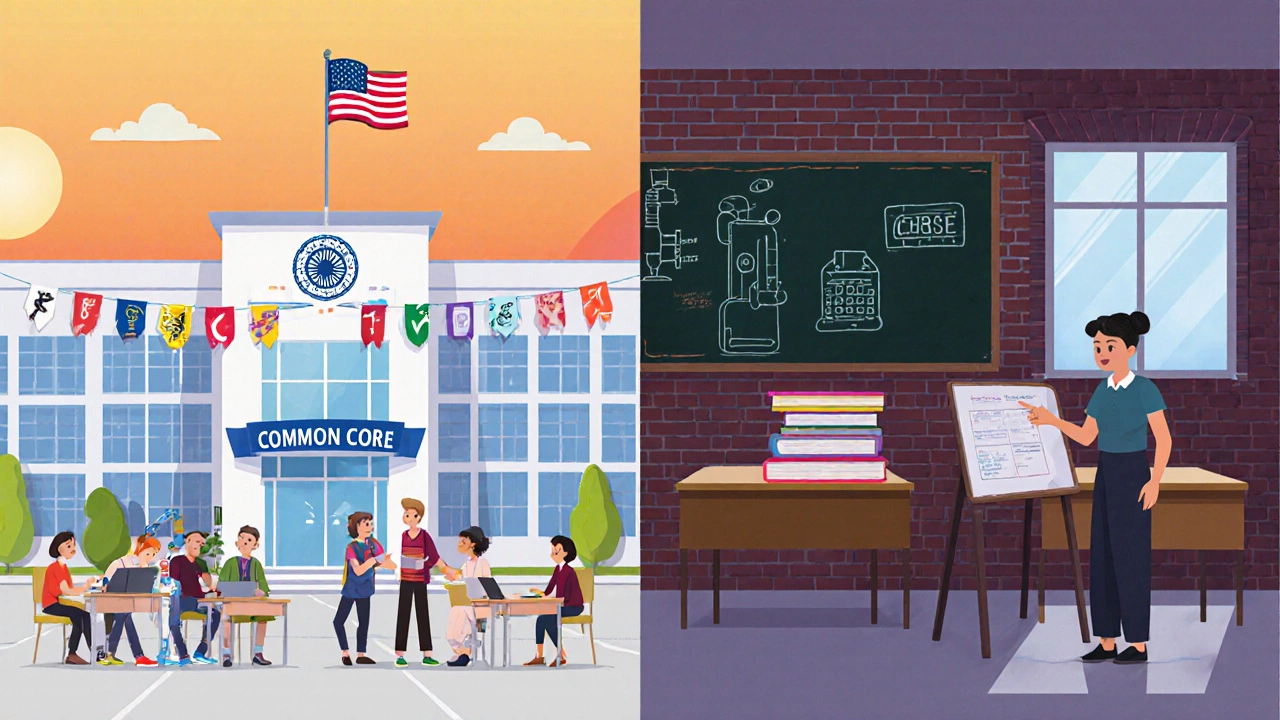
American syllabus vs CBSE: Which is easier?
Compare the American syllabus with CBSE: curriculum focus, assessments, flexibility, workload and which one feels easier for students.