CBSE: Understanding India's Largest School Board and Its Impact on Students
When we talk about CBSE, the Central Board of Secondary Education, India’s most widely followed school board. Also known as Central Board of Secondary Education, it governs over 2.5 crore students across India and abroad, making it the single largest education system of its kind in the country. Unlike state boards or international curricula, CBSE follows a standardized syllabus designed for nationwide consistency, especially important for families who move often or plan for competitive exams like JEE and NEET.
CBSE doesn’t just set textbooks—it shapes how students think. Its focus on application-based learning, reduced rote memorization, and inclusion of practical assessments reflects a shift toward real-world skills. Schools under CBSE are required to follow NCERT guidelines, which means the content you learn in Delhi is nearly identical to what’s taught in Kerala or Jammu. This uniformity helps students transition smoothly between cities and gives them a common foundation when applying to top colleges. But CBSE isn’t just about structure—it’s also about access. It’s the board of choice for government schools, private chains, and even Indian schools overseas, because it’s recognized by universities across India and in countries like the UK, Australia, and Canada.
Behind every CBSE student is a system that’s constantly adapting. In 2025, you’ll see more emphasis on skill-based subjects, internal assessments replacing some board exams, and digital tools integrated into daily learning. The board is also responding to pressure for greater equity—improving question paper design, reducing exam stress, and offering more support for students with learning differences. Meanwhile, the rise of coaching centers, online prep platforms, and tutoring apps all feed into the CBSE ecosystem, turning exam preparation into a multi-billion-dollar industry.
What you’ll find here are real answers to the questions students and parents actually ask: How many kids are in CBSE? Why does it dominate Indian education? What’s changing this year? And how does it stack up against other boards? These aren’t theoretical debates—they’re lived experiences of millions. Below, you’ll find posts that cut through the noise and give you the facts, stories, and data you need to understand CBSE—not as a label, but as a living system that affects every classroom, every exam hall, and every future.
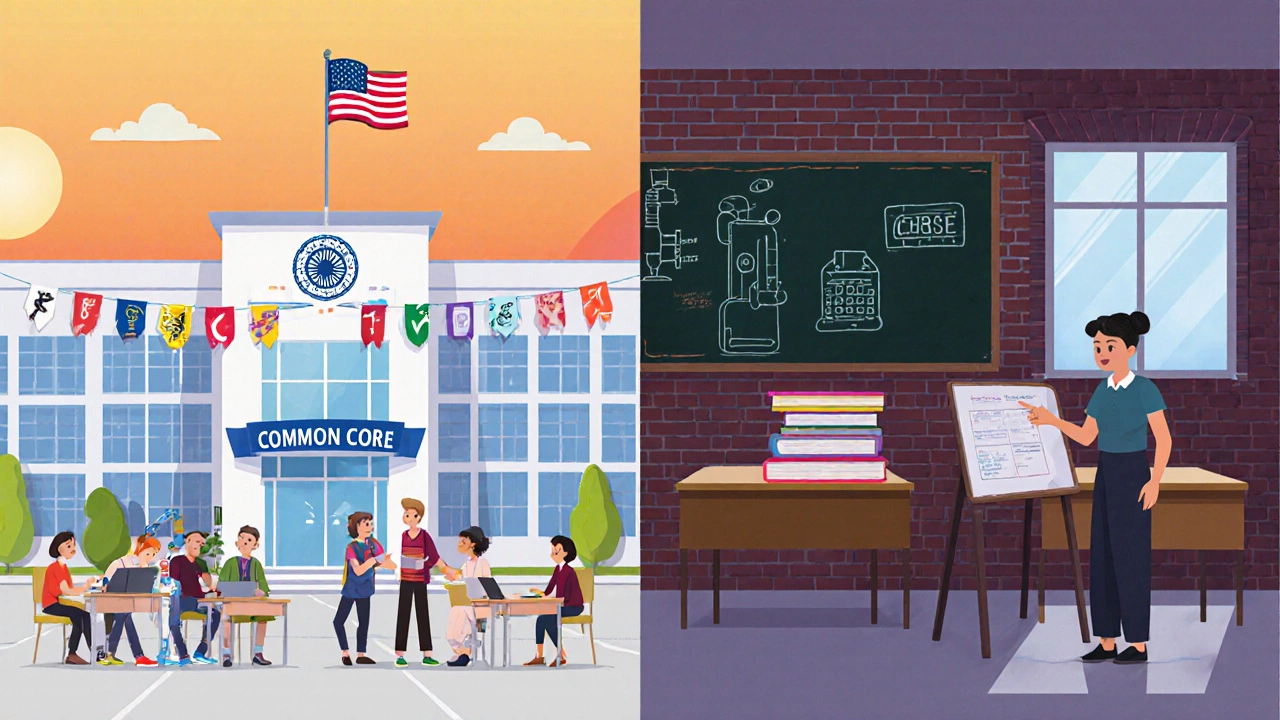
American syllabus vs CBSE: Which is easier?
Compare the American syllabus with CBSE: curriculum focus, assessments, flexibility, workload and which one feels easier for students.
Does Harvard Accept CBSE? What Indian Applicants Should Know
Curious if your CBSE marks will get you into Harvard? This article breaks down whether Harvard accepts CBSE results, what Indian students need to know about the application process, and how CBSE compares to other high school qualifications. Get real-world tips and insights to give your Ivy League dream the best shot possible.
CBSE Syllabus: Why So Many Parents Prefer It?
This article breaks down why the CBSE syllabus stands out as the top pick for students and parents across India. You’ll discover what sets CBSE apart from other educational boards, including its practical focus, national recognition, exam style, and future opportunities. Real-life tips and facts make the reasons easy to understand. See how CBSE makes a difference in both classroom comfort and big exam readiness. If you're deciding on an educational path, this read gives you the facts without the fluff.