CBSE Board Statistics: Real Data on Pass Rates, Trends, and Student Performance
When you hear CBSE board statistics, the official data on student performance, pass rates, and exam trends from India’s Central Board of Secondary Education. Also known as CBSE results, it tells you what’s really happening in classrooms across the country—not just the headlines. These numbers aren’t just reports. They shape how schools teach, how students plan their next steps, and even how parents decide between boards like CBSE and ICSE.
CBSE board statistics include things like the pass percentage each year, subject-wise performance trends, gender gaps in results, and how many students score above 90%. For example, in 2023, over 91% of students passed the Class 10 exams, and nearly 89% passed Class 12. But behind those numbers are deeper patterns: biology and mathematics consistently have the lowest pass rates in Class 12, while English and social science see the highest scores. And while girls outperform boys in overall pass rates, boys still dominate top scorers in science subjects. These aren’t random fluctuations—they reflect teaching focus, exam design, and even coaching culture.
CBSE also tracks how many students repeat exams, how many opt for compartmental exams, and how many switch boards after Class 10. The data shows a steady rise in students choosing CBSE over state boards, especially in urban areas, because of its structured syllabus and national recognition for competitive exams like JEE and NEET. That’s why IIT JEE coaching, intensive training programs designed to prepare students for India’s top engineering entrance exam and NEET preparation, the focused study strategy for India’s medical entrance test are so tightly linked to CBSE results. If you’re doing well in CBSE Class 11 and 12 science subjects, you’re already on the path these coaching institutes target.
And it’s not just about passing. CBSE statistics now include data on internal assessments, practical marks, and how much weight each component carries. That’s why some students who scored low in theory still passed with flying colors—they nailed the projects and lab work. The board has also started releasing subject-wise average scores, so you can see exactly where students struggle. For instance, in 2022, nearly 40% of Class 12 students scored below 50% in physics, while chemistry had a much smoother curve. That’s not a coincidence. It’s a signal.
These aren’t dry government figures. They’re live indicators of what’s working—and what’s not—in India’s largest school system. Whether you’re a parent wondering if CBSE is the right choice, a teacher trying to improve outcomes, or a student planning your next move, the real numbers tell you more than any brochure ever could. Below, you’ll find real stories and data-driven posts that break down what these statistics mean for you—no fluff, no guesswork, just what’s happening on the ground.
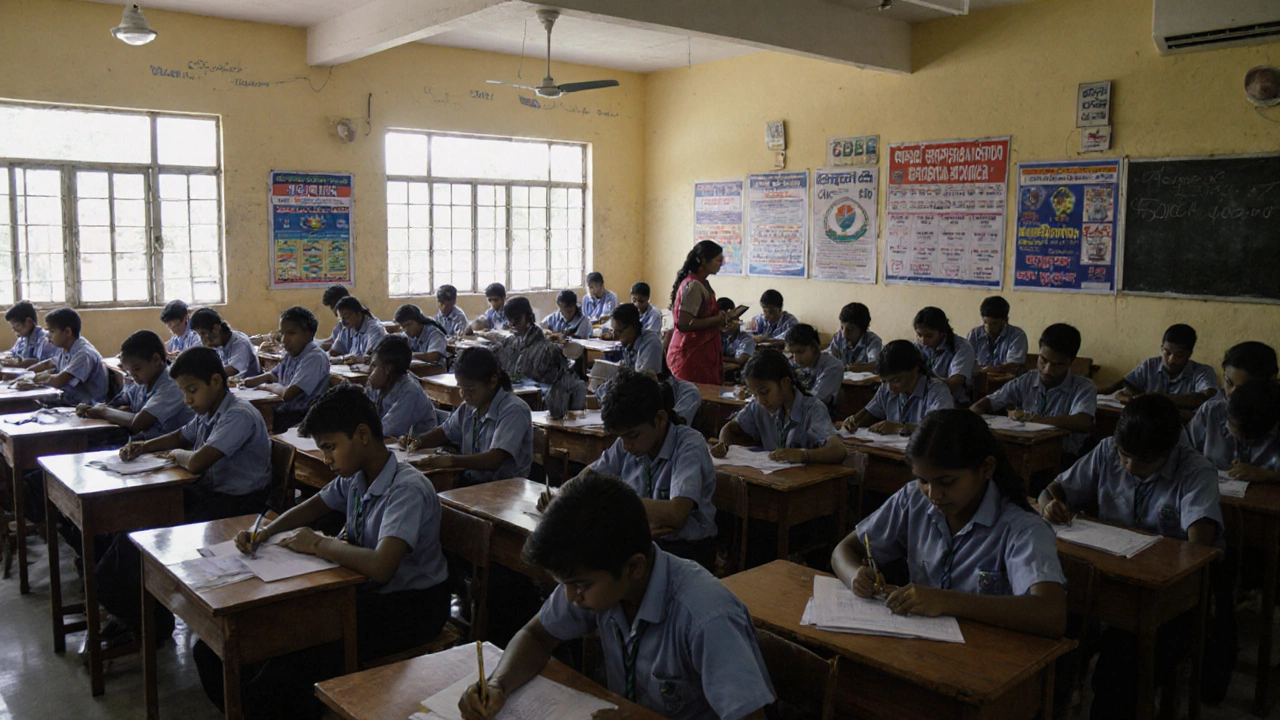
How Many Students Are There in CBSE Board in India?
CBSE serves over 2.5 crore students in India and abroad, making it the largest school board in the country. Learn why enrollment is growing, how it compares to other boards, and what’s changing in 2025.