Ease of Syllabus: How Simpler Curriculum Design Improves Learning in India
When we talk about ease of syllabus, the clarity, relevance, and manageable scope of what students are expected to learn. Also known as curriculum simplicity, it’s not about making things easier—it’s about making them focused. In India’s crowded education landscape, where students juggle multiple boards, coaching loads, and exam pressures, a cluttered syllabus doesn’t just overwhelm—it wastes time, drains motivation, and hides what really matters.
The CBSE syllabus, the most widely followed school curriculum in India, covering over 2.5 crore students. Also known as Central Board of Secondary Education curriculum, it has moved toward reducing content in recent years—but many schools still teach everything, everywhere, all at once. Meanwhile, the NEET syllabus, the high-stakes medical entrance exam that determines who gets into India’s top medical colleges. Also known as National Eligibility cum Entrance Test syllabus, is packed with dense biology, chemistry, and physics topics—yet top performers don’t study everything. They study the high-yield parts. That’s the power of ease: cutting noise to amplify results. When syllabi are trimmed to focus on core concepts, students retain more, stress less, and perform better. It’s not magic—it’s design.
Think about it: why do self-taught coders succeed without degrees? Because they build real projects, not memorize textbooks. The same applies to students. When a syllabus is too broad, learners get lost in details. When it’s sharp, they build confidence. That’s why coaching institutes like those preparing students for IIT JEE or NEET don’t teach the full syllabus—they teach what’s tested, what’s repeated, and what actually moves the needle. The best teachers don’t cover more—they cover less, but deeper.
And it’s not just about exams. A simpler syllabus helps teachers plan better, parents understand progress, and students see their own growth. It turns learning from a race through a maze into a walk down a clear path. The Indian education system has the data—CBSE’s enrollment is rising, NEET competition is fierce, and online learning is growing—but it still clings to outdated, overloaded content. The real innovation isn’t in new apps or AI tutors. It’s in saying no to the unnecessary.
Below, you’ll find real stories, data, and strategies from students, teachers, and exam experts who’ve seen firsthand how cutting the clutter changes outcomes. Whether you’re prepping for NEET, navigating CBSE, or just trying to make sense of what really matters in Indian education, these posts cut through the noise—just like a well-designed syllabus should.
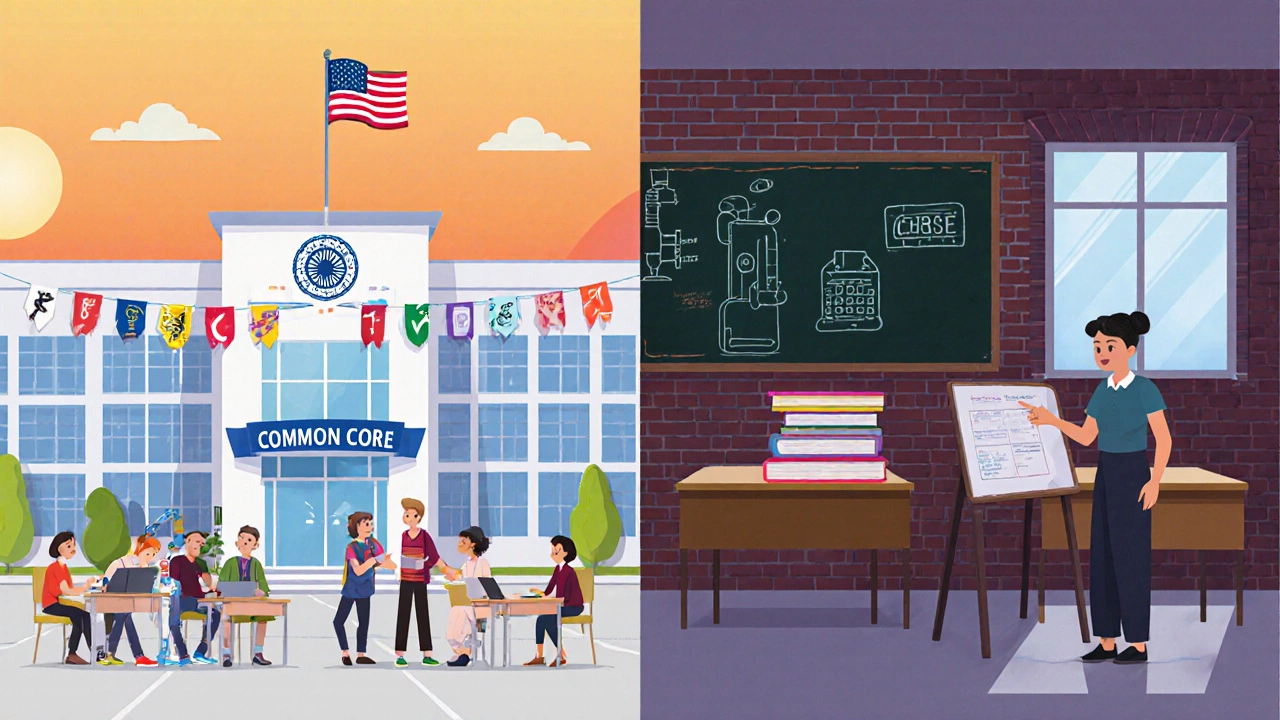
American syllabus vs CBSE: Which is easier?
Compare the American syllabus with CBSE: curriculum focus, assessments, flexibility, workload and which one feels easier for students.