School Curriculum Comparison: CBSE, ICSE, State Boards & What Really Matters
When you’re choosing a school board in India, you’re not just picking a name—you’re choosing a school curriculum comparison, the structured set of subjects, teaching methods, and assessment rules that shape how children learn from grades 1 to 12. Also known as education board system, it determines everything from how much math is taught to whether biology includes dissections or just diagrams. The three big players—CBSE, the Central Board of Secondary Education, India’s largest school board with over 2.5 crore students, ICSE, the Indian Certificate of Secondary Education, known for deeper subject coverage and English focus, and state boards, regional systems that tailor content to local language and culture—each have very different goals. CBSE leans toward standardized testing and national exams like JEE and NEET. ICSE pushes critical thinking and detailed writing. State boards often prioritize local relevance over national competitiveness.
What’s missing from most comparisons? Real impact. A student in Maharashtra might study the same physics chapter as one in Delhi, but the depth, exam style, and teacher training vary wildly. CBSE’s uniform syllabus makes it easier to switch schools across states, which matters if your family moves often. ICSE’s heavier reading load helps students who thrive in analytical environments, but can overwhelm those who need more structure. State boards, while often easier to pass, can leave gaps when students apply to national colleges or competitive exams. And here’s the truth: no board guarantees success. What matters more is how well the curriculum matches the student’s pace, interests, and future goals. If your child wants to become an engineer, CBSE’s alignment with JEE gives it a clear edge. If they’re into literature or global studies, ICSE’s broader syllabus might be better. For rural students or those focused on state-level careers, a state board can be just as effective—sometimes more so.
There’s no perfect board, only the right one for the right child. The best school curriculum comparison isn’t about which one is ‘better’—it’s about which one fits your child’s learning style, your family’s mobility, and their career path. Below, you’ll find real data on enrollment trends, syllabus depth, and how each board prepares students for college and beyond. No opinions. Just facts from the classrooms, exam results, and student outcomes that actually matter.
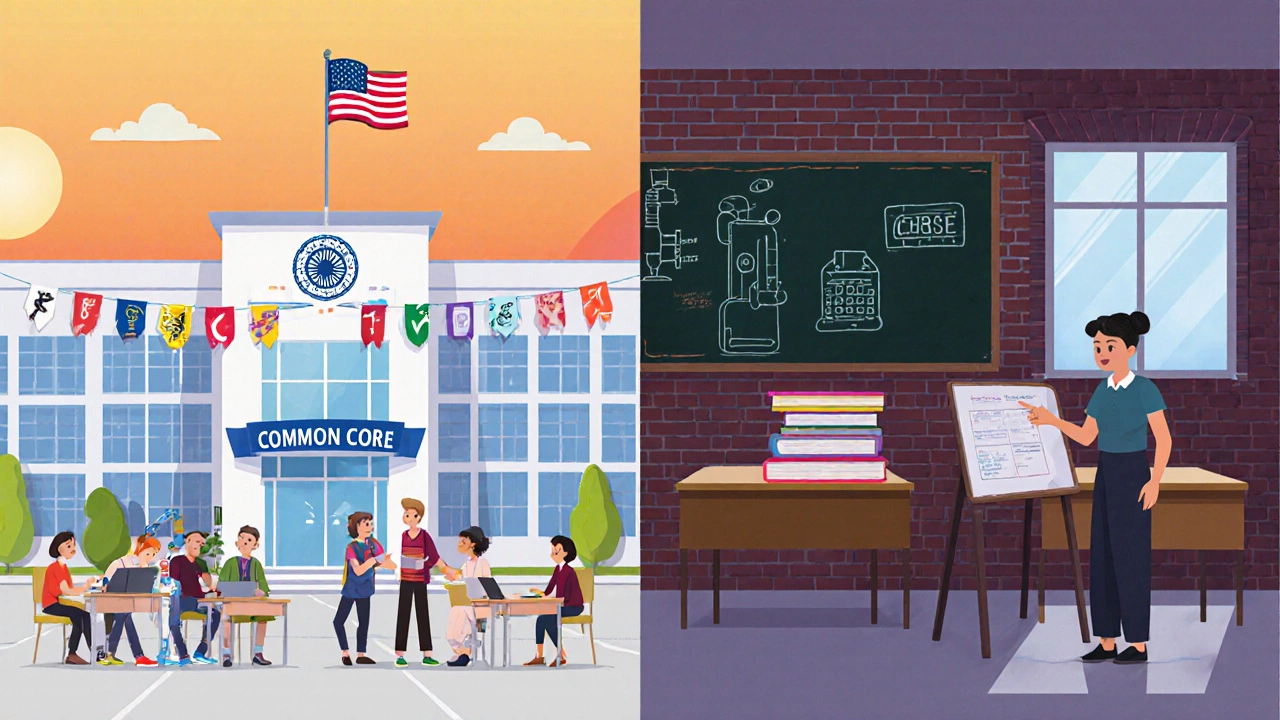
American syllabus vs CBSE: Which is easier?
Compare the American syllabus with CBSE: curriculum focus, assessments, flexibility, workload and which one feels easier for students.