Teacher Training in India: What Works, What Doesn't, and Why It Matters
When we talk about teacher training, the structured process of preparing educators to teach effectively in classrooms. Also known as teacher education, it's the backbone of every school system—but in India, it’s often the weakest link. You can have the best curriculum, the latest tech, or the most funding, but if teachers aren’t trained to use them, none of it matters. Real learning happens in the classroom, not in policy documents. And that’s where teacher training either lifts students up—or lets them fall through the cracks.
Teacher training in India isn’t one thing. It’s a mix of government-run colleges, private institutes, online modules, and on-the-job coaching. Some teachers get years of theory before stepping into a classroom. Others are hired on the spot and expected to figure it out as they go. The Indian education system, the vast network of public and private schools, boards, and policies that govern learning across the country doesn’t have a single standard for what good training looks like. In urban centers, you might find teachers using digital tools and student-centered methods. In rural areas, many still rely on rote memorization because no one ever showed them how to do more.
What’s missing? Consistency. Feedback. Follow-up. Training that ends after a week-long workshop doesn’t change how someone teaches. Real change happens when teachers get ongoing support—mentors, peer observations, real data on student progress. The professional development for teachers, the continuous learning and skill-building that helps educators improve over time most teachers get is a one-time certificate, not a lifelong journey. And that’s why so many passionate teachers burn out. They want to do better, but the system doesn’t give them the tools to keep growing.
Look at the posts below. You’ll find stories about how teachers are learning to handle massive class sizes, how some are using Google Classroom to reach students who can’t come to school, and how coaching institutes are training educators for NEET and JEE prep—not just to teach content, but to build confidence. You’ll see how the same training that works for a coding bootcamp teacher might not work for a biology teacher in a village school. And you’ll see that the biggest problem isn’t lack of will—it’s lack of smart, scalable systems.
Teacher training isn’t about checking boxes. It’s about giving educators the power to make learning stick. If you’re a teacher, a parent, or someone who cares about what happens in Indian classrooms, this isn’t just policy—it’s personal. The posts here don’t sugarcoat it. They show what’s broken, what’s working, and how real people are fixing it, one classroom at a time.
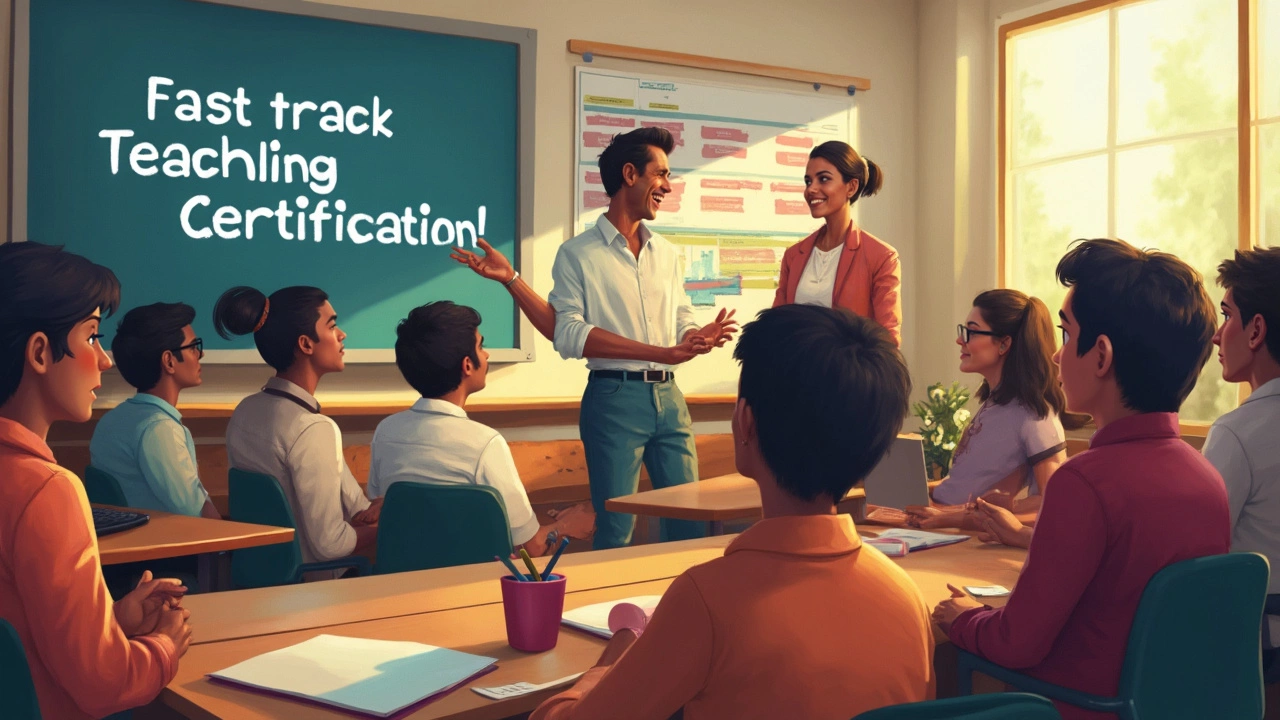
Fastest Programs to Become a Teacher: Your Shortcut to the Classroom
Looking to get into teaching without spending years in college? This article breaks down the quickest programs you can take to become a certified teacher, covering both online and in-person options. You'll find out which states are the fastest, how alternative programs work, and what to expect along the way. Whether you already have a degree or just want to make a speedy career change, get tips and facts to start teaching sooner. Skip the guesswork and find your fastest route into the classroom.