Find Your Ideal eLearning Style
Your Recommended Approach
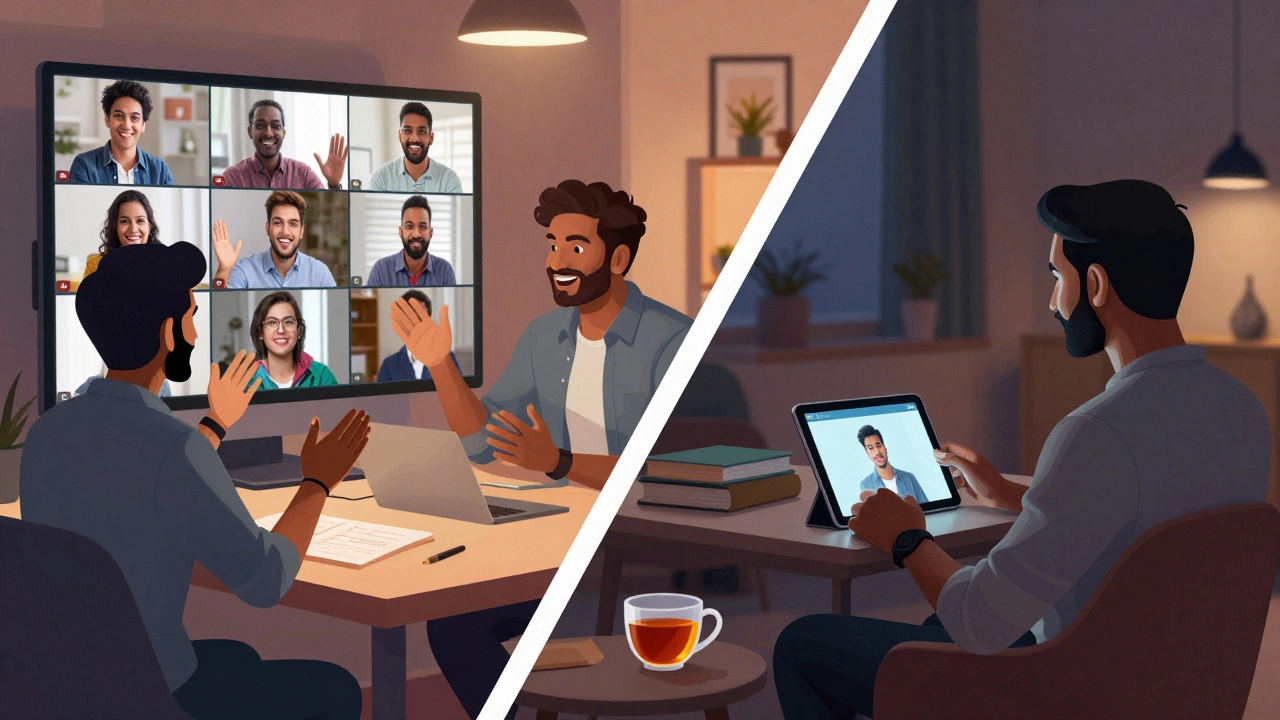
Imagine you are trying to learn a new software tool for work. You have two options. Option A: You sit in a virtual room at 2 PM on Tuesday, listening to an instructor explain features in real-time while you ask questions via chat. Option B: You watch a pre-recorded video series on your lunch break, pause it when you get confused, and complete a quiz later that night.
Both methods are valid ways to learn online. But they feel completely different. One demands your immediate attention; the other bends around your schedule. This difference isn't just about preference-it’s about the fundamental structure of how digital education is delivered.
If you are looking into eLearning, you will quickly realize it is not a single monolith. It breaks down into three distinct pillars. Understanding these three main types-synchronous, asynchronous, and blended-is the key to choosing the right path for your career or personal growth. Let's look at how each one works, who it helps, and where it falls short.
Synchronous Learning: The Real-Time Experience
Synchronous learning happens live. When you join a session, everyone involved-the instructor and the learners-is present at the same time. Think of it as a traditional classroom, but the walls are made of pixels instead of brick.
Synchronous Learning is an educational method where instruction occurs in real-time with all participants interacting simultaneously. This format relies heavily on communication tools like Zoom, Microsoft Teams, or dedicated webinar platforms. The core value here is immediacy. If you have a question, you ask it, and you get an answer within seconds.
This type of learning mimics the social dynamics of a physical school. You see faces. You hear voices. There is a sense of urgency because the lesson moves forward regardless of whether you are ready or not. For many people, this external pressure is actually helpful. It creates a routine. You know that if you don't log in at 10 AM, you miss out.
The technology behind this has evolved rapidly. In the early days of online education, "live" often meant clunky web conferences with poor audio quality. Today, high-definition video, screen sharing, and interactive whiteboards make remote collaboration seamless. Tools like Miro or Jamboard allow groups to brainstorm together visually, bridging the gap between digital distance and physical proximity.
However, there is a catch. Time zones can be a nightmare. If you are studying with peers across the globe, finding a slot that works for everyone requires significant compromise. Also, synchronous sessions demand high bandwidth and a stable internet connection. A dropped call during a critical explanation is frustrating and disrupts the flow of information.
- Best for: Complex topics requiring immediate clarification, team building exercises, and students who struggle with self-discipline.
- Key Tools: Zoom, Webex, Google Meet, LiveClassroom.
- Major Drawback: Lack of flexibility; requires fixed scheduling.
Asynchronous Learning: Learn on Your Own Terms
Now flip the script. Imagine you never have to meet anyone live. You access materials whenever you want. This is asynchronous learning. It is the backbone of most modern Massive Open Online Courses (MOOCs) and corporate training modules.
Asynchronous Learning is a flexible educational approach where students access pre-recorded content and complete assignments independently without real-time interaction. The instructor provides the material, but the student controls the pace, place, and speed of consumption.
This model puts the learner in the driver's seat. You might read a module on Monday morning, watch a lecture on Tuesday evening, and submit an assignment on Thursday afternoon. There is no class to "miss." The content sits there, waiting for you.
The beauty of asynchronous learning lies in its scalability and accessibility. An instructor can record one video and have ten thousand people watch it. Each viewer can pause, rewind, and re-watch difficult sections. This self-pacing is crucial for complex subjects. If you need five minutes to digest a mathematical formula, you take five minutes. No one is watching the clock.
But let's be honest: it requires serious self-motivation. Without a teacher standing over your shoulder, it is easy to procrastinate. "I'll do it tomorrow" becomes a dangerous mantra. Many people sign up for online courses with great enthusiasm only to abandon them halfway through because the lack of external accountability kills their momentum.
Interaction in this model is delayed. Instead of raising your hand, you post a comment on a discussion forum. The instructor might reply hours or even days later. While this allows for more thoughtful responses, it lacks the spark of spontaneous debate found in live classes.
- Best for: Working professionals, parents, global audiences with varying time zones, and self-starters.
- Key Tools: Coursera, Udemy, LinkedIn Learning, LMS platforms like Moodle or Canvas.
- Major Drawback: Requires high levels of self-discipline; limited immediate feedback.
Blended Learning: The Best of Both Worlds?
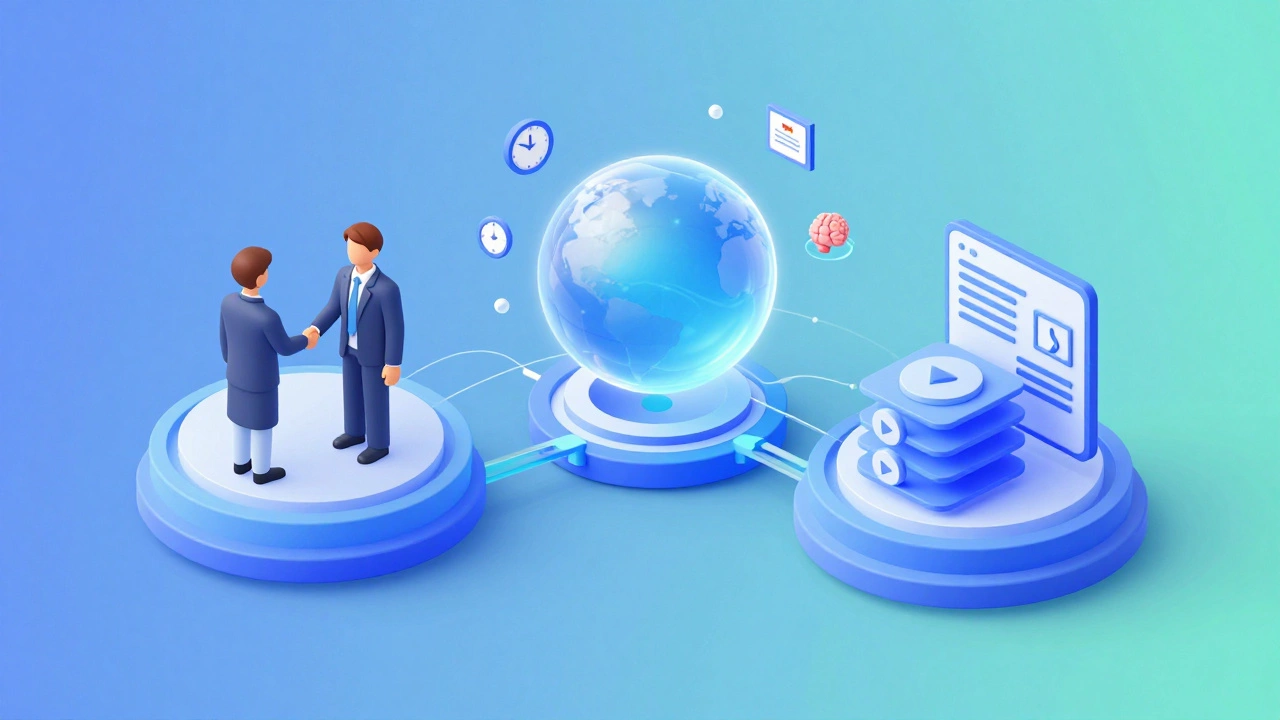
So, which is better? Live interaction or total flexibility? The answer, increasingly, is both. This hybrid approach is known as blended learning (or sometimes mixed-mode learning). It combines the structured guidance of synchronous sessions with the independent study of asynchronous resources.
Blended Learning is an integrated educational strategy that merges face-to-face or live online instruction with self-directed digital learning activities. The goal is to optimize the strengths of each method while mitigating their weaknesses.
In a typical blended course, you might spend the week reading articles and watching videos on your own time (asynchronous). Then, once a week, you join a live workshop (synchronous) to discuss those materials, solve problems in groups, or get expert coaching. This is often called the "flipped classroom" model. You do the heavy lifting of absorbing facts at home, so you can use valuable live time for higher-order thinking and application.
This model addresses the biggest pain points of the other two. It solves the isolation of asynchronous learning by adding human connection. It solves the rigidity of synchronous learning by allowing deep dives into theory on your own schedule.
For organizations, blended learning is often the most cost-effective solution. Live training is expensive because it ties up instructors' time. Pure online courses can lead to low completion rates. Blending them keeps engagement high without burning out the teaching staff.
However, designing a good blended course is hard. It requires careful coordination. If the live sessions don't connect meaningfully to the online prep, students feel disconnected. The transition between modes must be smooth. You cannot just throw a few videos and a webinar together and call it blended. The pedagogy needs to be intentional.
- Best for: Comprehensive skill development, university degrees, corporate leadership programs.
- Key Tools: Integrated LMS systems that support both video hosting and live conferencing plugins.
- Major Drawback: Complex to design and manage; requires clear instructions from providers.
Comparing the Three Approaches
To help you decide which type fits your needs, let's look at them side-by-side. The choice depends largely on your learning style, your schedule, and the complexity of the subject matter.
| Feature | Synchronous | Asynchronous | Blended |
|---|---|---|---|
| Schedule Flexibility | Low (Fixed times) | High (Anytime) | Medium (Hybrid) |
| Interaction Speed | Immediate | Delayed (Hours/Days) | Mixed |
| Self-Discipline Required | Low | Very High | Medium |
| Social Connection | Strong | Weak | Moderate to Strong |
| Ideal For | Complex discussions, networking | Factual knowledge, busy schedules | Deep skill acquisition |
How to Choose the Right Type for You
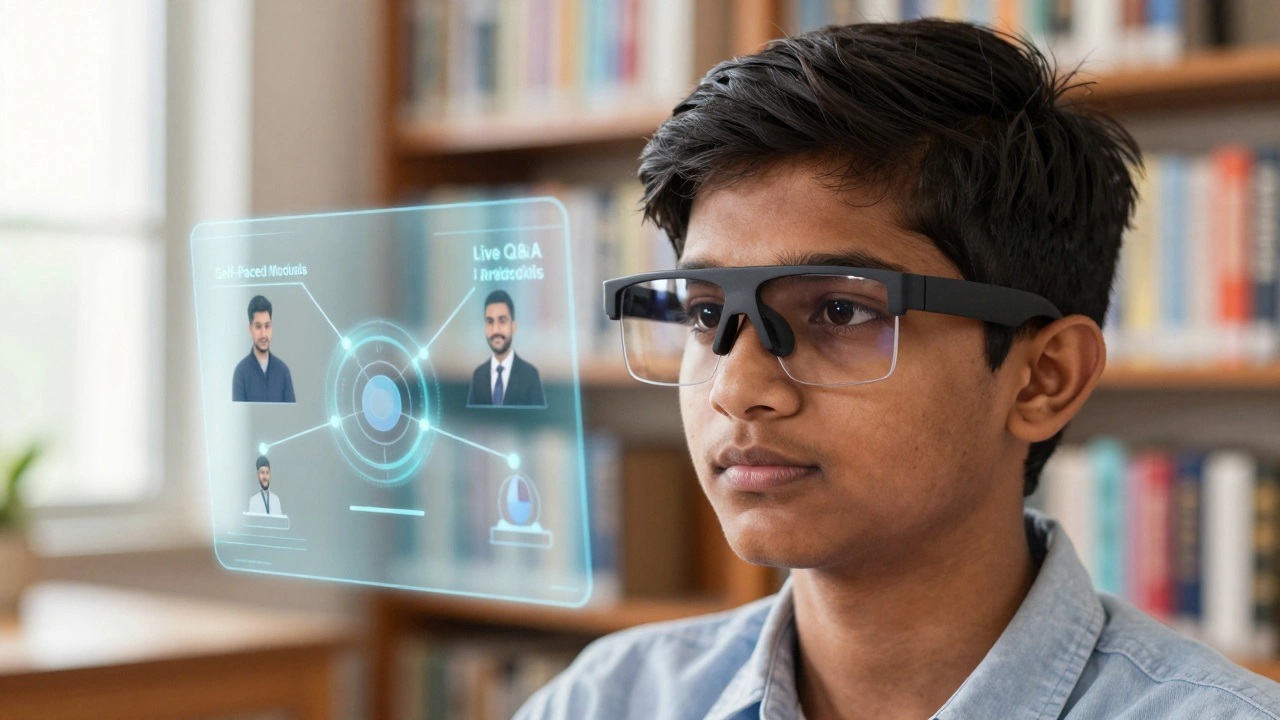
Selecting the right eLearning format isn't just about what sounds nice. It's about matching the method to your life constraints and learning goals. Ask yourself these three questions before enrolling in any program.
1. How much control do I need over my time? If you have a rigid job with unpredictable overtime, synchronous learning might cause you stress. You cannot afford to miss a live class. Asynchronous or blended options offer a safety net. If you tend to procrastinate, however, the freedom of asynchronous learning might hurt you. The structure of live sessions can act as a necessary anchor.
2. What is the complexity of the topic? Learning basic Excel formulas? Asynchronous videos are perfect. You can pause and practice. But if you are learning negotiation skills or public speaking, you need feedback. You need someone to watch you and correct your tone. These soft skills thrive in synchronous or blended environments where role-playing and immediate critique are possible.
3. Do I learn better alone or with others? Some people find group settings distracting. They prefer the quiet focus of reading and watching at their own pace. Others feel isolated when studying alone and crave the energy of a cohort. Be honest about your personality. If you are an introvert who finds video calls draining, lean towards asynchronous. If you are an extrovert who learns through debate, seek out live workshops.
The Future of Digital Education
As we move further into 2026, the lines between these three types are blurring. Technology is making asynchronous learning feel more synchronous, and vice versa.
Artificial Intelligence is playing a huge role here. AI tutors can now provide immediate feedback on written assignments, mimicking the instant response of a live teacher. This makes asynchronous learning more interactive. On the flip side, advanced analytics in live sessions allow instructors to track who is engaged and who is falling behind in real-time, making synchronous classes more personalized.
Virtual Reality (VR) and Augmented Reality (AR) are also entering the mix. Imagine practicing a surgical procedure in VR (asynchronous practice) and then reviewing your performance with a specialist doctor in a live video call (synchronous review). This is the next evolution of blended learning.
Regardless of the technology, the core principles remain. You still need to decide if you want the push of live interaction or the pull of self-paced study. Or perhaps, you need a bit of both. Understanding these three main types gives you the power to make that choice intentionally, rather than accidentally.
Is synchronous or asynchronous learning more effective?
Effectiveness depends on the learner and the subject. Studies generally show that synchronous learning leads to higher engagement for social and complex topics due to immediate feedback. Asynchronous learning often results in deeper comprehension for factual content because learners can review materials multiple times. There is no universal "better" option; it matches the individual's learning style.
What is the difference between blended and hybrid learning?
In most contexts, the terms are used interchangeably. However, some educators distinguish them slightly. "Blended" usually refers to mixing online and offline (face-to-face) elements. "Hybrid" might imply a more balanced integration where both modes are essential to the curriculum. For practical purposes, both describe combining live and self-paced instruction.
Can I switch between synchronous and asynchronous modes?
Yes, many modern platforms allow flexibility. For example, a live webinar might be recorded and made available asynchronously for those who missed it. Conversely, an asynchronous course might offer optional live Q&A sessions. Check the course details to see if recordings are provided or if live attendance is mandatory.
Which type is best for corporate training?
Blended learning is often preferred for corporate training. Compliance and procedural knowledge can be handled asynchronously to save time and money. Leadership development, sales techniques, and team-building benefit from synchronous interaction. This mix maximizes ROI by using live time for high-value activities.
Do employers value certificates from asynchronous courses?
Yes, especially from reputable platforms like Coursera, edX, or industry-specific providers. Employers care more about the skills demonstrated and the credibility of the issuing institution than the delivery method. However, synchronous programs from accredited universities often carry more weight for degree-seeking candidates.