
Right now, the most in-demand career isn’t what you think it is. It’s not just software engineering or data science, though those are still hot. It’s not even nursing or teaching, even though we’ve seen them grow over the last few years. The real winner? AI prompt engineers.
Why AI prompt engineers are the top pick
You’ve probably heard of AI tools like ChatGPT, Gemini, or Claude. But most people just type in basic questions and call it a day. The people who make these tools actually work for companies - they’re the ones fine-tuning prompts to get accurate, useful, and safe answers. That’s the job of an AI prompt engineer.
This role didn’t exist five years ago. Now, companies like Google, Microsoft, and startups in Sydney and Melbourne are hiring them full-time. They don’t need a computer science degree. Many come from backgrounds in linguistics, psychology, or even creative writing. What they do need is a sharp eye for detail and the ability to ask the right questions.
According to a 2025 report from LinkedIn, AI prompt engineering roles grew by 280% in the last year alone. The average salary in Australia? Around $95,000 AUD, with senior roles hitting $140,000. And most of these jobs are remote-friendly. You can work from Adelaide, Perth, or even a beach town in Queensland.
How to get started - no degree required
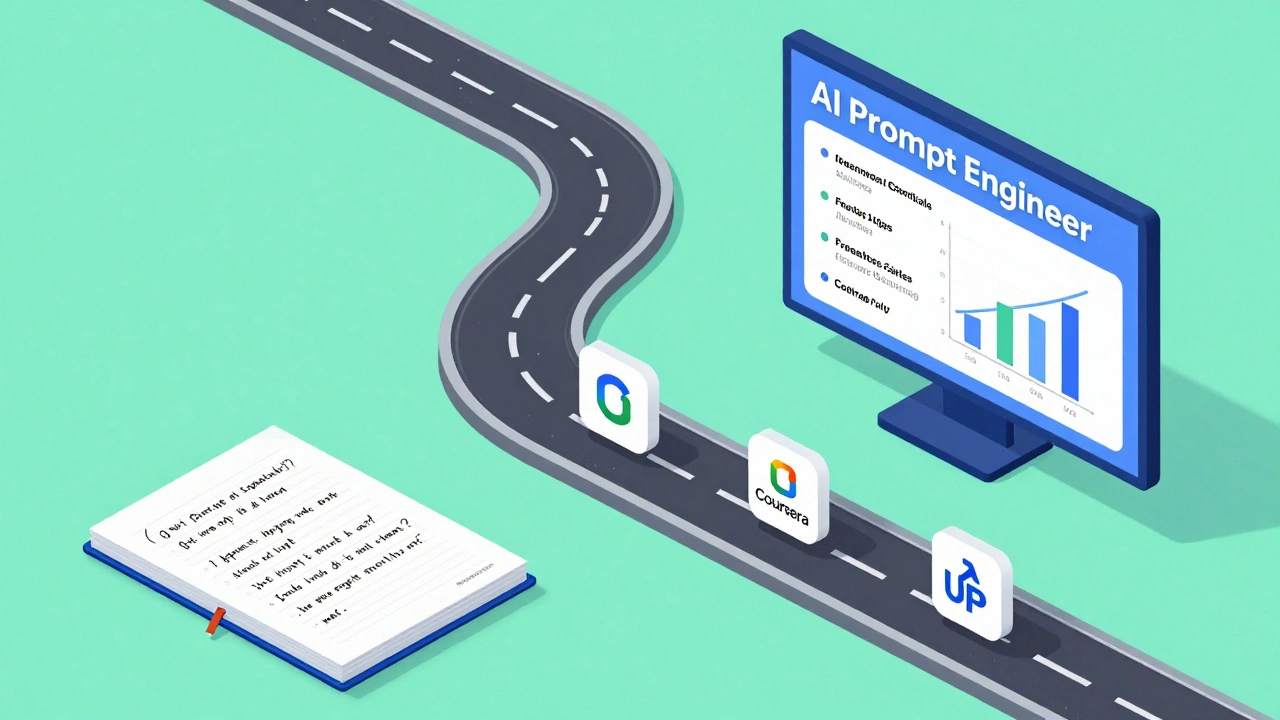
You don’t need to go back to university. There are dozens of affordable, high-quality online courses that teach prompt engineering in under 10 weeks. Platforms like Coursera, Udemy, and even free resources from Google’s AI Essentials program give you hands-on practice.
Here’s what a real beginner’s path looks like:
- Take a free 4-hour intro course on prompt fundamentals (Google’s AI Essentials is a solid start).
- Practice daily using free AI tools. Try asking complex questions: “Explain quantum computing like I’m 12, then write a short story based on it.” Analyze how the AI responds.
- Build a portfolio. Record 5-10 prompts you’ve crafted and the results they produced. Show how you improved clarity, reduced bias, or got more creative output.
- Apply for freelance gigs on Upwork or Fiverr. Start with small tasks like rewriting product descriptions or generating marketing copy.
- Once you have 3-5 completed projects, apply for junior AI assistant roles at tech startups.
One student from Brisbane, Sarah Lin, finished a 6-week online course in late 2024. She started freelancing in January 2025. By March, she was earning $3,500 a month working part-time for a health tech company. She never took a single university class.

Other top in-demand careers (and how to train for them)
AI prompt engineering is #1 - but it’s not the only one. Here are three others growing fast, with clear paths using online courses:
1. Cybersecurity analysts
Every business now needs someone to protect its data. The Australian Cyber Security Centre reports over 10,000 unfilled cybersecurity roles in 2025. You can train for this in 3-6 months with certifications like CompTIA Security+ or Google’s Cybersecurity Certificate. Most courses are online, hands-on, and cost under $500. Many employers accept these certs instead of degrees.
2. Renewable energy technicians
Australia’s push to hit net-zero by 2050 means solar and wind installations are exploding. Technicians who install, maintain, and repair these systems are in high demand - especially in regional areas like South Australia. TAFE and online providers like FutureLearn offer certified training programs. You can start earning a wage as an apprentice while you learn. Median pay: $85,000 AUD.
3. UX/UI designers for mobile apps
Every company wants a better app. But most apps are clunky. That’s where UX/UI designers come in. You don’t need to code. You need to understand how people think. Online courses from Interaction Design Foundation or Adobe’s free design courses teach you wireframing, user testing, and prototyping. Many graduates land remote jobs with US or EU companies.
What’s NOT in demand anymore
Let’s be clear: some careers are shrinking fast. Traditional data entry, basic customer service roles handled by call centers, and routine accounting tasks are being automated. If you’re in one of these fields, don’t wait. Upskill now.
Online courses aren’t magic. But they’re the fastest, cheapest way to pivot. You can learn AI prompt engineering, cybersecurity, or renewable energy tech while keeping your current job. Most programs take 10-15 hours a week. You can do it after work, on weekends, or during lunch breaks.
Start now - before the competition catches up
The window to get into these fields is still wide open. But it’s closing. More people are discovering these paths every month. In 2024, only 12% of AI prompt engineering hires had formal degrees. By 2027, that number could be 40%. The earlier you start, the less competition you face.
Here’s the truth: the most in-demand career isn’t about where you went to school. It’s about what you can do today. Can you craft a prompt that gets a perfect answer from an AI? Can you spot a security flaw in a website? Can you design an app that users actually enjoy? If yes - you’re already on the path.
Don’t wait for a perfect plan. Pick one skill. Take one course. Do one project. In six months, you’ll look back and wonder why you didn’t start sooner.
Do I need a degree to become an AI prompt engineer?
No, you don’t. Most people in this field come from non-technical backgrounds - writing, marketing, education, or even the arts. Employers care more about your ability to structure clear, effective prompts and analyze AI output than your degree. Online certifications and real-world projects matter far more.
How long does it take to land a job in AI prompt engineering?
With consistent practice, you can be job-ready in 3-6 months. Start by taking a free course, then spend 1-2 hours a day practicing prompts. Build a simple portfolio showing before-and-after examples of your work. Apply for freelance gigs first - many turn into full-time offers. The key is showing results, not credentials.
Are these careers only for tech-savvy people?
Not at all. AI prompt engineering is more about communication than coding. Cybersecurity analysts need problem-solving skills, not a computer science PhD. Renewable energy techs often start as electricians or tradespeople who upskill. UX/UI design is about empathy and observation. These fields welcome people from all walks of life - if you’re willing to learn.
Can I do this while working full-time?
Absolutely. Most online courses are designed for working adults. You can complete a certification in under 100 hours total. That’s just 3-4 hours a week. Many people study after work, on weekends, or during lunch breaks. Freelancing can even start generating income before you fully switch careers.
What’s the best online platform to start learning?
For AI prompt engineering, start with Google’s free AI Essentials course. For cybersecurity, try Google’s Cybersecurity Certificate on Coursera. For UX/UI, Interaction Design Foundation offers affordable, high-quality modules. All of these are self-paced, include hands-on projects, and cost less than $200.
Next steps: Pick one and begin
Don’t try to learn everything. Pick one career path that excites you - even if it feels unfamiliar. Sign up for the free intro course today. Spend 20 minutes experimenting with an AI tool. Write down one thing you learned. That’s your first step.
The future of work isn’t about having the right degree. It’s about being willing to learn, adapt, and build something new - even if you’re starting from scratch.