Quick Guide to Common Terms
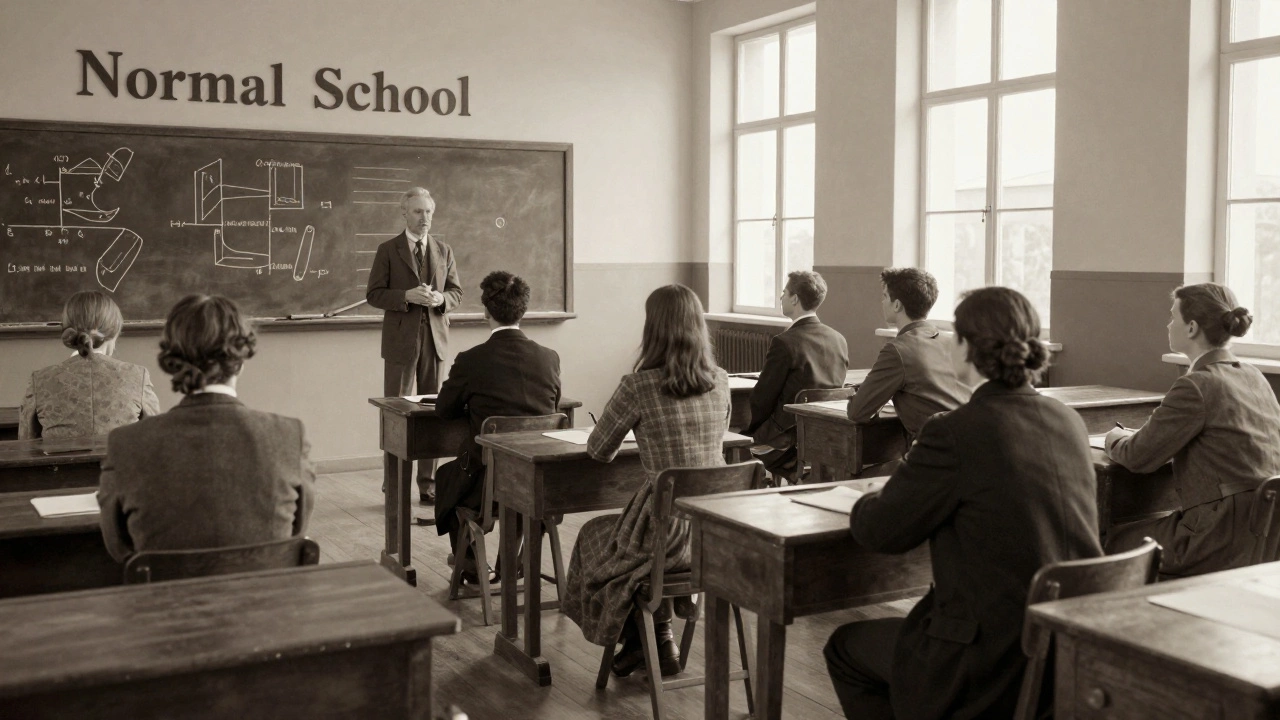
- Normal School: The historical term for primary teacher training.
- Teachers College: A specialized institution focused solely on educator prep.
- College of Education: A department or faculty within a larger university.
- Pedagogical Institute: A term more common in Europe and Asia focusing on the science of teaching.
The Legacy of the Normal School
If you dig into the history of education, you'll keep seeing the term Normal School is a type of institution designed to establish a 'norm' or standard for teaching practices. The name comes from the French phrase école normale. Back in the 1800s, teaching wasn't always a formal profession. You could be a teacher simply because you were a literate adult in the village. Normal schools changed that by creating a standardized curriculum. They didn't just teach teacher training school subjects; they taught how to manage a classroom and how to break down complex ideas for children.
In the United States, for example, Horace Mann pushed for these schools in the mid-19th century to ensure every child had a qualified teacher. While you won't find many "Normal Schools" active today, most of them evolved. They grew from two-year certificates into four-year degrees, eventually rebranding as state colleges or universities. If you see a school today called "State Teachers College," it's almost certainly a descendant of the Normal School movement.
Teachers Colleges vs. University Departments
Not all training happens in the same kind of environment. There is a big difference between a standalone Teachers College and a department within a larger university. A Teachers College is a specialized entity where every single student, professor, and resource is dedicated to the art of instruction. These institutions often have a tighter-knit community and a curriculum that is 100% focused on the profession from day one.
On the other hand, many people get their training through a College of Education. This is typically a faculty within a massive university system. The advantage here is the breadth of resources. A student in a College of Education can take a class in theoretical physics from the science department and then head over to their education seminar to learn how to teach that specific physics concept to a 10th grader. This creates a bridge between subject-matter expertise and instructional skill.
Global Perspectives on Training Names
Depending on where you are in the world, the terminology shifts. In many European countries, you might hear about a Pedagogical Institute. This highlights the focus on Pedagogy, which is the method and practice of teaching, especially as an academic discipline. While Americans might talk about "lesson planning," a pedagogical approach looks at the psychological and sociological impact of the teaching method on the learner.
In the UK and Commonwealth countries, the terminology often revolves around the qualification rather than the school's name. You'll hear about the PGCE, or Postgraduate Certificate in Education. In this case, the "school" is often a university's education department, but the identity of the training is tied to the certification. The focus is heavily on the practicum-the time spent actually working in a school under a mentor-which is sometimes called a teaching residency.
Comparing Different Training Paths
Choosing the right path depends on whether you want a narrow, intense focus or a broad academic experience. Here is how the primary options stack up:
| Institution Type | Primary Focus | Typical Qualification | Environment |
|---|---|---|---|
| Teachers College | Professional Practice | B.Ed / M.Ed | Specialized/Intense |
| University College of Ed | Subject + Method | B.A./B.S. + Certification | Broad/Academic |
| Normal School (Historic) | Standardization | Teaching Certificate | Vocational/Basic |
| Pedagogical Institute | Theory of Learning | Professional Degree | Research-oriented |
Modern Alternatives: Alternative Certification
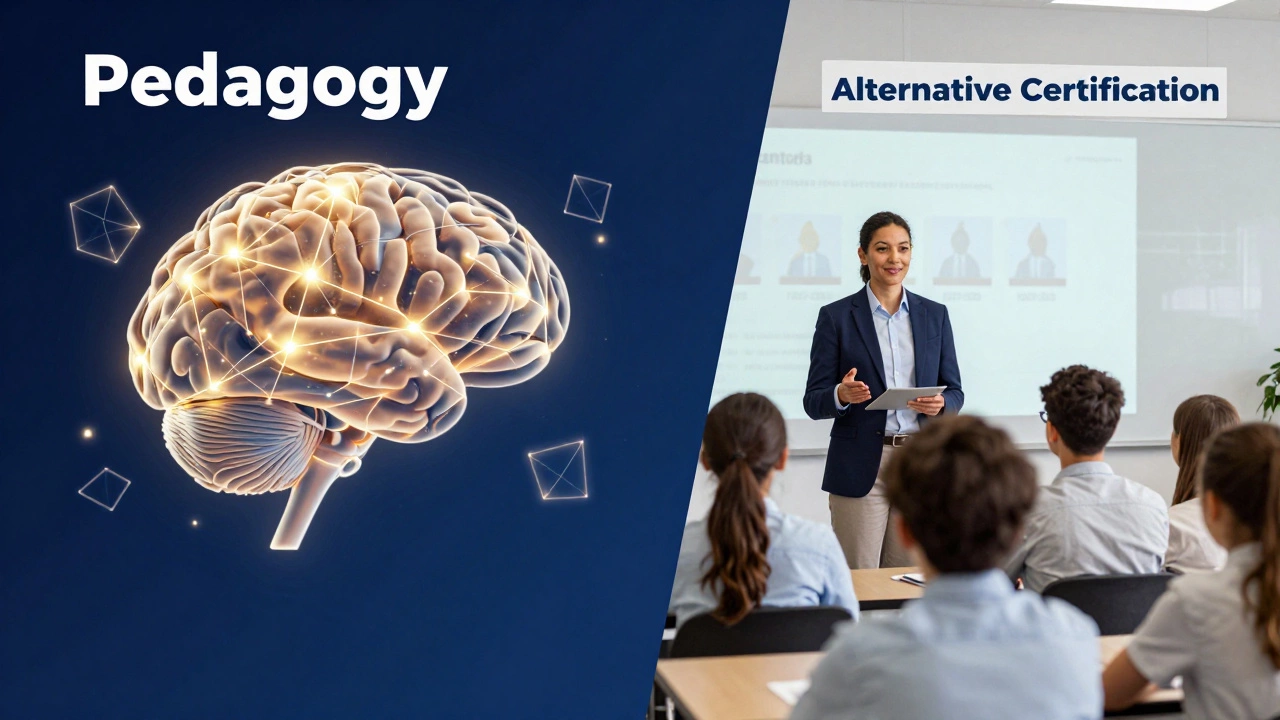
It's not all about traditional schools anymore. We're seeing a rise in Alternative Certification Programs. These are designed for people who already have a degree in a specific field-like engineering or history-but want to switch to teaching. Instead of spending four years in a Teachers College, they might enter a program where they teach in a classroom from day one while taking evening classes to get their license.
Programs like Teach For America or various state-led residency models act as a "school" without the traditional campus. They prioritize clinical experience (the actual act of teaching) over theoretical coursework. This shift is a response to the teacher shortage in many regions, allowing professionals to pivot into education more quickly. While they aren't "schools" in the brick-and-mortar sense, they perform the exact same function as a teacher training school.
Key Terms You Should Know
If you are browsing course catalogs or job descriptions, these terms will pop up. Understanding them will save you a lot of confusion:
- Practicum / Student Teaching: The supervised period where a student teacher works in a real classroom. This is the "clinical" part of the training.
- B.Ed (Bachelor of Education): The standard undergraduate degree awarded by most training schools.
- M.Ed (Master of Education): An advanced degree for those looking to specialize in areas like special education or administration.
- Credentialing: The process of getting the official state or national license to teach.
- Accreditation: The seal of approval that tells you a training school meets the professional standards of the industry.
Which Name Should You Use?
If you're writing a formal paper, stick to "College of Education" or "Teacher Education Program." If you're talking about the history of the profession, "Normal School" is the correct term. In a casual conversation, "teacher training college" is perfectly understood everywhere. The most important thing isn't the name of the building, but whether the program provides the balance of subject knowledge and instructional skill needed to actually help students learn.
Is a Normal School the same as a Teachers College?
Essentially, yes, but they belong to different eras. Normal Schools were the early versions of teacher training centers that focused on basic standardization. Most evolved into Teachers Colleges or universities as the requirements for becoming a teacher became more rigorous and required a full college degree.
What is the difference between pedagogy and teacher training?
Teacher training is the overall process of becoming a teacher, which includes everything from learning the subject matter to filling out paperwork. Pedagogy is a specific part of that training; it is the study of how we teach. It focuses on the theory and practice of the instructional act itself.
What is a PGCE?
A PGCE stands for Postgraduate Certificate in Education. It is a common qualification in the UK and other Commonwealth countries. It's a one-year program taken after a university degree that prepares graduates to teach in schools.
Do I need to go to a dedicated teachers college to teach?
No. Many people get their teaching credentials through a general university's College of Education or through alternative certification paths. The key is that the program must be accredited by the relevant government or educational board to grant a legal license to teach.
What are some examples of alternative certification?
Alternative certification involves programs where candidates enter the classroom immediately and earn their license while working. Examples include residency programs or organizations like Teach For America, which recruit non-education majors into high-need classrooms.