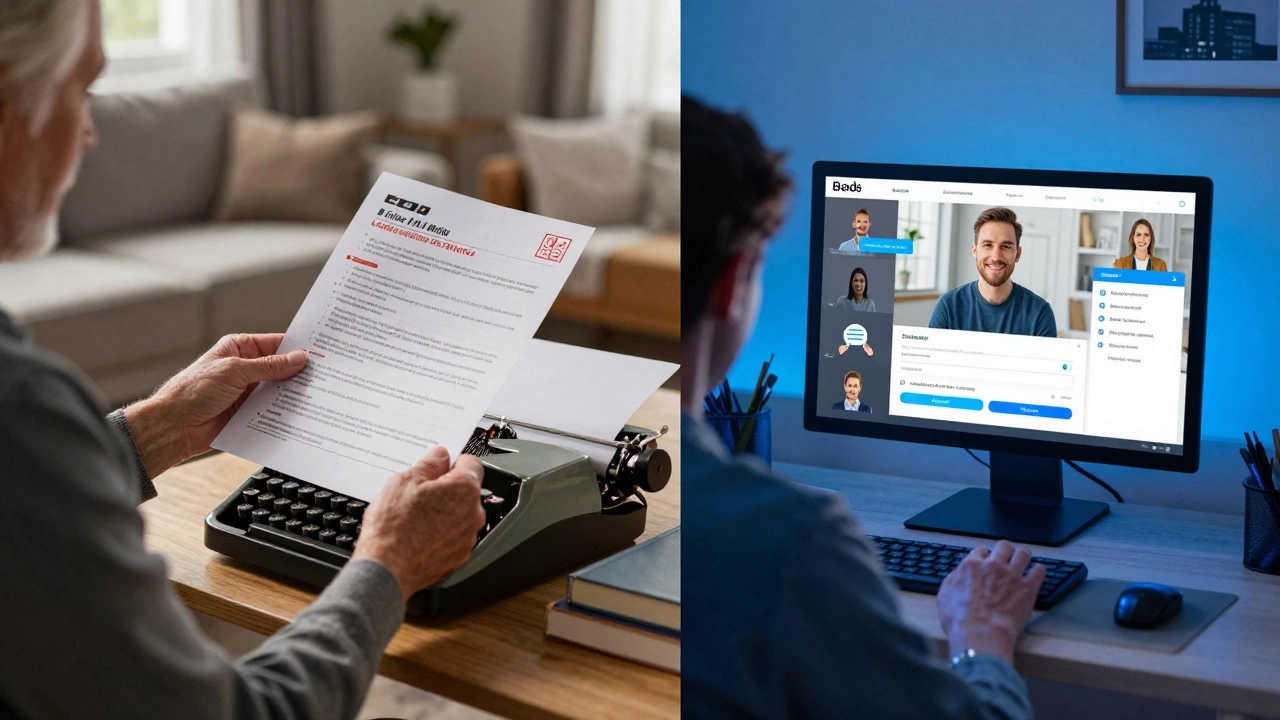
People often use the terms distance learning and online learning like they mean the same thing. But they don’t. If you’re trying to pick a path for your education - whether you’re going back to school, switching careers, or just learning something new - mixing them up could cost you time, money, and frustration.
Distance learning isn’t just about being remote
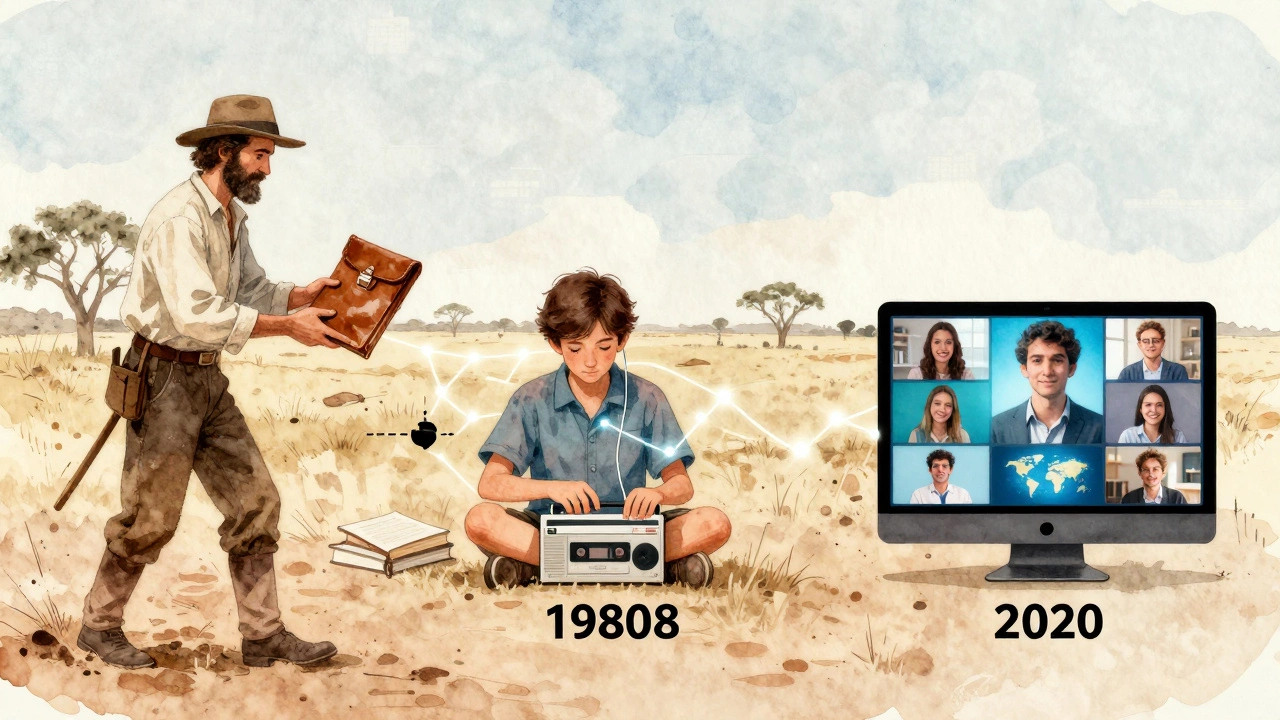
Distance learning has been around since the 1800s. Back then, it meant mailed lessons, printed textbooks, and handwritten assignments sent by post. Even in the 1980s, students in rural Australia got course materials through the postal service. Today, that model still exists - but it’s evolved.Distance learning focuses on separation. The student and teacher are physically apart. Communication isn’t always real-time. You might get a packet of study guides, a DVD with lectures, or a printed workbook. You complete assignments, mail them in, and wait weeks for feedback. Some programs still use this method, especially in areas with poor internet or for learners who prefer low-tech options.
It’s not about the tool - it’s about the structure. Distance learning is designed for flexibility, not speed. It’s common in vocational training, adult education, and in countries where internet access is limited. Think of it like correspondence courses with modern updates.
Online learning is built for connection
Online learning, on the other hand, lives on the internet. It’s not just about sending files - it’s about interaction. You log in to a platform like Moodle, Canvas, or Google Classroom. You watch videos, join live Zoom sessions, post in discussion boards, submit assignments digitally, and get feedback within hours, not weeks.Online learning is designed for engagement. It uses tools like quizzes with instant results, group projects over Slack, peer reviews, and real-time Q&A with instructors. Many universities now offer full degrees online - not because they’re cutting corners, but because they’ve built systems that support active learning remotely.
And here’s the key difference: online learning can be synchronous (live classes) or asynchronous (self-paced), but it always relies on digital infrastructure. You need a stable internet connection. You need to be comfortable using apps and platforms. If your internet goes down, your class stops.
Time and interaction: the real divide
If you’re choosing between the two, ask yourself: Do I need to talk to my teacher right now?Distance learning gives you freedom - but it’s lonely. You might go weeks without speaking to anyone in your course. Feedback comes slowly. There’s no chat group. No live office hours. You’re on your own, and that works for some people - especially those with irregular schedules, caregivers, or people in remote areas.
Online learning gives you structure - but it demands presence. You’re expected to log in regularly. Deadlines are strict. You’re part of a digital classroom. You’ll see your classmates’ names. You’ll reply to their posts. You might even form study groups. It’s more like traditional school - just without the physical building.
A 2023 study from the Australian Department of Education found that students in online learning programs completed their courses 37% faster than those in traditional distance learning programs. Why? Because they had access to real-time support, peer motivation, and automated feedback systems.
Technology requirements: what you actually need
Distance learning doesn’t require much. A printer, a mailbox, maybe a phone for occasional calls. Some programs even send USB drives with course content. You don’t need to be tech-savvy. You just need to be consistent.Online learning? You need more. A reliable computer. A decent internet connection. A webcam if there are live sessions. You need to know how to upload files, join video calls, and use learning platforms. If you’ve never used Google Drive or Zoom before, you’ll need to learn - and fast.
That’s why some adult learners, especially older ones, still choose distance learning. It’s less intimidating. It doesn’t ask them to become digital natives overnight. But if you’re younger, or already comfortable with apps, online learning gives you more control, more support, and more speed.
Cost and accessibility: who benefits from what?
Distance learning is often cheaper. No need to pay for platform licenses, video hosting, or tech support. Many government-funded vocational programs in Australia still use this model because it’s scalable and low-cost.Online learning costs more to run - but it’s often more affordable for students. Why? Because you save on travel, accommodation, and sometimes even textbooks (they’re digital). Many platforms offer free trials or open courses. You can start a course on Coursera or edX for $0 and upgrade later if you want a certificate.
Accessibility isn’t just about internet. Distance learning can reach people without smartphones. Online learning can reach people anywhere in the world - as long as they have Wi-Fi. In cities like Adelaide, where 96% of households have broadband, online learning is the obvious choice. In remote parts of South Australia? Distance learning still matters.
Which one suits your goals?
Ask yourself these three questions:- Do I need feedback quickly? If yes → online learning.
- Do I have a stable internet connection and basic tech skills? If no → distance learning might be easier to start with.
- Do I want to feel connected to a learning community? If yes → online learning wins.
For example:
- If you’re a single parent working nights and studying nursing basics, distance learning with printed modules might be your best bet.
- If you’re a 22-year-old wanting to get certified in digital marketing and can log in after work, online learning with live webinars and peer feedback will help you finish faster and feel less isolated.
Neither is better. They’re just different tools for different lives.
What’s the future holding?
The lines are blurring. Many institutions now offer hybrid models - you get printed materials and access to an online portal. Some courses start as distance learning and shift to online as you progress.But the core difference stays: distance learning is about delivering content across space. Online learning is about building a learning experience across time and connection.
If you’re starting out, don’t just pick the trend. Pick the model that matches your life - not the one that sounds cooler.
Is distance learning the same as online learning?
No. Distance learning means learning remotely, often with minimal real-time interaction - using mail, DVDs, or printed materials. Online learning happens over the internet with live sessions, digital assignments, and instant feedback. One is about separation; the other is about digital connection.
Which is better for someone with poor internet?
Distance learning is better. It doesn’t require constant internet access. You receive materials by post or USB, complete work offline, and submit it when you can. Online learning won’t work without reliable connectivity.
Can I get a degree through distance learning?
Yes. Many universities, including the University of South Australia and Charles Darwin University, offer accredited degrees through distance learning. These programs are recognized by employers and government bodies, just like online or on-campus degrees.
Do online courses cost more than distance learning?
Online courses often cost more for institutions to run, but students usually pay the same or less because they save on travel, housing, and physical materials. Some online platforms even offer free courses with paid certificates.
Which one looks better on a resume?
Neither. Employers care about the qualification, not how you earned it. What matters is whether the program is accredited and what skills you gained. A degree from a recognized institution - whether delivered online, by mail, or in person - holds the same value.
Can I switch from distance to online learning mid-course?
Sometimes. Many institutions now offer hybrid options. If you start with printed materials and later get better internet access, you can ask your provider if you can move to their online portal. It’s not automatic, but it’s often possible.
What to do next
If you’re unsure which path to take, start small. Try a free online course on a platform like FutureLearn or Khan Academy. See how you feel about logging in daily, submitting work digitally, and interacting with others online.Then, check if your local TAFE or community college offers distance learning materials. Get a printed sample. See if you’d prefer working without screens.
There’s no right answer - only the right fit for your life right now.