
Essential English Words Practice Tool
Daily Vocabulary Practice
Practice the 100 most common English words. Start with today's word and say it aloud.
Your Progress
Tips from the Article
- Start with words you use every day
- Learn in context - say "Where is the bathroom?" not just "where"
- Focus on pronunciation over accent
- Speak from day one, even if you make mistakes
If you’re just starting out with English, the biggest mistake isn’t speaking too slowly or making grammar errors. It’s trying to learn everything at once. You open an app, see 500 vocabulary words, watch a video on past perfect tense, and suddenly you’re overwhelmed. The truth? You don’t need all of that. What you need is a clear starting point-and the right order.
Start with words you use every day
Forget memorizing lists of fancy words like ‘benevolent’ or ‘ubiquitous.’ Those won’t help you order coffee, ask for directions, or introduce yourself. Instead, focus on high-frequency words-ones native speakers use over and over. Studies show that just 100 words make up nearly half of all spoken English. These include: hello, thank you, yes, no, please, help, where, what, how, time, eat, go, come, good, bad.
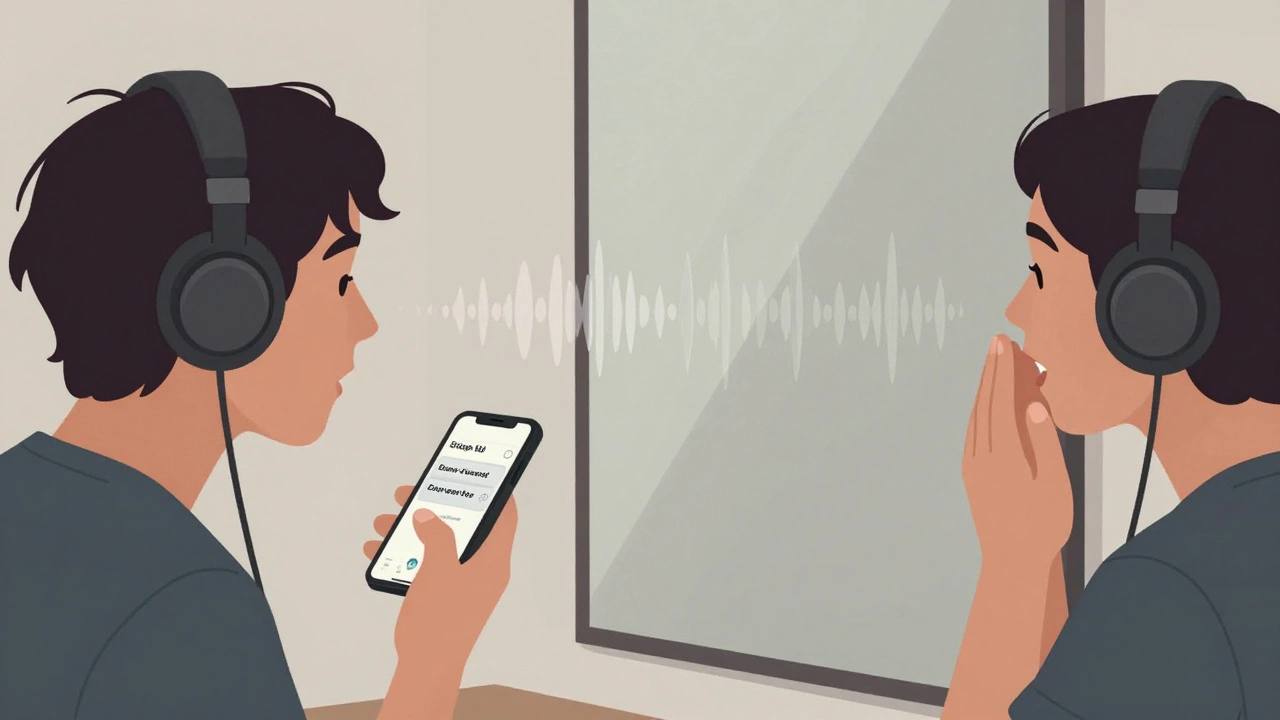
Learn these in context. Don’t just write them down. Say them out loud. Practice with a mirror. Record yourself. Say, ‘Where is the bathroom?’ instead of just memorizing ‘where’ and ‘bathroom.’ When you speak these phrases daily, even for five minutes, your brain starts to recognize them as natural patterns-not foreign symbols.
Master simple sentences before complex grammar
You don’t need to know subject-verb-object agreement rules to say, ‘I want water.’ You don’t need to understand conditionals to ask, ‘Can you help me?’ Start with basic sentence structures: Subject + Verb + Object. That’s it. ‘I eat rice.’ ‘She goes to work.’ ‘They like music.’
Once you can build those, add small modifiers: ‘I eat rice every day.’ ‘She goes to work by bus.’ These aren’t grammar lessons-they’re real-life tools. Grammar rules come later. Right now, you want to be understood, not to write an essay.
Many learners get stuck trying to ‘do grammar right’ and never speak. That’s backwards. Think of it like learning to drive: you don’t start by studying engine mechanics. You start by turning the key and moving the car. Same here.
Listen more than you speak-at first
It’s easy to think speaking is the goal. But listening is the foundation. If you can’t understand what someone says, you can’t respond properly. Start with slow, clear audio. YouTube channels like ‘Learn English with Emma’ or podcasts like ‘ESLPod’ are perfect. Listen for just 10 minutes a day.
Don’t try to translate every word. Focus on the rhythm. Notice how people shorten words: ‘I am’ becomes ‘I’m,’ ‘do not’ becomes ‘don’t.’ Pay attention to how questions sound-do they go up at the end? Do people drop sounds? ‘Wanna’ for ‘want to,’ ‘gotta’ for ‘got to.’ These aren’t slang-they’re how English is actually spoken.
Try shadowing: play a short clip, pause it, then repeat exactly what you heard, matching the tone and speed. Do this for five days straight. You’ll start hearing patterns you never noticed before.
Learn phrases, not just words
English isn’t a puzzle where you put individual words together. It’s made of ready-made chunks. Instead of learning ‘how,’ ‘are,’ ‘you,’ learn: ‘How are you?’, ‘What’s up?’, ‘Do you have a minute?’, ‘I’m sorry, I didn’t catch that.’
These phrases are your survival kit. Use them in real situations. When you’re at the grocery store, say, ‘How much is this?’ Don’t wait until you ‘know enough.’ You’ll never feel ready. Start now. The more you use them, the more natural they become.
Write down 5 phrases you hear often. Say them aloud three times a day. After a week, you’ll be using them without thinking.

Focus on pronunciation, not accent
You don’t need to sound like a British or American actor. You need to be understood. The goal isn’t to lose your accent-it’s to make sure your pronunciation doesn’t block communication.
Three sounds trip up most beginners: th (as in ‘think’ or ‘this’), v vs w, and r vs l. Practice these daily. Say ‘this’ and ‘dis’ out loud. Feel the difference. Say ‘very’ and ‘wery.’ Notice how your lips move.
Use free tools like Google Translate’s voice feature. Say a word, listen to how it sounds, then say it again. Repeat until it matches. It’s not about perfection-it’s about clarity.
Speak from day one-even if you’re scared
Waiting until you’re ‘ready’ is the biggest delay tactic in language learning. You’ll never feel ready. The only way to get better is to use it, mess up, and try again.
Find one person to practice with. It could be a language partner online, a friend, or even a tutor for one 15-minute session a week. Say this: ‘I’m learning English. Can we talk for 10 minutes?’ Most people will say yes. You’d be surprised how kind strangers are.
Don’t worry about grammar. Don’t worry about sounding stupid. Say, ‘I go store yesterday.’ They’ll understand. They’ll correct you. That’s how you learn.
Track progress with small wins
Progress in English isn’t measured by tests. It’s measured by real moments: the first time you understood a whole sentence on TV. The first time someone said, ‘Your English is good.’ The first time you ordered food without pointing.
Keep a simple journal. Every day, write one thing you learned or did in English. ‘Today I asked for the time.’ ‘Today I understood a song lyric.’ These aren’t big achievements-but they’re real. And they add up.
After 30 days, look back. You’ll see how far you’ve come. That’s what keeps you going.
What not to do
- Don’t memorize long lists of vocabulary without context.
- Don’t wait until you ‘know grammar’ to speak.
- Don’t compare yourself to native speakers or advanced learners.
- Don’t use apps that promise fluency in 30 days. They’re designed to sell subscriptions, not teach.
- Don’t skip listening. You can’t speak well if you can’t understand.
Learning English isn’t about being perfect. It’s about being consistent. One small step every day beats five hours once a month.
First 30-day plan
- Learn 10 high-frequency words and use them in sentences every day.
- Listen to 10 minutes of slow English audio daily.
- Practice 3 common phrases out loud three times a day.
- Find one person to speak with for 10 minutes once a week.
- Write one sentence in your journal every day about what you did in English.
Stick to this for 30 days. No extra apps. No complicated books. Just these five things. At the end, you won’t be fluent-but you’ll be confident. And that’s the real first step.
Should I learn grammar first when starting English?
No. Grammar is important, but it’s not the starting point. Focus on understanding and using simple phrases first. You’ll naturally pick up grammar rules through repetition and correction. Trying to learn grammar before speaking leads to paralysis. Speak first, refine later.
How many words do I need to know to speak basic English?
You only need about 300-500 words to handle everyday situations like shopping, asking for help, or talking about yourself. The top 100 words cover nearly 50% of spoken English. Focus on those before expanding your vocabulary.
Is it better to learn British or American English?
It doesn’t matter for beginners. Both are widely understood. Choose based on what you hear most-like a show, podcast, or teacher. The differences in spelling or accent are minor at this stage. Focus on being clear, not sounding like someone from London or New York.
How long does it take to start speaking English?
With consistent daily practice-10 to 15 minutes-you can start holding simple conversations in 4 to 8 weeks. It’s not about speed. It’s about repetition. One phrase practiced daily becomes automatic. That’s how real learning happens.
What’s the best app for beginners learning English?
There’s no single ‘best’ app. Duolingo and Memrise are good for vocabulary, but they’re not enough. Use them alongside listening practice (like ESLPod) and speaking with real people. Apps are tools, not teachers. Your progress depends on how often you speak, not how many streaks you keep.
Next steps after 30 days
Once you’ve done the first 30 days, you’re no longer a complete beginner. You can ask for things, understand basic replies, and express simple needs. Now, expand: learn how to talk about the past (‘I went,’ ‘She ate’), describe people and places, and ask follow-up questions like ‘Why?’ or ‘When?’
Keep listening. Keep speaking. Keep journaling. The next level isn’t about more rules-it’s about more confidence. And that comes from doing, not studying.