Classroom Exit Restrictions: What They Are and How They Affect Indian Students
When you think about classroom exit restrictions, rules that limit when and how students can leave their seats during class time. These are common in Indian schools, especially under boards like CBSE, and they’re not just about order—they shape how students learn, focus, and even manage stress. These rules often say you can’t get up without permission, not even to use the bathroom, drink water, or stretch. It sounds strict, but schools say it’s to prevent disruption and maintain discipline. The real question is: does it help learning—or hurt it?
These restrictions are tied to deeper systems like school discipline policies, formal rules enforced to control student behavior in educational settings. In many Indian classrooms, especially in government and private schools following rigid structures, teachers are expected to maintain control through uniformity. That means silence, stillness, and minimal movement. But this clashes with how the brain actually works. Studies show that short breaks, even just standing up or walking to the water cooler, help memory and attention. When students are forced to hold it in—whether it’s a full bladder, a headache, or just mental fatigue—they’re not learning better. They’re just enduring.
And it’s not just about physical needs. student mobility in schools, the freedom students have to move within the classroom environment for learning or comfort is a silent factor in engagement. Think about it: if you’re 14 and stuck in a chair for 45 minutes with no escape, your mind wanders. You zone out. You stop listening. But if you’re allowed to stand, stretch, or even just walk to the back of the room to get a tissue, you reset. That’s not rebellion—it’s biology. Yet, in many Indian schools, mobility is treated like a privilege, not a basic need.
These rules also vary wildly. In elite private schools, teachers might quietly let kids step out if they raise their hand. In crowded government schools, with 70 students per class and one teacher, any movement is seen as chaos. The result? Kids learn to stay quiet, even when they’re in pain. They learn to suppress basic needs. And that’s not discipline—it’s conditioning.
What you’ll find in the posts below are real stories and data about how Indian schools operate—from CBSE’s broad policies to how teachers enforce (or ignore) these rules. You’ll see how classroom restrictions connect to bigger issues: student mental health, exam pressure, and the gap between policy and practice. Some posts dig into how students cope. Others look at how these rules affect learning outcomes. None of it is theoretical. It’s all happening right now, in classrooms across India.
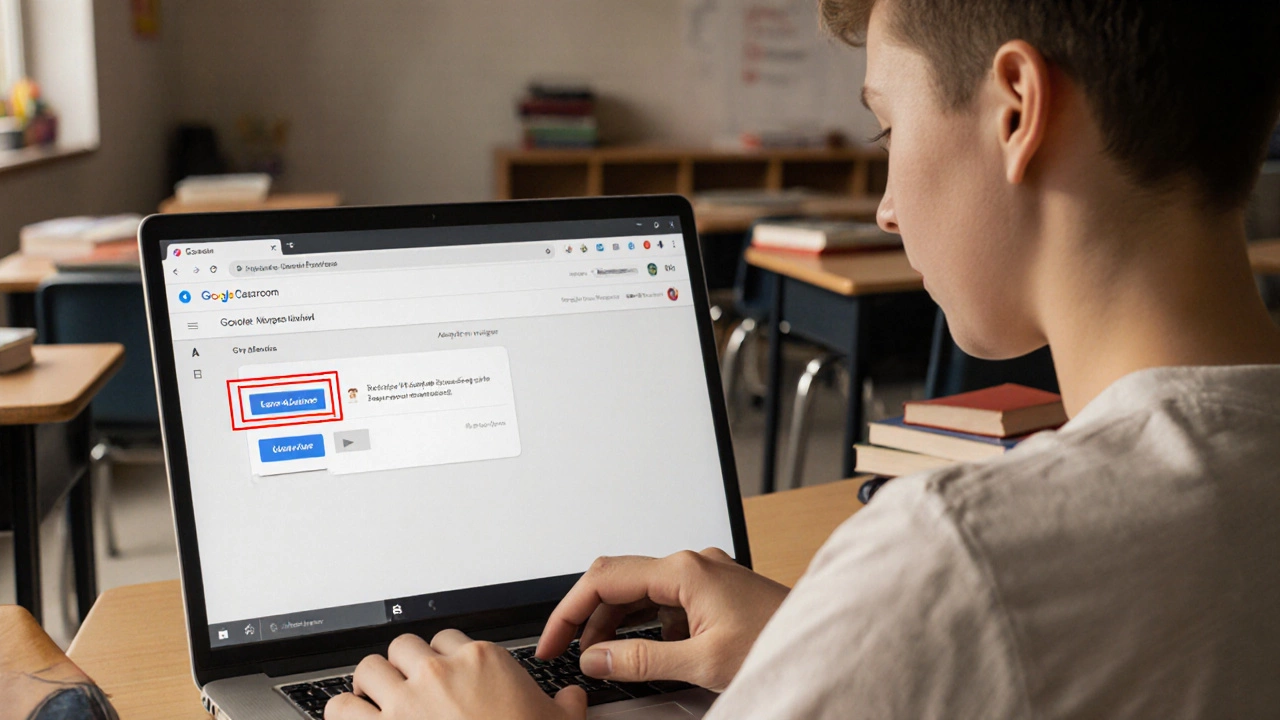
Why You Can’t Exit Google Classroom Anymore - Causes and Fixes
Discover why the Google Classroom leave button can be disabled, the admin settings behind it, and step‑by‑step ways to exit a class safely.