Coding for Beginners: What to Learn First and How to Start
When you're new to coding for beginners, the process of writing instructions computers understand to build apps, websites, or tools. Also known as programming for beginners, it's not about memorizing syntax—it's about solving problems step by step. You don’t need a computer science degree. You don’t need to be a math genius. You just need to start building something, even if it’s small.
Most people who succeed in coding start with either Python, a simple, readable language used for websites, data analysis, and automation or JavaScript, the language that makes websites interactive, from buttons to animations. Python lets you write a script that renames 100 files in seconds. JavaScript lets you build a calculator that works right in your browser. Both give you quick wins—something you can show someone after just a few hours. That’s what keeps people going.
What most beginners don’t realize is that the real challenge isn’t learning a language—it’s learning how to think like a coder. It’s breaking big problems into tiny steps. It’s debugging when something doesn’t work. It’s trying again after hitting a wall. That’s why so many people over 50, career changers, and self-taught coders are landing jobs in 2025—they didn’t wait for perfect conditions. They built projects. They shared them. They asked for feedback. One person taught themselves Python while working night shifts. Another learned JavaScript by rebuilding their favorite website from scratch. Neither had a degree. Both got hired.
You don’t need expensive courses. You don’t need to join a bootcamp right away. Start with free tools: Codecademy, freeCodeCamp, or even YouTube tutorials. Spend 30 minutes a day building something real—a to-do list, a simple game, a page that shows the current weather. That’s more valuable than watching five hours of theory. The best coders aren’t the ones who learned fastest. They’re the ones who kept going.
There’s a myth that coding is only for young people or tech insiders. But the truth is, it’s for anyone who’s curious. Whether you want to automate your job, build a side business, or just understand how the digital world works, coding gives you control. And the path? It’s not a straight line. It’s messy. It’s full of errors. But every error teaches you something.
Below, you’ll find real stories from people who started with zero experience and ended up with jobs, projects, and confidence. You’ll see which languages actually matter for beginners, how to avoid wasting time on outdated advice, and what hiring managers really look for in self-taught coders. No fluff. Just what works.
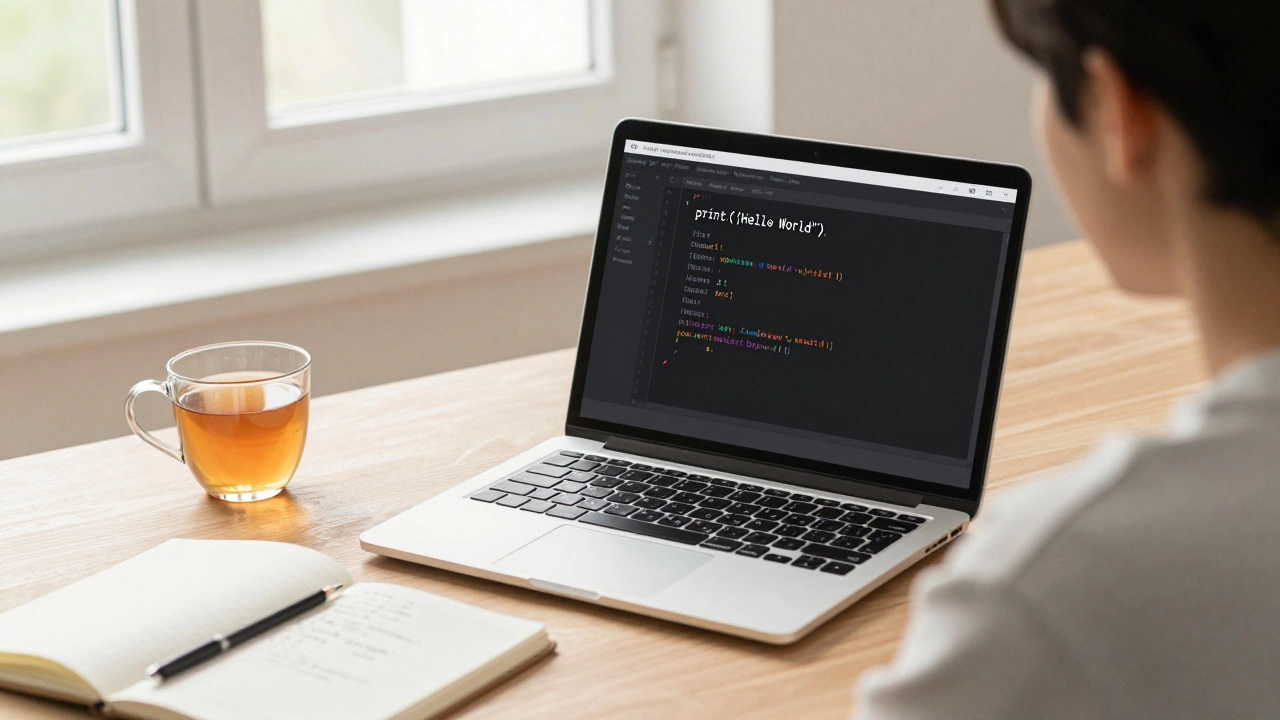
How to Start Coding for Beginners: A Simple Step-by-Step Guide
Learn how to start coding as a beginner with practical steps, free tools, and real projects. No experience needed-just curiosity and consistency.