eLearning frameworks: What works and why in India's digital classrooms
When you think about eLearning frameworks, structured systems that guide how online courses are built and delivered. Also known as online learning models, they’re not just about uploading videos and quizzes—they’re the hidden architecture that turns passive scrolling into real learning. In India, where over 2.5 crore students are on digital platforms, these frameworks make the difference between a course that gets ignored and one that changes how someone thinks, learns, or even gets hired.
eLearning frameworks require more than tech—they need psychology. The best ones follow clear stages: Analysis, understanding who the learner is and what they need, then Design, building the structure around real goals, not just content, followed by Development, creating tools and interactions that stick, and finally Implementation, putting it all in front of learners and adjusting based on how they respond. These aren’t theoretical steps. They’re what separates a course that fails from one that helps someone crack IIT JEE, switch careers after 50, or land a coding job without a degree.
Interactive eLearning is one of the most powerful tools inside these frameworks. It’s not about flashy animations—it’s about giving learners choices, feedback, and small wins. Think of it like a game where every decision matters. That’s what keeps someone scrolling through a 30-minute module instead of closing it after five. And it’s not just for kids. Adults learning to code at home, teachers designing courses for rural students, or professionals upgrading skills through platforms like Google Skillshop—all rely on this same principle. The best eLearning platforms don’t just deliver content; they create experiences that feel personal, urgent, and doable.
But here’s the catch: most eLearning in India still skips the framework. It’s just videos with a quiz at the end. That’s why so many learners drop out. The real winners? Those who build courses around what learners actually do—not what they watch. Whether it’s a NEET aspirant drilling high-yield biology topics or a mid-career professional mastering cloud engineering, the framework guides the journey. And in a country where distance education has real downsides—like isolation and lack of hands-on practice—strong frameworks aren’t optional. They’re the only thing that keeps learners from giving up.
Below, you’ll find real examples of what works: how to build courses that hold attention, what stages top educators actually follow, and how tools like Google Classroom or interactive platforms are being used across India’s classrooms, coaching centers, and home offices. No theory. No fluff. Just what’s moving the needle right now.
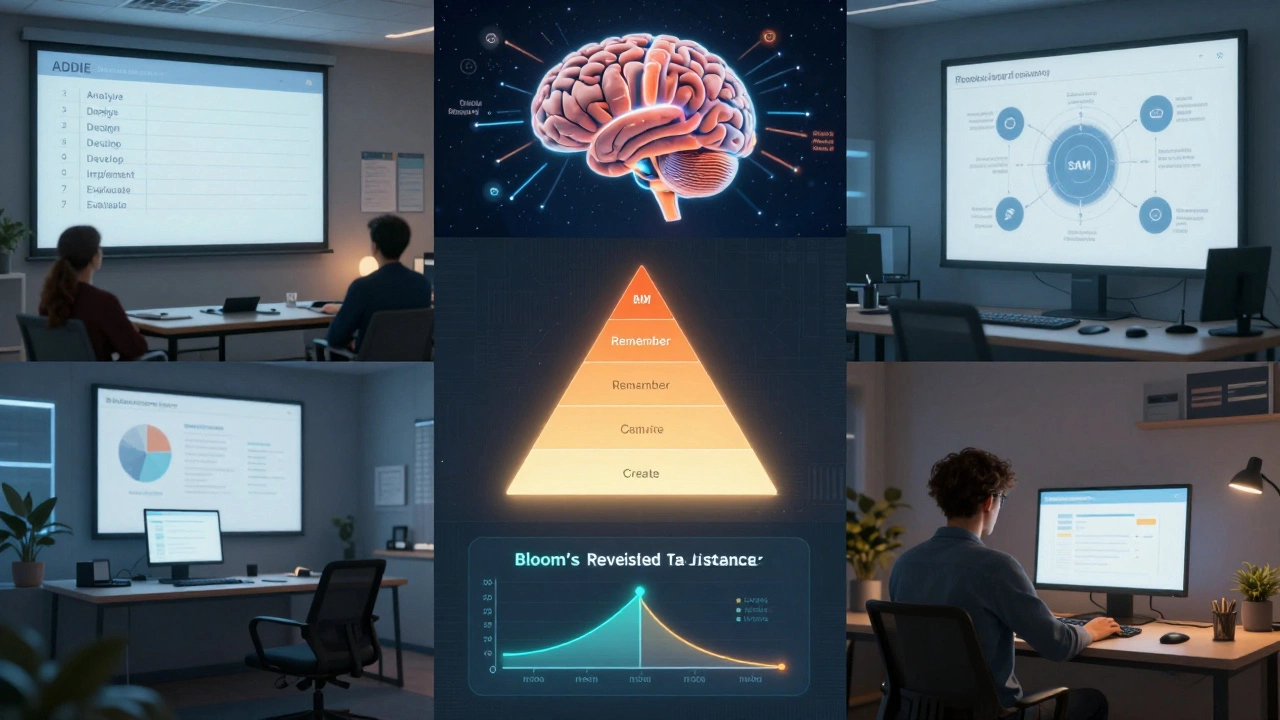
What Are the 5 eLearning Models Used Today?
Learn the five key eLearning models used today-ADDIE, SAM, Bloom’s Taxonomy, Gagne’s Events, and Moore’s Transactional Distance-and how to pick the right one for your learners. No fluff, just practical design insights.