eLearning Models: What Works, What Doesn’t, and How to Use Them
When we talk about eLearning models, structured approaches to designing and delivering online education. Also known as online learning frameworks, they’re not just about uploading videos or setting up quizzes—they’re the invisible architecture behind courses that actually stick. Many assume eLearning is just digital textbooks with a play button. But the best ones? They’re built on clear stages: analyzing what learners need, designing experiences that match, developing tools that work, and putting it all into action. That’s the four stages of eLearning, Analysis, Design, Development, and Implementation—the core cycle that turns passive content into active learning. Skip even one of these, and your course becomes another forgotten link in a learner’s inbox.
What separates a good eLearning model from a great one? It’s not the platform. It’s the interactive eLearning, designs that make learners do something—choose, respond, build, fail, try again. Also known as engagement-driven learning, it’s the difference between watching a video and building a project based on it. Think of it like learning to drive: you don’t get better by just reading the manual—you need to turn the wheel, feel the road, and correct your mistakes. That’s why courses with micro-interactions, real choices, and immediate feedback outperform ones with endless slides. Tools like Google Classroom or Moodle are just containers. The real magic happens in how you use them to create online course design, the intentional shaping of learning paths that guide people from confusion to clarity. In India, where students juggle exams like NEET and IIT JEE, these models matter more than ever. A rushed online course won’t help someone preparing for a high-stakes test. But one built on the right model? It can be the difference between burning out and breaking through.
You’ll find posts here that cut through the noise. From how to build courses that keep learners hooked, to why distance education often fails—not because of tech, but because of poor design. We look at real examples: what works for a 50-year-old career switcher learning to code, how a student in a small town uses eLearning to prep for NEET, and why some platforms succeed while others collect dust. There’s no theory without practice here. Just what you need to know to pick, use, or even build a model that actually changes how people learn.
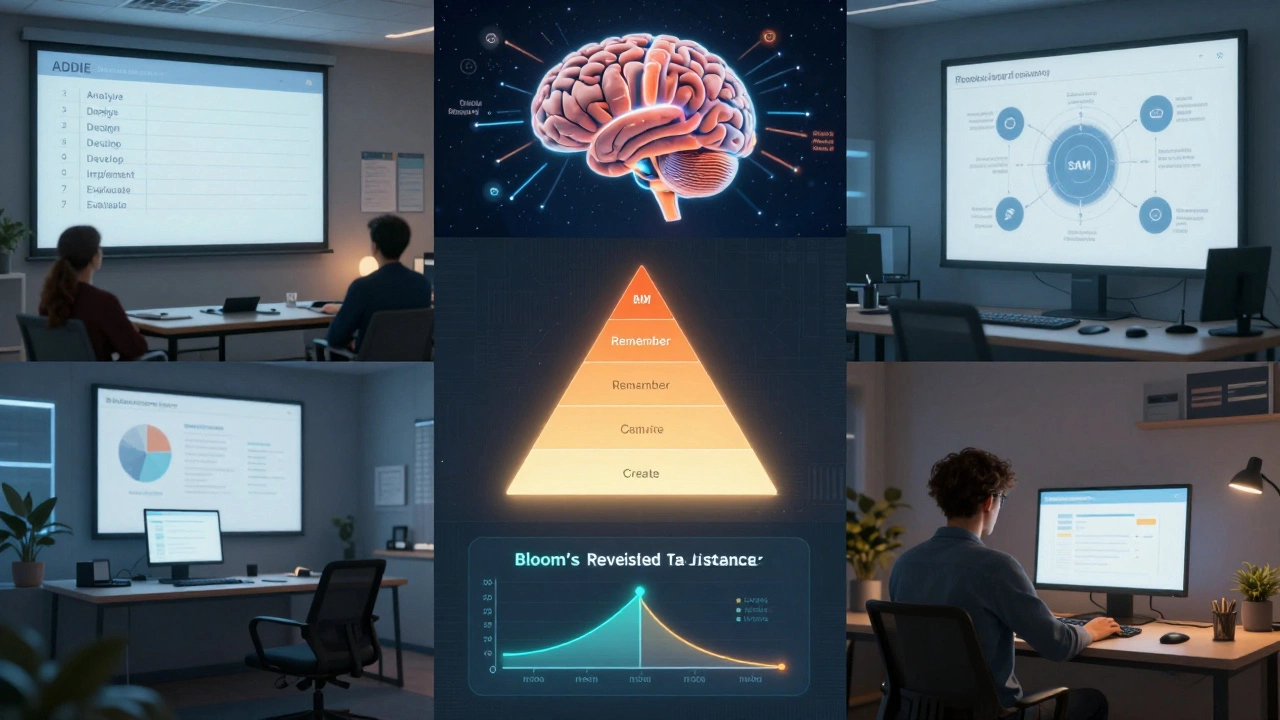
What Are the 5 eLearning Models Used Today?
Learn the five key eLearning models used today-ADDIE, SAM, Bloom’s Taxonomy, Gagne’s Events, and Moore’s Transactional Distance-and how to pick the right one for your learners. No fluff, just practical design insights.