Online Learning Models: What Works, What Doesn’t, and Why
When we talk about online learning models, structured approaches to delivering education digitally, ranging from self-paced videos to live interactive classrooms. Also known as eLearning frameworks, they’re not just about putting lectures online—they’re about designing experiences that stick. Too many platforms treat online learning as a video library. But real learning? It needs interaction, feedback, and rhythm. That’s why some models fail while others turn passive viewers into active learners.
Take interactive eLearning, a model that asks learners to make choices, solve problems, and get immediate feedback—not just click through slides. Also known as engagement-driven learning, it’s what separates a forgettable course from one that changes how someone thinks. You’ll see this in posts about how to build courses that actually hold attention, not just collect views. Then there’s distance education, a broader term for learning without physical classrooms, often used in India’s rural and remote areas. Also known as remote learning, it’s the backbone for millions of students who can’t attend coaching centers—but it comes with real downsides: isolation, tech gaps, and exams that don’t match real skills. And behind every successful model? The eLearning stages, the four-step process—Analysis, Design, Development, Implementation—that turns random content into effective learning. Also known as instructional design cycle, it’s the quiet engine behind every course that actually works. Most people skip these steps. That’s why so many online courses feel empty.
What you’ll find here aren’t theories. These are real stories from students who finished IIT JEE prep online, teachers who rebuilt their courses from scratch, and coders who learned at home with zero support. Some used live coaching. Others relied on micro-interactions and project-based tasks. A few fought through broken internet and silent Zoom rooms. The common thread? The model didn’t matter as much as the design. A poorly built interactive course fails. A simple video series with clear goals can win. It’s not about the tech—it’s about the structure.
Whether you’re a student in a small town trying to prep for NEET, a teacher struggling to keep learners engaged, or someone considering a career shift through online certs—this collection gives you what actually works. No fluff. No hype. Just what’s happening on the ground in India’s digital learning space right now.
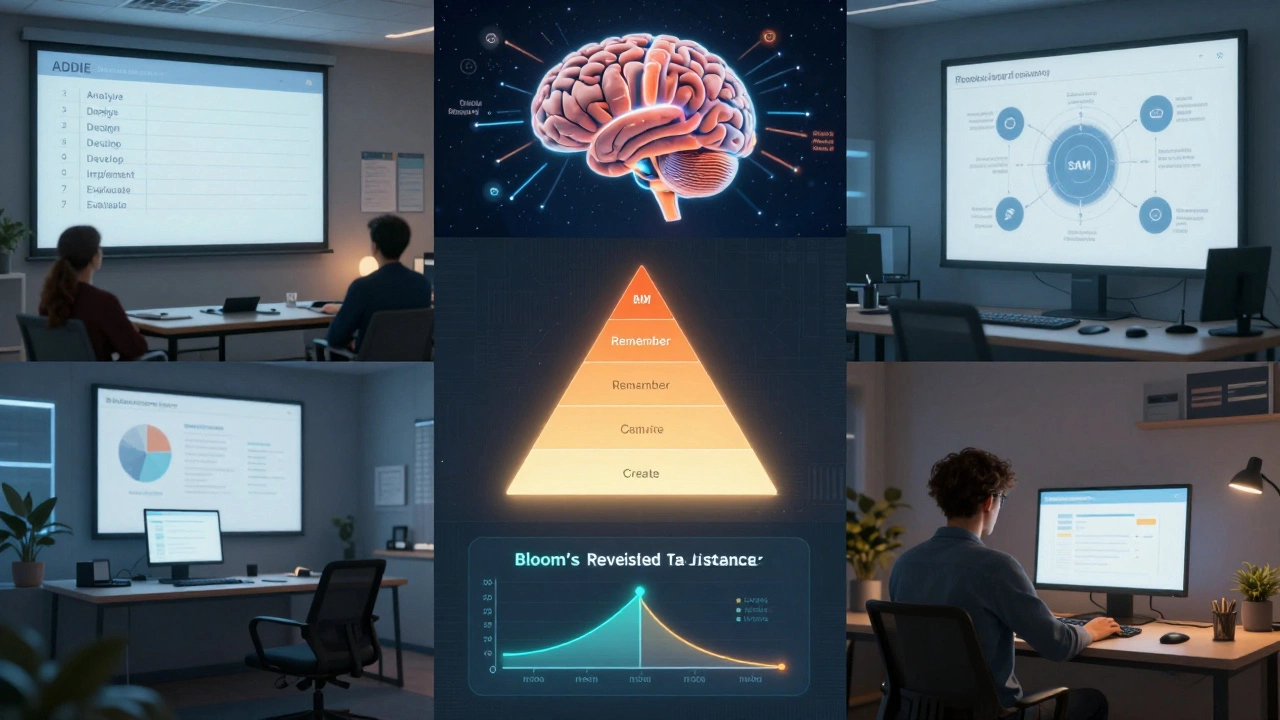
What Are the 5 eLearning Models Used Today?
Learn the five key eLearning models used today-ADDIE, SAM, Bloom’s Taxonomy, Gagne’s Events, and Moore’s Transactional Distance-and how to pick the right one for your learners. No fluff, just practical design insights.