Toughest Exams Explorer
Click on an exam below to view detailed statistics, key challenges, and survival strategies based on global data.
Gaokao
China's College Entrance
High PressureUPSC CSE
India's Civil Services
Lowest Pass RateNY Bar Exam
USA Legal License
High StakesYou might think you had a rough day at work or school. But try sitting for three days straight, answering questions that require you to memorize entire libraries of law, history, and geography, while thousands of others compete for just a handful of spots. That’s not a bad dream; it’s Tuesday for someone taking one of the world's most brutal tests.
People love ranking things. We rank movies, we rank phones, and yes, we rank exams. But calling an exam "tough" is tricky. Is it tough because there are too many questions? Or is it tough because almost nobody passes? Usually, it’s the latter. The toughest exams aren't just about difficulty; they're about survival rates. Some have pass rates lower than 1%. Others take years of dedicated study before you even stand a chance.
If you’re prepping for a major test or just curious about what makes certain qualifications so elite, you need to look past the hype. Let’s break down the three exams that consistently dominate global conversations for their sheer unforgiving nature. These aren't just hard; they are life-altering gatekeepers.
The Gaokao: China’s One-Shot Chance
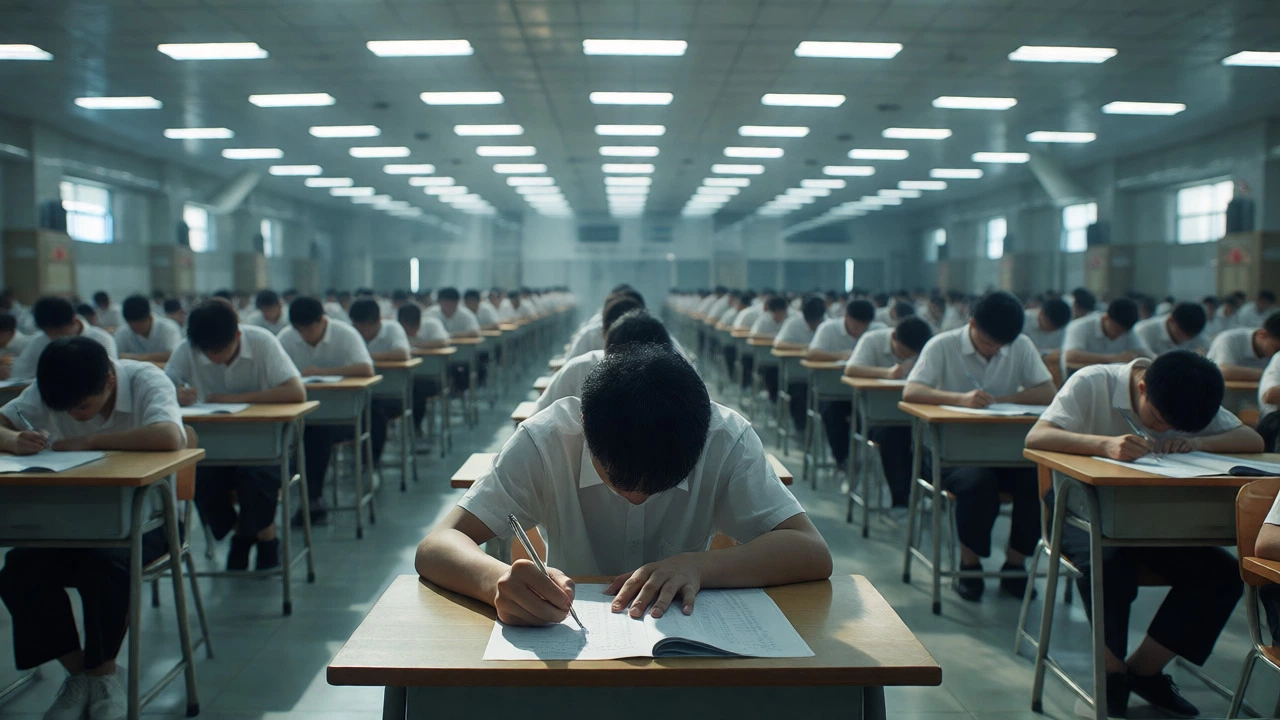
Imagine your entire future hanging on a single four-day period. No retakes. No second chances. That is the reality of the Gaokao, the National College Entrance Examination in China. For over 10 million students every year, this isn't just a test; it’s the sole determinant of whether they attend a top-tier university or end up in vocational training with limited upward mobility.
Why is it considered one of the toughest? It’s not necessarily that the questions are impossible for a smart person. It’s the volume and the pressure. Students spend twelve years preparing specifically for these four days. The curriculum covers Chinese language, mathematics, foreign languages, and sciences or humanities depending on the track. But here’s the kicker: the competition is fierce. In recent years, only about 5% of candidates get into the country's most prestigious universities, like Tsinghua or Peking University. If you miss the cut by a few points, you don’t just go to a "slightly worse" school; you often go to a completely different tier of education with vastly different career prospects.
The social pressure is suffocating. Families often move cities to be closer to better high schools. Parents quit jobs to tutor their children. During exam week, construction stops near testing centers. Police escort students who oversleep. It’s a national event. If you fail, you can retake it, but most families cannot afford the financial and emotional cost of a second attempt. This scarcity mindset drives the difficulty level through the roof.
UPSC Civil Services Examination: India’s Everest
If Gaokao is a sprint under extreme pressure, the UPSC Civil Services Examination (CSE), India's premier examination for recruitment into civil services is a marathon run through quicksand. Held annually by the Union Public Service Commission, this exam selects candidates for roles like the Indian Administrative Service (IAS), Indian Foreign Service (IFS), and Indian Police Service (IPS).
The numbers tell the story of its brutality. Roughly 1 million people apply each year. After the preliminary round, maybe 100,000 remain. Then comes the main written exam, which lasts several days and requires essay writing on abstract topics, detailed answers on governance, economics, and science. Finally, the top few thousand face a personal interview. The final selection rate hovers around 0.1% to 0.2%. Yes, less than one percent.
What makes UPSC uniquely difficult is its unpredictability. Unlike standardized tests where you can predict the pattern, UPSC changes its focus. One year, they might ask deep questions about rural development; the next, it’s all about international relations or technology policy. You need to know everything from ancient history to modern quantum physics. Plus, the syllabus is vast. Candidates often say you can read the entire library of a university and still miss a relevant topic. Many aspirants prepare for 4 to 6 years before cracking it. It’s not just an exam; it’s a lifestyle choice that demands total sacrifice.

The New York State Bar Exam: The Lawyer’s Gatekeeper
While Gaokao and UPSC are famous for mass appeal and low pass rates, the New York State Bar Exam, a two-day examination required to practice law in New York holds a different kind of terror. It’s shorter, yes. But for those who fail, the consequences are immediate and professional. Law school is expensive-often costing over $200,000. Failing the bar means you can’t practice, despite having the degree.
The exam consists of the Multistate Bar Examination (MBE) and state-specific essays. The MBE alone has 200 multiple-choice questions covering constitutional law, contracts, criminal law, evidence, real property, and torts. Sounds manageable? Try doing it under time pressure where you have less than two minutes per question. Then add six essay questions requiring you to synthesize complex legal principles into coherent arguments in three hours.
The pass rate fluctuates, often dropping below 70% for first-time takers in recent years, and significantly lower for repeat takers. Why is it ranked among the toughest globally? Because it combines high stakes with high complexity. You’re not just recalling facts; you’re applying logic to ambiguous scenarios. There is rarely a clear-cut "right" answer in law; there’s only the most defensible argument. And if you’re an international lawyer trying to qualify in the US, the cultural and linguistic nuances add another layer of difficulty.
| Feature | Gaokao (China) | UPSC CSE (India) | NY State Bar (USA) |
|---|---|---|---|
| Primary Goal | University Admission | Civil Service Job | Legal Practice License |
| Duration | 4 Days | Months (Prelims + Mains + Interview) | 2 Days |
| Pass Rate | ~5-10% for top tier | ~0.1% | ~60-75% |
| Prep Time | 12 Years (K-12) | 3-5 Years | 3 Years (Law School) + Months |
| Retake Policy | Allowed, but costly | Limited attempts based on age/category | Unlimited, but fees apply |

What Actually Makes an Exam "Tough"?
We’ve looked at the big three, but let’s step back. What defines difficulty? It’s usually a mix of three factors: content breadth, psychological pressure, and opportunity cost.
- Content Breadth: Can you master the material? UPSC wins here because the syllabus is endless. You can never feel fully prepared.
- Psychological Pressure: Gaokao excels here. The societal expectation weighs heavier than any textbook.
- Opportunity Cost: The NY Bar Exam hurts because failing means wasting millions of dollars and years of your life. You can’t easily pivot without losing significant investment.
Other exams deserve honorable mentions. The Chartered Financial Analyst (CFA) Level III is notoriously hard due to its depth in finance ethics and portfolio management. The French Baccalauréat was historically grueling, though reforms have softened it slightly. The Japanese Center Test for University Admissions also carries massive weight. But none quite match the combination of scale, stakes, and duration found in our top three.
How to Survive (or Pass) These Monsters
If you’re eyeing one of these, don’t just study harder. Study smarter. Here’s how veterans approach them:
- Prioritize High-Yield Topics: In UPSC, not all history is equal. Focus on modern Indian history and post-independence events. In the Bar Exam, master Constitutional Law and Contracts-they appear everywhere.
- Simulate Conditions: Don’t just read notes. Take full-length mock exams under strict timing. Your brain needs to learn to retrieve information when stressed.
- Manage Burnout: With prep times stretching over years, consistency beats intensity. Studying 12 hours a day for a month leads to crash. Studying 6 hours a day for a year builds endurance.
- Understand the Examiner: For essay-based exams like UPSC or Bar, structure matters more than flowery language. Use headings, bullet points, and clear conclusions. Make it easy for the grader to give you marks.
Remember, passing these exams doesn’t make you smarter than everyone else. It proves you can handle specific types of pressure. That skill is valuable, but it’s not the only path to success. Plenty of brilliant people fail the Gaokao and build empires anyway. Don’t let the label of "toughest" scare you off if you have the grit to grind.
Is the UPSC exam really harder than the Gaokao?
It depends on how you define "hard." Gaokao has higher competition density (millions competing for university spots) and immense societal pressure. However, UPSC has a much lower pass rate (around 0.1%) and requires broader knowledge across diverse subjects like polity, economy, and current affairs. Most educators consider UPSC more intellectually demanding due to its analytical requirements, while Gaokao is more memory-intensive.
Can I retake the Gaokao if I fail?
Yes, you can retake the Gaokao. However, it is culturally discouraged and financially burdensome. Most students aim to pass on their first attempt after 12 years of schooling. Retaking requires paying registration fees again and dealing with the stigma of being a "repeat student," which can affect confidence and peer dynamics.
What is the pass rate for the New York Bar Exam?
The pass rate varies by year and applicant type. Generally, first-time takers from accredited US law schools have pass rates between 70% and 80%. Repeat takers and graduates from non-US law schools often see rates drop below 50%. The overall average tends to hover around 60-70%, making it challenging but not as statistically rare as UPSC.
Which exam takes the longest to prepare for?
Technically, the Gaokao preparation spans 12 years of primary and secondary education. However, focused intensive preparation for UPSC typically lasts 2 to 4 years after graduation. The NY Bar Exam usually requires 3 months of intense review after completing a 3-year Juris Doctor program. So, in terms of dedicated adult study time, UPSC demands the most sustained effort.
Are these exams worth the stress?
For those aiming for government power in India (UPSC), elite university access in China (Gaokao), or legal practice in New York (Bar Exam), yes. The credentials open doors that are otherwise closed. However, many successful professionals bypass these routes entirely, proving that while these exams are tough, they are not the only measure of capability or success.