
Certification Difficulty Comparison Tool
Compare the most demanding professional certifications based on real-world metrics from the article. This tool shows pass rates, time investment, costs, and key difficulty factors to help you understand which certifications require the most dedication.
CPA Exam
Certified Public Accountant
50%
18 months
$1,000-$3,000
Why it's hard: 4 sections (4 hours each), scenario-based questions, detailed exam content
CFA Exam
Chartered Financial Analyst
40% (Level I)
4 years
$3,000+
Why it's hard: 3 levels requiring 900+ hours total, complex global finance concepts
Bar Exam
U.S. Legal Certification
43% (California)
6-12 months
$2,000+
Why it's hard: Two-day exam, multiple testing formats, high-stakes decision making
USMLE
Medical Licensing Exam
75% (International Graduates)
3-4 years
$2,000+
Why it's hard: Three-step process, clinical simulations, life-or-death scenarios
ATP License
Airline Transport Pilot Certification
75% (First Attempt)
1-2 years
$10,000+
Why it's hard: 1,500 flight hours required, high-stakes oral and practical exams
Understanding Difficulty
Difficulty varies based on individual circumstances. The hardest certification isn't always the one with the lowest pass rate - it's the one that matches your background, skills, and resources.
There’s a reason people whisper about the hardest certification like it’s a myth. You don’t just study for it-you live it. You sacrifice sleep, social life, and sometimes your sanity. And even then, thousands fail. This isn’t about passing a test. It’s about surviving a gauntlet designed to separate the exceptional from the merely competent.
Why Some Certifications Are Nearly Impossible
Not all certifications are created equal. Some are gateways. Others are walls. The hardest ones aren’t hard because they’re long-they’re hard because they’re unpredictable, brutally detailed, and unforgiving. They test not just knowledge, but endurance, precision, and mental toughness under pressure.
Take the Certified Public Accountant (CPA) exam in the U.S. It’s not just about knowing accounting rules. You need to master tax law, auditing standards, business law, and financial reporting-all in four separate sections. Each section is four hours long. You have 18 months to pass all four. If you fail one part, you retake it. And you can’t just memorize. The questions are scenario-based. You’re given a 50-page financial statement and asked to spot the error buried in line 347. One wrong assumption, and you fail. The national pass rate hovers around 50%. For some sections, it’s lower.
The CFA: The Marathon That Takes Years
If the CPA is a sprint with heavy weights, the Chartered Financial Analyst (CFA) is a 1,000-mile ultramarathon. You need three levels. Each level is a full-day exam. Level I? 240 multiple-choice questions. Level II? 20 item sets-each one a mini-case study with six questions. Level III? Essay writing and constructed responses. You’re expected to know every formula in portfolio management, ethics, derivatives, and behavioral finance. And you can’t just study for six months. Most candidates spend 300+ hours per level. That’s over 900 hours total. The average time to earn the CFA? Four years. The global pass rate? Around 40% for Level I, dropping to 35% for Level III. And that’s after you’ve already paid $3,000+ in fees.
The Bar Exam: One Shot, One Life
In the U.S., becoming a lawyer isn’t just about passing law school. You have to survive the bar exam. And it’s not just one test-it’s a two-day beast. In most states, you take the Multistate Bar Exam (MBE), the Multistate Essay Exam (MEE), and the Multistate Performance Test (MPT). The MBE alone has 200 questions on constitutional law, contracts, torts, criminal law, evidence, and civil procedure. The essays? You’re given a fictional legal problem and asked to write like a judge. The MPT? You’re handed a file and a library of legal materials and told to draft a motion, brief, or memo in three hours. No second chances. In California, the pass rate for first-time takers was 43% in 2024. In New York? 67%. But in California, if you’re a foreign-trained lawyer? The pass rate drops to 29%. That’s not a test. That’s a filter.
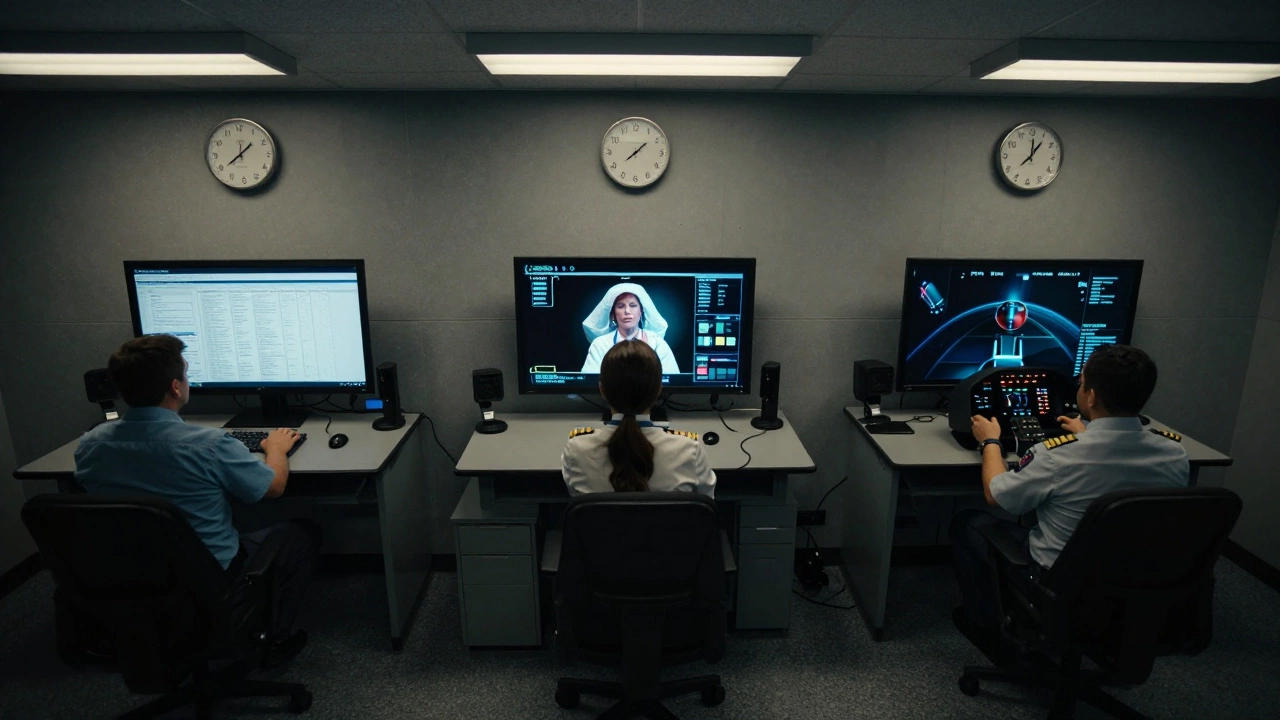
The Medical Licensing Exams: The Ultimate Pressure Cooker
Doctors don’t just memorize anatomy. They have to save lives with that knowledge. The United States Medical Licensing Examination (USMLE) is a three-step process. Step 1? 280 questions on basic sciences. Step 2 CK? 318 questions on clinical knowledge. Step 3? Two days of case simulations. You’re not just answering questions-you’re managing virtual patients who are deteriorating. One misstep, and the patient dies on screen. And you’re graded on whether you ordered the right test, prescribed the right drug, or missed a red flag. The pass rate for U.S. medical graduates? Around 95%. Sounds easy, right? Until you realize that’s only for those who made it through four years of med school and a year of internship. For international medical graduates? The pass rate is 75%. That’s still 1 in 4 failing. And if you fail Step 1 or 2? You can’t start residency. Your career stalls. For many, this isn’t just hard-it’s existential.
Pilot Certification: When One Mistake Costs Everything
Commercial pilots don’t just fly planes. They manage systems, weather, air traffic, and human lives-all while staying calm. The Airline Transport Pilot (ATP) certificate in the U.S. requires 1,500 flight hours. That’s not just logging time. It’s flying in ice storms, night landings, engine failures, and instrument-only conditions. You need to pass a written exam with 100+ questions on aerodynamics, meteorology, navigation, and regulations. Then comes the oral exam. The examiner asks: “What would you do if your primary flight display fails at 30,000 feet during a thunderstorm?” There’s no textbook answer. You have to think on your feet. And then there’s the flight test. You’re evaluated on 200+ maneuvers. Miss one, and you start over. The failure rate? Around 25% on the first attempt. And you’re not allowed to retake it the next day. You have to wait 30 days. And you’ll pay $10,000+ in training costs before you even sit for the test.
What Makes These Certifications So Hard?
There’s a pattern. The hardest certifications share five traits:
- They test application, not recall. You can’t cram. You have to understand how to use knowledge under pressure.
- They’re high-stakes. One failure can cost you years, money, or your career.
- They’re long. Not just in time, but in depth. You’re expected to master entire fields.
- They’re inconsistent. Pass rates vary wildly by country, school, or background. There’s no guarantee.
- They’re isolated. You’re often studying alone. No study groups. No mentors. Just you and a mountain of material.
Compare that to a Google certification or a basic project management credential. Those are tools. These are rites of passage.

Who Actually Passes? And Why?
It’s not about being the smartest. It’s about being the most consistent. People who pass these exams don’t have superhuman IQs. They have routines. They wake up at 5 a.m. every day. They track every practice test. They review mistakes-not just what they got wrong, but why they thought they got it right. They treat failure as data, not defeat.
One CPA candidate I spoke to studied for 18 months. She worked full-time. She had two kids. She didn’t take a single vacation. She used Anki flashcards for every rule. She did 300+ practice questions every weekend. She failed the first attempt. She didn’t quit. She analyzed her score report. Found out she bombed auditing. Spent three months on it alone. Passed on the second try.
That’s the secret. It’s not talent. It’s persistence.
Is It Worth It?
Let’s be honest. These certifications don’t make you rich overnight. But they open doors that stay locked for everyone else. A CFA charterholder can command a salary 50% higher than a non-charterholder in asset management. A licensed attorney with a high bar score can join a top law firm. A pilot with an ATP can fly for a major airline. A doctor with USMLE clearance can practice anywhere in the U.S.
It’s not about the piece of paper. It’s about the proof. The world doesn’t trust degrees. It trusts proof you can handle pressure, think under stress, and deliver when it matters.
What If You’re Not Ready?
Some people hear about these exams and think, “I could never do that.” Maybe you can’t. Maybe you shouldn’t. But if you’re even a little curious-start small. Take one practice question. Read one chapter. Watch one tutorial. Don’t think about passing. Think about learning.
Because the hardest certification isn’t the one with the lowest pass rate. It’s the one you never try.
What is the hardest certification in the world?
There’s no single answer, but the CFA, CPA, USMLE, Bar Exam, and ATP pilot license are consistently ranked among the most difficult. Each demands years of preparation, deep mastery of complex material, and high-pressure testing conditions. The CFA has the longest timeline (often 4+ years), while the Bar Exam in California has one of the lowest pass rates for first-time takers (43% in 2024).
Which certification has the lowest pass rate?
The California Bar Exam has one of the lowest pass rates among major certifications, with first-time takers passing at just 43% in 2024. For international law school graduates, the rate drops to 29%. The CFA Level III and USMLE Step 2 CS (before it was discontinued) also had similarly low pass rates, often below 35%.
How long does it take to get the CFA charter?
On average, it takes 4 years to earn the CFA charter. Candidates must pass three levels, each requiring 300+ hours of study. Most people take 12-18 months between levels. The exam is only offered twice a year for Level I and once a year for Levels II and III, so timing matters. Many candidates fail at least one level and must retake it, extending the timeline.
Can you pass the CPA exam without a degree in accounting?
Yes, but you need to meet state-specific education requirements. Most states require 150 college credits, including specific courses in accounting, auditing, and business law. You don’t need an accounting degree, but you must have taken the right classes. Many non-accounting majors complete a post-baccalaureate program to meet these requirements before sitting for the exam.
Is the CFA harder than the CPA?
It depends on what you mean by “harder.” The CPA is more intense in the short term-you have to pass four exams in 18 months. The CFA is harder over time-it takes years, covers broader material, and requires deep understanding of global markets, ethics, and portfolio theory. The CPA tests technical knowledge; the CFA tests strategic thinking. Many professionals say the CFA is harder mentally, while the CPA is harder logistically.
Do you need to be a genius to pass these exams?
No. You don’t need to be a genius. You need discipline. The people who pass these exams are not necessarily the smartest-they’re the most consistent. They study daily, track their mistakes, and don’t give up after a failure. Many successful candidates work full-time, have families, and still pass. It’s not about IQ. It’s about showing up, every day, even when you don’t feel like it.